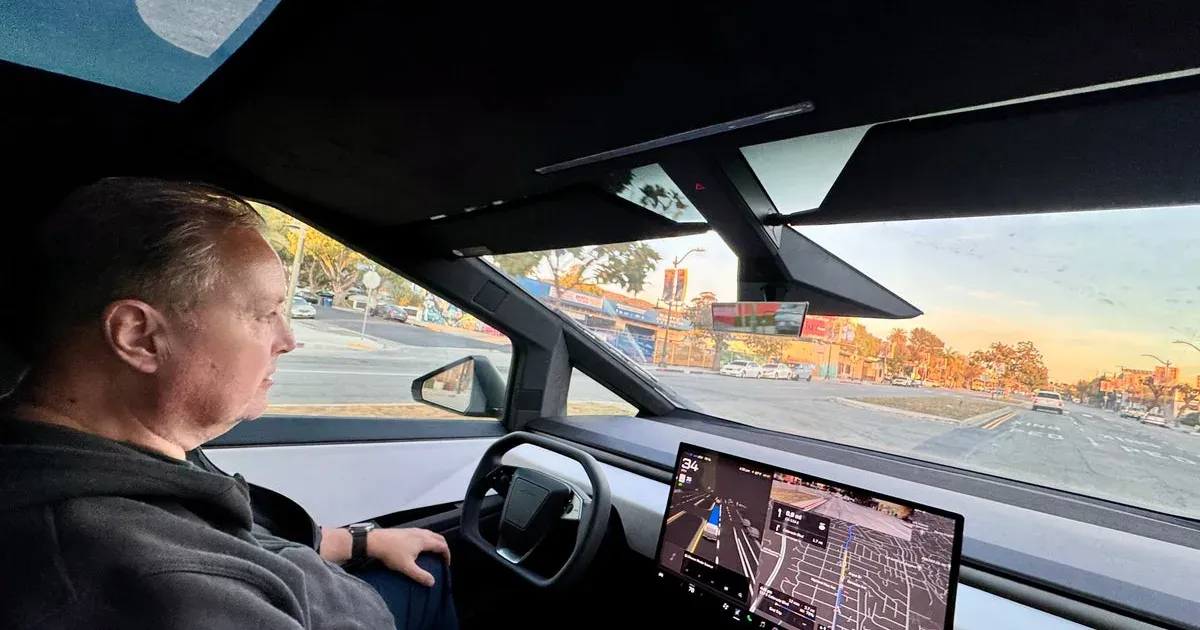
Tesla is seeking approval to put a large robotaxi fleet on Las Vegas-area roads, a proposal that would test how quickly autonomous ride services can move from limited pilots to a mass-market transportation option. Tourism traffic makes the permit more complex than a small closed-course test. The Las Vegas permit gives Tesla a chance to test robotaxi scale in a dense tourist market. The filing asks Nevada regulators for permission to operate up to 5,000 vehicles in the first year after approval. The request surfaced in the June 10, 2026, news pool as one of the more concrete signs that Tesla wants its robotaxi business measured in fleets, not demos.
The application is tied to an Autonomous Vehicle Network Company permit, the type of authorization needed to operate a paid or organized autonomous ride network in Nevada. The proposed service area includes Clark County, Las Vegas, Harry Reid International Airport, Henderson Executive Airport and surrounding communities. For Tesla, that geography matters because airports, resorts, conventions and short urban trips create the kind of steady ride demand that can make or break a robotaxi rollout.
The permit still needs regulatory review, so the headline number is not the same thing as cars already carrying passengers. It does, however, show the scale Tesla wants regulators, rivals and investors to imagine. A 5,000-vehicle ceiling would be far larger than a cautious neighborhood pilot and would put the company directly into a city where autonomous vehicle companies have already been trying to prove the model.
Why Las Vegas Fits the Robotaxi Pitch
Las Vegas is a tempting market for autonomous ride companies because travel patterns are unusually dense. Visitors move between the airport, hotels, convention centers, arenas, restaurants and residential neighborhoods in predictable waves. That does not make the driving simple, but it gives operators a concentrated business case if they can handle the traffic, pickup zones and safety requirements.
The city is also used to transportation experiments. Tourists often accept new ride options faster than commuters who depend on a daily routine. A visitor who needs a ride from the Strip to the airport may care less about brand loyalty and more about wait time, price and whether the vehicle arrives where the app says it will arrive.
Robotaxi service is not only a software question. It depends on charging, cleaning, remote support, insurance, dispatching, airport access, local rules and public trust after the first difficult incident. Las Vegas would test all of those pieces in a high-visibility market where mistakes can become national stories quickly.
The 5,000-Vehicle Figure Sets a High Bar
The number in the filing is important because it suggests Tesla is not asking for a symbolic foothold. Permission for up to 5,000 vehicles during the first 12 months would give the company room to scale if regulators approve the plan and operations perform well. It also gives Tesla flexibility if it wants to begin smaller and expand without returning immediately for a new ceiling.
That scale would raise practical questions. Thousands of robotaxis would need places to charge, staging areas near high-demand zones, systems for handling passenger problems and clear procedures when vehicles face road closures, police direction or unusual Strip traffic. A permit can authorize a network, but the network has to function in messy public space.
Safety will be the center of the review. Regulators are likely to look at vehicle capability, incident reporting, emergency response, cybersecurity and how Tesla would manage rides around airports and crowded entertainment districts. The company will also have to persuade the public that driverless trips are not only impressive, but boringly reliable.
Las Vegas Permit Puts Tesla's Scale Claim on Trial
Tesla has spent years telling investors that autonomy can change the economics of the company. A large Las Vegas permit would give that claim a more visible test. If approved, the plan could help Tesla show that its autonomous strategy can produce a transport network rather than remain a feature attached to privately owned cars.
The competitive backdrop is already active. Other autonomous vehicle operators have used Las Vegas and similar cities to test passenger service, airport corridors and entertainment-district routing. Tesla entering with a large proposed fleet would raise pressure on rivals, but it would also invite direct comparison on safety record, service quality and regulator confidence.
Local transportation interests will also watch the plan closely. Taxi operators, ride-hailing drivers, airport officials and resort managers all have a stake in where autonomous vehicles can wait, load passengers and respond when demand spikes after major events. Those details can decide whether a robotaxi network feels useful to riders or creates new friction at already crowded curb space.
For riders, the near-term impact depends on approval and rollout details. A permit request does not guarantee launch timing, prices or coverage. The clearer takeaway is that Las Vegas has become a proving ground for the next phase of ride-hailing, where the question is no longer whether autonomous cars can move through a city, but whether they can do it at a scale that ordinary passengers notice.