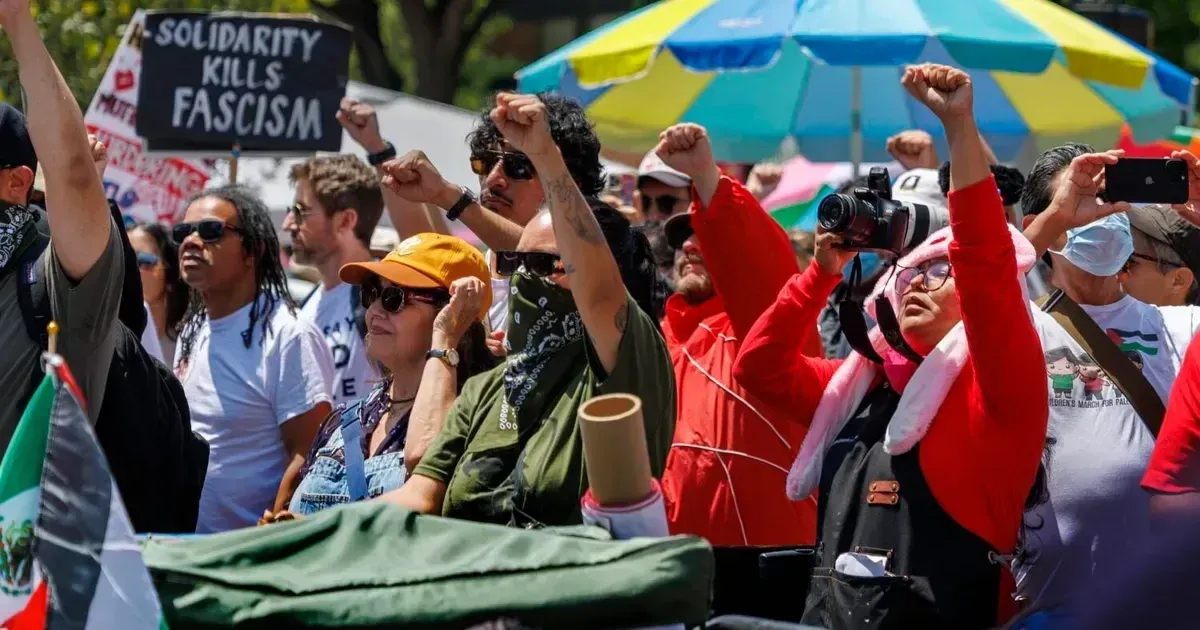
May Day gave labor organizers a national platform rather than a single-city protest. Demonstrators in Los Angeles joined May Day rallies that linked worker rights, immigration policy and anger over the Iran war. The marches took place on May 1, 2026, as part of International Workers' Day actions across the United States and abroad. In Southern California, labor and immigrant-rights groups drew thousands of people into downtown streets, with organizers calling for economic relief, expanded protections for workers and a halt to aggressive immigration enforcement.
The Los Angeles events fit into a wider national day of action sometimes described by organizers as an economic blackout. Protest groups urged supporters to skip work, school and shopping, while local coalitions framed the rallies as a response to rising costs, federal immigration actions and the administration's foreign-policy priorities. The message was broad, but it was not random: speakers repeatedly tied household pressure to decisions made in Washington. National organizers promoted the day through a May Day Strong network that encouraged no-work, no-school and no-shopping actions, turning ordinary consumer choices into part of the protest strategy. The Guardian described more than 3,500 planned events, a scale that helped make the demonstrations feel coordinated rather than isolated.
Organizers said the demonstrations were rooted in the labor movement's long May Day tradition. Participants carried signs about wages, housing, citizenship pathways and the cost of war. Several groups also used the day to criticize billionaire influence in politics, arguing that tax and spending choices favor wealthy interests while low-wage workers face rent, food and utility pressures. Their demands included taxing the wealthy, defending worker rights, expanding voting rights, creating citizenship pathways for immigrants, protecting tenants and opposing war.
The Iran war gave the 2026 rallies a sharper economic frame. Associated Press coverage of global May Day events noted that unions and activists were connecting shrinking purchasing power and energy costs to the conflict. The same report described rallies across Asia, Europe and the United States, showing that the 2026 labor calendar was being shaped by both local wage disputes and international instability. In Los Angeles, that argument appeared in signs and speeches that contrasted military spending with affordable housing, healthcare and workplace protections.
Immigration enforcement was the other major thread. Community groups argued that workplace sweeps and the threat of deportation make it harder for immigrant employees to report wage theft, unsafe conditions or discrimination. That connection between labor rights and immigration status has long shaped May Day organizing in California, and it remained central to this year's turnout. For many long-term residents, the demand for legalization was presented as both a civil-rights issue and a workplace-safety issue.
Los Angeles Demonstrations Target Federal Policy
Local leaders focused their criticism on the intersection of federal spending, immigration enforcement and household costs. Speakers referenced the Iran war as a drain on resources that could otherwise support domestic priorities. Immigrant-rights groups emphasized that fear of enforcement can ripple through workplaces, schools and local businesses even when a particular march remains peaceful.
Downtown Los Angeles offered a visible stage because the city sits at the center of several overlapping debates: organized labor, immigrant communities, housing affordability and anti-war activism. Reports from local outlets described thousands of workers, students and advocates gathering for rallies and marches tied to labor rights and immigration reform. Los Angeles coverage pointed to MacArthur Park, Grand Park and downtown routes as major gathering points, with unions, students and community organizations sharing the same protest calendar. CBS Los Angeles reported that speakers at the Grand Park rally included service-worker voices, reinforcing the event's labor focus. The turnout reflected both national coordination and local grievances.
Those grievances were practical as much as ideological. Protesters cited rent, groceries, healthcare and stagnant wages as reasons for joining the march. Labor speakers argued that any discussion of economic recovery has to include workers who clean buildings, serve food, staff schools and keep public services running. That emphasis kept the event anchored in wages and working conditions even as the agenda widened.
May Day History Anchors the Message
May Day's history gave organizers a familiar language for the 2026 demonstrations. The date is tied to the 1886 Haymarket Affair in Chicago, when the fight for an eight-hour workday became a defining episode in labor history. Modern rallies often invoke that legacy to argue that basic workplace protections were won through public pressure rather than granted voluntarily.
Chicago also remained part of the story this year. The city is central to May Day memory, and organizers there used the holiday to connect school, union and immigrant-rights campaigns to a larger national action. That mattered because the holiday's origin story is often invoked by organizers trying to link present-day demands to the eight-hour-day movement. National protest coverage pointed to May Day events in cities including Chicago, New York, Seattle, Washington and Los Angeles, with organizers using the date to connect local campaigns to a broader worker-rights calendar. That shared history helped turn separate rallies into a recognizable national action.
What Comes Next for Labor and Immigration Demands
The policy effect of the marches will depend on whether organizers can sustain pressure beyond a single day. Large turnout can draw attention, but legislative outcomes require narrower demands, coalition discipline and repeated contact with city, state and federal officials. That means organizers will have to translate street pressure into specific fights over wage enforcement, local cooperation with federal immigration agencies, housing assistance and congressional spending priorities. The strongest message from the rallies was that labor, immigration and anti-war groups see their issues as connected rather than separate.
That connection may shape the next phase of organizing. If federal immigration enforcement remains aggressive and household costs stay high, May Day could become a preview of larger summer campaigns rather than a one-day protest. For now, the rallies showed that economic anxiety is no longer confined to wages alone; it is being tied to war spending, immigration policy and the distribution of political power. That broader framing is likely to remain useful for coalitions that need labor unions, immigrant-rights groups and anti-war organizers to keep working together after May Day.