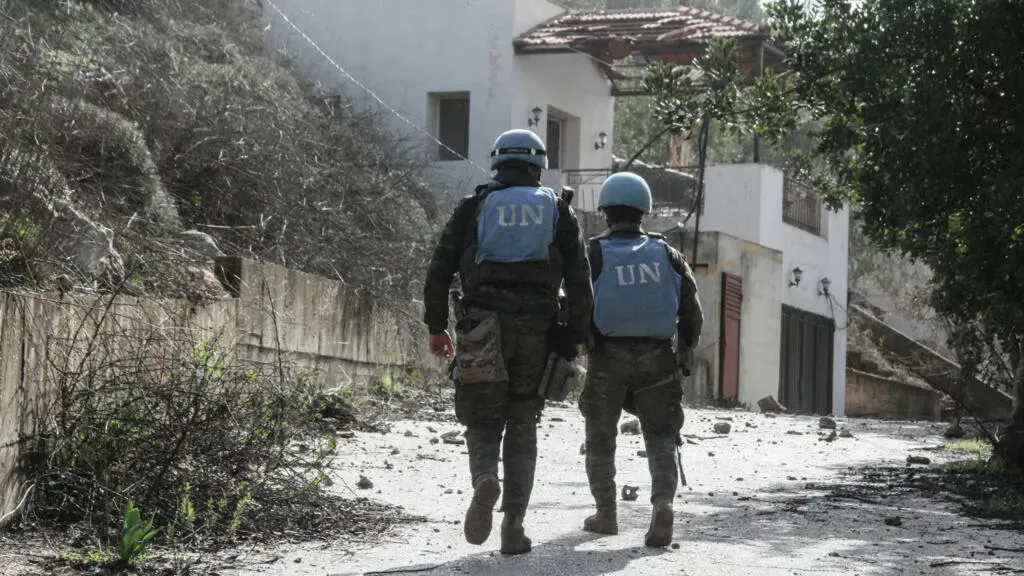
The deaths of three Indonesian UNIFIL peacekeepers in southern Lebanon showed how little room remains for neutral monitors when a buffer zone becomes a battlefield. The March 29 and March 30 incidents were not only tragic personnel losses for Indonesia. They were a warning about the collapse of restraint around a mission that depends on both sides respecting the blue flag.
Early accounts left key responsibility questions open. Later investigation reporting sharpened the picture: the March 29 death near Aadchit al-Qusayr was linked to a 120 mm shell fired from an Israeli tank, while the March 30 convoy explosion near Bani Hayyan was assessed as most likely caused by a tripwire-activated explosive device planted by Hezbollah. The split matters. It shows UNIFIL was not endangered by one side's conduct alone, but by a battlefield where multiple actors made protected movement unsafe.
Two Incidents Created One Crisis
The first incident killed an Indonesian peacekeeper and wounded others at or near a known UNIFIL position. The second killed two more Indonesian personnel when a logistics convoy was struck by an explosion the following day. Within roughly 24 hours, a dangerous deployment became a diplomatic crisis for the United Nations, Indonesia and every troop-contributing country watching the mission's risk level rise.
Peacekeeper deaths carry a different weight from ordinary battlefield casualties. UN personnel are not supposed to be targets, and combatants are expected to coordinate around their positions and movements. When that protection fails repeatedly, the issue becomes larger than one patrol route.
UNIFIL Is Built On A Fragile Bargain
UNIFIL's role in southern Lebanon has always been difficult. Peacekeepers monitor, report, liaise with parties and try to reduce miscalculation, but they cannot impose peace on Israel or Hezbollah by force. Their authority depends on access, visibility and a minimum level of respect from armed actors.
When fighting is contained, that role can still reduce risk. When war spreads through villages, roads, observation posts and suspected militant infrastructure, the same mission becomes exposed. A UN vehicle can be close to civilians, military lines, damaged roads, mines, improvised devices and artillery trajectories at the same time.
Responsibility Cannot Be Blurred
It is tempting in a chaotic war to say that peacekeepers were killed by the general danger of the conflict. General danger is not enough. If Israeli tank fire killed a peacekeeper at a known UN location, that demands accountability and explanation from Israel. If a Hezbollah-planted device killed peacekeepers in a convoy, that demands accountability from Hezbollah and from any command structure that tolerates explosive hazards near UN routes.
Neutral language should not become fog. Peacekeeper protection depends on identifying who created which danger and whether the act was deliberate, reckless or the result of failed deconfliction. Condolences do not substitute for that record.
Indonesia Carries The Human Cost
Indonesia has been a major contributor to UN peacekeeping, and its personnel in Lebanon serve under a mandate far from home. Each death forces Jakarta to defend why its soldiers remain in a war zone where the parties they are monitoring may not protect them.
Troop-contributing countries accept risk, but they do not accept abandonment. They expect clear investigations, medical evacuation, route protections, equipment support and political pressure on combatants. If those expectations are not met, future deployments become harder to sustain.
The Mission Loses Space When Monitors Are Hit
The operational danger is direct. If UNIFIL restricts movement too heavily, it sees less. If it keeps moving without stronger guarantees, it risks more casualties. Either outcome weakens the mission's value at the exact moment civilians and diplomats need independent reporting most.
A damaged peacekeeping mission leaves more room for each combatant to control the narrative. It also reduces channels for deconfliction, humanitarian coordination and local restraint. Peacekeepers are most useful when the battlefield is unstable, but instability is exactly what makes their work more lethal.
The Legal Standard Is Serious
International law gives peacekeepers protection because they operate on behalf of the international community, not as a party to the conflict. Deliberate attacks on them can amount to grave violations. Reckless fire, poor coordination and tolerated explosive hazards can also produce serious legal and diplomatic consequences.
The investigation cannot be treated as a bureaucratic afterthought. It must establish weapon type, line of fire, route coordination, prior warnings, known hazards and command responsibility. Without that detail, the blue helmet becomes a symbol without operational force.
The Warning Goes Beyond Lebanon
The Indonesian deaths were not a side note to the Israel-Hezbollah war. They were a measure of how far the conflict had degraded the protective space around neutral monitors. If peacekeepers cannot hold positions or move convoys without being hit by tank fire or explosive devices, the buffer zone is failing in its most basic purpose.
UNIFIL does not need only condolences. It needs enforceable route safety, transparent findings, diplomatic pressure on all armed actors and consequences for violations. Without those, the mission becomes trapped between visibility and survival.