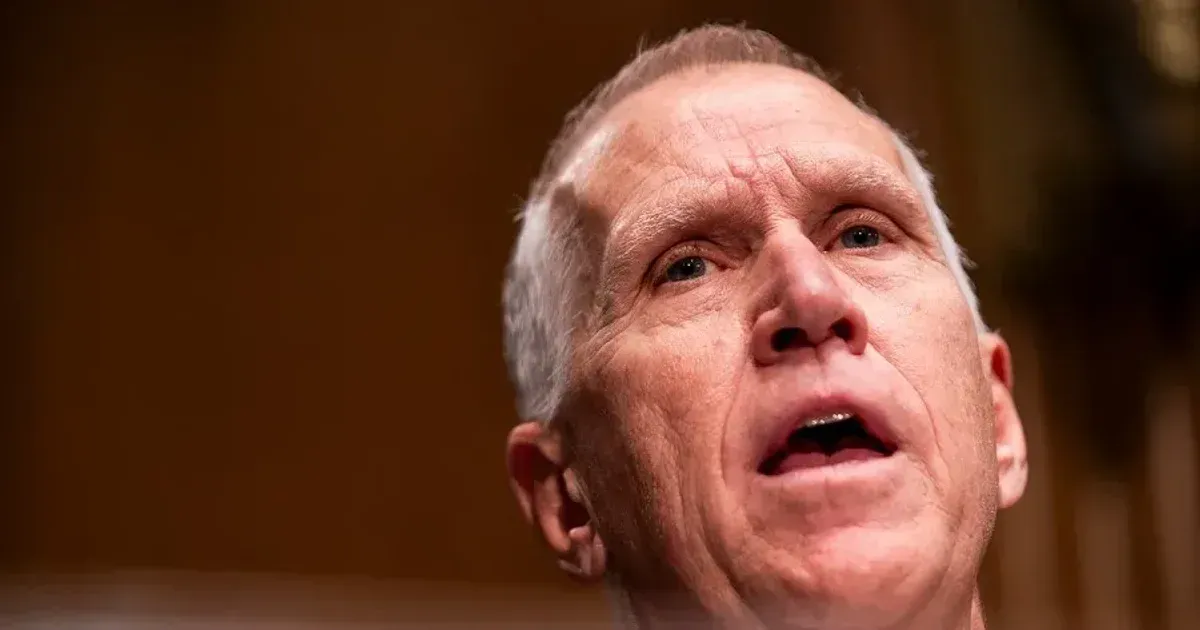
Thom Tillis tried to lower the temperature around Donald Trump's AI Jesus image. The North Carolina Republican treated the episode as a political explanation problem rather than a theological one. The AI image dispute forced Republican allies to explain religious messaging in campaign terms. On April 16, 2026, Tillis addressed the controversy during an interview regarding the president's recent digital messaging. Donald Trump shared an image created by artificial intelligence that depicts him in a posture and setting typically reserved for Jesus Christ. Thom Tillis noted his willingness to take the presidential explanation for the graphic at face value while shifting focus to diplomatic tensions with Pope Leo XIV. Critics within the Republican Party have questioned the wisdom of merging messianic imagery with political campaigning, yet Tillis suggested that the internal reasoning of the White House is not his primary concern.
Accepting the narrative provided by the administration allows Tillis to navigate a complex electoral environment in North Carolina. Religious leaders expressed a variety of opinions regarding the AI Jesus image, ranging from mild confusion to accusations of sacrilege. The senator’s comments suggest a strategic prioritization of concrete policy friction over the cultural ephemera of social media. The interview provided a rare glimpse into how senior Republicans are managing the unconventional communication style of the current administration. Voters in the South often demand a high degree of religious literacy from their representatives, making any comment on Christ-like imagery a calculated risk for a sitting senator.
Tillis Weighs Political Risks of AI Jesus Post
Evangelicals in the South have historically been the backbone of the Republican coalition, yet the introduction of AI-generated religious icons introduces a new variable. Digital forensics suggest the image was rendered using advanced generative tools to evoke a specific emotional response from the base. The image depicts the president with a soft halo and outstretched hands, a composition that mirrors traditional Byzantine iconography. Tillis emphasized that while the post has generated headlines, his legislative focus persists on matters of state and international relations. Donald Trump maintains that the image was intended to represent his commitment to religious freedom rather than a literal comparison to a deity.
Republican strategists believe that taking these explanations at face value prevents unnecessary infighting before the midterm cycle. Many observers pointed out that Tillis is walking a fine line between loyalty to the party leader and the traditional sensibilities of his constituency. The White House has not issued a formal retraction or clarification beyond the statements Tillis referenced in his interview. Thom Tillis stays focused on the wider effects of presidential rhetoric on global Catholic relations.
Digital ethics experts argue that the use of AI to create religious parallels is a strategy to bypass traditional media filters. The software used to create the image likely used thousands of existing religious paintings to ensure the final product felt familiar to a Christian audience. Trump’s base often interprets these visuals as a sign of spiritual warfare. Tillis argued that the debate over the pixels of an image is less productive than discussing the verbal exchanges between the president and the Vatican.
"I worry less about the post," Tillis said during an exclusive interview with The Hill on April 16, 2026.
Diplomatic Friction Between Trump and Pope Leo XIV
Pope Leo XIV has become a vocal critic of certain administrative policies, leading to a public exchange of barbs between the Vatican and the White House. Within the beltway, the tension is viewed as a meaningful hurdle for Catholic voters who have supported the Republican platform on social issues. The North Carolina senator indicated that the specific comments directed at the pontiff are more deserving of scrutiny than a single social media post. The Vatican press office has released several statements calling for a more respectful tone in international discussion. Friction between a sitting president and the Holy See is not without precedent, but the direct nature of the recent comments has unsettled some diplomatic circles.
Religious demographics in the United States continue to shift, but the influence of the Catholic vote remains a factor in swing states. The relationship between Donald Trump and Pope Leo XIV is complicated by differing views on global migration and environmental stewardship. Tillis noted that the president’s explanation for his remarks regarding the Pope should be analyzed with the same directness as his explanation for the AI image. The Hill reported that several other Republican senators have avoided commenting on the matter entirely.
Policy differences often lead to heated rhetoric, but the targeting of a religious leader by a head of state carries unique risks. The resilience of the Republican relationship with Catholic organizations is being tested by these interactions. The demand for clarity from the administration has increased as the 2026 legislative session progresses. Tillis indicated that he prefers to address the substance of the disagreement between the two leaders.
Religious Messaging Test
Messaging within the Republican Party has long used religious themes to mobilize voters, but the advent of AI has changed the scale. Thom Tillis is one of several leaders who must now account for a digital landscape where the line between reality and symbolic art is blurred. The use of AI Jesus imagery is a departure from the traditional use of scripture or church endorsements. The speed at which these images can be produced and spread outpaces the ability of traditional religious institutions to provide guidance. This shift has forced politicians like Tillis to adopt a stance of pragmatic acceptance to maintain party unity.
Visual communication often carries more weight than written policy for the average voter. The AI Jesus image was shared millions of times within hours of its original post. The sheer volume of engagement makes it difficult for any Republican to ignore, even if they choose to downplay its importance. Tillis pointed out that the president’s ability to communicate directly with his supporters is a primary feature of his political identity. The imagery is designed to foster a sense of shared identity and purpose among the president’s followers.
Critics argue that taking the explanation at face value is a form of political surrender. The concern is that by not challenging the messianic parallels, the party is fundamentally altering its relationship with traditional religious doctrines. The theological implications are vast, yet the political utility of the image appears to outweigh the risk of alienation for now. Thom Tillis continues to emphasize that his concerns are rooted in the real effects of presidential speech on global alliances.
Digital Strategy and the North Carolina Electorate
Voters in North Carolina have shown a historic preference for candidates who balance traditional values with economic pragmatism. The senator’s choice to prioritize the Vatican dispute over the AI image reflects this balance. The controversy provides a distraction that some analysts believe the White House is using to control the news cycle. The effectiveness of this strategy depends on the willingness of congressional allies to echo the administration’s talking points. Thom Tillis has established a reputation for being a stable presence within the caucus, making his acceptance of the explanation significant.
Local polls in North Carolina suggest that while some voters find the AI Jesus image distasteful, it is not a deciding factor in their support. The economy and regional infrastructure projects hold more weight for the majority of the electorate. Tillis knows that his comments will be dissected by both the religious left and the MAGA base. The interview with The Hill suggests that he is comfortable with his current positioning. The senator’s focus stays on the legislative calendar as the summer months approach.
National politics is increasingly defined by these moments of digital friction. The AI Jesus image is a single data point in a much larger trend of algorithmic campaigning. The reaction of the party leadership will determine if this becomes a standard tool in the Republican arsenal. Thom Tillis has signaled that for now, the explanation provided by Donald Trump is sufficient for him to move forward. The image remains a viral artifact of a shifting political culture.