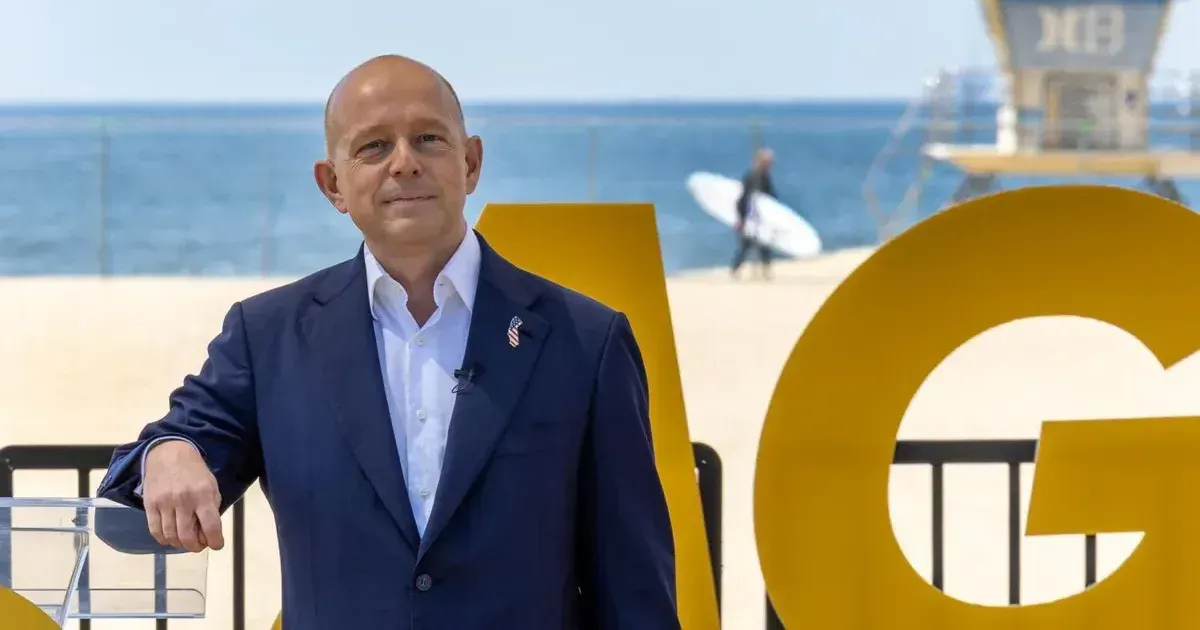
Donald Trump declared his support for Steve Hilton in the California governor race from his Mar-a-Lago residence. The endorsement immediately changed the Republican primary conversation and placed Chad Bianco under new pressure from a nationalized campaign environment. By April 6, 2026, Hilton was trying to convert media recognition into a viable statewide bid as California Republicans searched for a candidate who could reach the top-two ballot.
Steve Hilton previously was a political adviser in the United Kingdom before establishing himself as a conservative commentator in the United States. His background in policy and media gave him a unique platform to launch a bid for the executive office in Sacramento. Current polling data suggests that Hilton is a frontrunner alongside Chad Bianco, the sheriff of Riverside County. Both candidates have sought to capitalize on voter frustration regarding crime rates and economic stagnation in major urban centers like San Francisco and Los Angeles.
Voters in the Republican primary now face a choice between a media personality with national recognition and a career law enforcement officer with deep roots in local government. Bianco maintains a strong following among voters who prioritize public safety and border security. This decision by Trump to favor Hilton creates a new dynamic in the primary, potentially consolidating the populist wing of the party behind a single candidate. Steve Hilton has used his media presence to highlight what he describes as the systemic failures of the state's social programs and tax structures.
Hilton and Bianco Split Primary Field
Polling numbers released in early April show Hilton and Bianco separated by only a few percentage points among likely Republican voters. Hilton's name recognition, strengthened by years of television appearances, provides him with an advantage in reaching voters across diverse geographic regions. California Republican circles have debated the merits of an outsider candidate versus an established official for years. Recent surveys indicate that the outsider narrative connects more strongly with a base that feels neglected by the state's traditional political machine. Hilton's campaign focuses heavily on deregulation and a radical overhaul of the state's environmental mandates. He argues that these policies have driven the cost of living to unsustainable levels for middle-class families. Success in the primary would place Hilton in a general election against a Democratic opponent in a state where Democrats hold a serious registration advantage. Republicans have not won a statewide race in California since 2006, making the selection of a viable candidate a matter of survival for the party's local influence.
Fundraising totals for the Hilton campaign surged immediately following the announcement from the former president. Donors who previously sat on the sidelines have begun to commit resources, anticipating a competitive general election cycle. Hilton has promised to bring a business-oriented approach to the governor's office, emphasizing fiscal discipline and the reduction of state-funded bureaucracy. Internal campaign memos suggest a strategy focused on the Central Valley and Inland Empire where Republican turnout is historically higher.
Republican Primary Dynamics Shift Toward National Figures
National political trends often struggle to penetrate the unique political environment of the West Coast, yet Trump's influence persists in the state's more conservative corridors. The endorsement serves to nationalize a race that local officials hoped would stay focused on regional issues like water rights and forest management. Chad Bianco has not yet altered his campaign schedule or rhetoric in response to the news. He continues to campaign on his record of reducing crime in Riverside County, positioning himself as the candidate of law and order.
Bianco's supporters argue that his experience in the field of public safety is more relevant to the needs of the state than Hilton's media background. While Hilton speaks to broad policy shifts, Bianco focuses on the immediate mechanics of law enforcement and judicial reform. The tension between these two approaches reflects a broader debate within the national GOP. One faction seeks ideological messengers while another prefers candidates with direct administrative experience in government roles. This alignment between Trump and Hilton suggests a preference for the former in this specific contest. External political influence remains a central theme as the California governor election attracts commentary from national figures. California's primary system allows the top two vote-getters to move on to the general election regardless of party affiliation. This means Hilton and Bianco could theoretically face each other again in November if they outpace all Democratic challengers. Such an outcome is unlikely given the Democratic Party's dominance in the state legislature and major cities. Instead, the real contest for Republicans is to secure a spot in the top two to ensure the party has a voice in the final stage of the election.
Riverside County Sheriff Chad Bianco Maintains Strong Support
Sheriff Bianco has built a reputation as a defiant critic of state-level mandates, particularly during the pandemic years. His refusal to enforce certain state directives earned him a loyal following among residents in Southern California. Bianco’s campaign team believes that his authenticity and local record will outweigh the impact of any national endorsement. They point to his consistent presence in the community as a factor that a media figure cannot easily replicate. Political analysts note that Bianco’s base is highly motivated and unlikely to abandon him simply because of a statement from Florida.
The Riverside County Sheriff's Department has grown under Bianco's leadership, and he frequently uses his department's successes as a blueprint for statewide reform. He advocates for a return to stricter sentencing guidelines and the repeal of several recent ballot measures that reduced penalties for certain crimes. These positions are popular in the more conservative suburbs and rural counties of the state. Bianco’s ability to mobilize these voters will determine whether he can withstand the momentum Hilton gained this week.
“California has gone to hell, and Steve Hilton is the man to fix the disaster created by the radical left in Sacramento.”
Trump used his social media platform to amplify this quote, which has since been shared millions of times by his supporters. The phrasing is consistent with his previous descriptions of major American cities and blue states. By framing the election as a rescue mission for a failing state, he seeks to motivate a disillusioned electorate. Hilton has adopted similar language in his recent town hall meetings, describing the state as a cautionary example of over-regulation and ideological governance.
California Policy Failures Shape Trump Campaign Rhetoric
Economic indicators in California show a stark divide between the booming tech sector and the struggling agricultural and manufacturing sectors. High energy costs and a housing shortage have led to a net migration out of the state for several consecutive years. Trump frequently cites these statistics as evidence that the state’s current leadership is failing its citizens. Hilton has integrated these data points into his campaign speeches, promising to reverse the trend by slashing the state income tax and easing land-use restrictions. His supporters believe these measures will bring businesses back to the state. Opponents of the Hilton campaign argue that his proposals would gut essential social services and worsen the state's deficit. They characterize his rhetoric as divisive and out of touch with the majority of Californians who support the state's progressive agenda. Democratic leaders in Sacramento have already begun to use the Trump endorsement as a weapon in their own fundraising efforts. They portray Hilton as a proxy for a national movement that is at odds with California's values. The entry of Trump into the race ensures that the contest will be one of the most expensive and closely watched in the country.
California GOP Identity Test
Donald Trump’s endorsement of Steve Hilton is not an act of political charity but a calculated experiment in brand expansion. By selecting a British-born commentator to lead the charge in California, Trump is attempting to bypass the traditional Republican infrastructure that has failed in the state for two decades. The move is a blatant disregard for the grassroots work of figures like Chad Bianco, who have spent years building a viable conservative alternative within the system. Trump is gambling that celebrity and media saturation can overcome the structural disadvantages of the California GOP.
Critics will argue that this endorsement is a gift to the Democratic Party. In a state where Trump’s approval ratings are historically low, tethering a candidate to his persona provides an easy target for the Democratic machine. The strategy assumes that there is a silent majority of frustrated voters who are willing to overlook their distaste for the messenger in exchange for a radical departure from the status quo. It is a high-risk maneuver that could just as easily end in a humiliating third-place finish for Hilton, further diminishing Trump's role as a kingmaker. Republican voters in California are now the subjects of a laboratory test for national populism.
Ultimately, this race is about whether the Republican Party wants to be a governing body or a media platform. Bianco represents the remnants of a party that tries to win by doing the work of government, while Hilton represents a party that seeks to win by winning the argument on screen. If Hilton succeeds, the path for future GOP candidates in blue states will be forever changed, prioritizing communication skills over administrative records. The verdict from the voters on June 2 will be a definitive statement on the future of the American right. Trump has placed his bet.