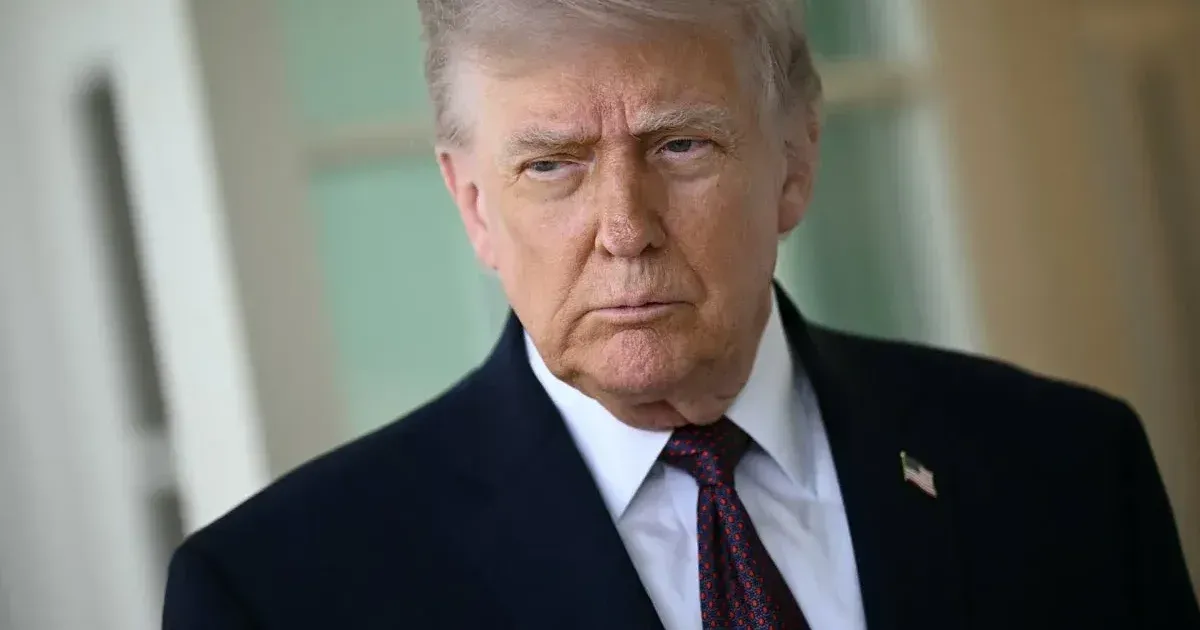
Donald Trump said the Iran war was nearing its end even as U.S. forces kept a tight maritime blockade around Iranian trade routes. The claim matters because the blockade was still doing real work. The April 15, 2026, remarks created a sharp contrast between the president's public confidence and the military posture still visible across the Persian Gulf.
Trump used a television interview to argue that the conflict had entered its final stage. Naval deployments, however, suggested that Washington was still relying on pressure rather than a completed diplomatic settlement. That gap matters because markets, allies, and regional governments read military movements as carefully as presidential statements.
The blockade has become the central test. If it continues, Iran remains under severe economic pressure and shipping risk stays elevated. If it eases, the administration will need to show what Tehran has agreed to and how compliance will be verified.
Blockade Complicates Peace Claim
U.S. commanders have described the maritime operation as a tool to restrict Iranian revenue and prevent military resupply. Such operations can create leverage, but they can also make de-escalation harder if either side treats the blockade as a point of national pride.
Trump's claim of progress may be aimed at domestic audiences tired of war costs. It may also be intended to pressure Iran by suggesting that Washington believes the endgame is already taking shape. Either way, the statement does not by itself end the operational risk in the Gulf.
For shipping companies and energy traders, the practical question is whether lanes reopen and insurance costs fall. Until that happens, the conflict remains an economic event as well as a military one.
What De-Escalation Would Require
A credible end to the war would need more than a public signal. It would likely require a ceasefire sequence, verification measures, prisoner or asset negotiations, and a plan for lifting or narrowing maritime restrictions. Without those steps, a peace claim can look premature.
Regional allies will also want clarity. Gulf states need to know whether commercial traffic can resume safely. European governments need to know whether energy markets will stabilize. China and other importers need to know whether crude shipments can move without interruption.
The administration can argue that pressure brought Iran closer to talks. Critics will argue that the same pressure risks miscalculation if the blockade remains in place while leaders talk about peace. That is the central uncertainty behind Trump's remarks.
For now, the war may be closer to a diplomatic turn than it was weeks earlier, but the blockade keeps the situation active. Until ships move normally and both sides describe the same settlement, the claim that the conflict is ending remains a political message rather than a settled fact.
The contradiction is why the story cannot be treated as a simple peace announcement. A leader can say a conflict is close to ending while the military keeps maximum pressure in place, but that creates uncertainty for everyone else. Commanders must keep enforcing orders, diplomats must decide whether public optimism helps or hurts talks, and businesses must decide whether to price risk as temporary or persistent. If the blockade is meant to be bargaining leverage, the administration will eventually need to explain what concession would cause it to ease. If it is meant to continue until Iran accepts broad U.S. terms, then the claim that the war is nearly over becomes much harder to sustain.
The domestic audience is just as important. War fatigue grows when costs continue after leaders suggest an end is near. Families see fuel prices, lawmakers see budget pressure, and allies see shipping lanes that remain dangerous. The White House can argue that pressure created the possibility of a deal, but it still needs a visible sequence from blockade to ceasefire to normal trade. Without that sequence, Trump's statement functions more as political reassurance than as operational guidance. The next signal will come from ships, negotiators, and insurance markets, not another interview.
Blockade Endgame
The risk is that each side interprets the same pressure differently. Washington may see the blockade as a final lever before diplomacy. Tehran may see it as proof that the United States wants surrender rather than settlement. Regional states may welcome restraint in public while privately fearing that a naval accident could restart escalation. That is why the end of the conflict has to be built through procedures, not mood. Hotlines, inspection rules, port access, verified cargo procedures, and phased relief all matter more than confident language. Trump's statement may still be useful if it prepares supporters for compromise. Presidents often need to describe a deal as victory before they can accept limits. But optimism becomes dangerous if it causes allies or markets to assume the crisis is solved. The blockade remains the visible measure. As long as it continues, the war is not fully ending; it is moving into a bargaining phase where mistakes can still carry large consequences.