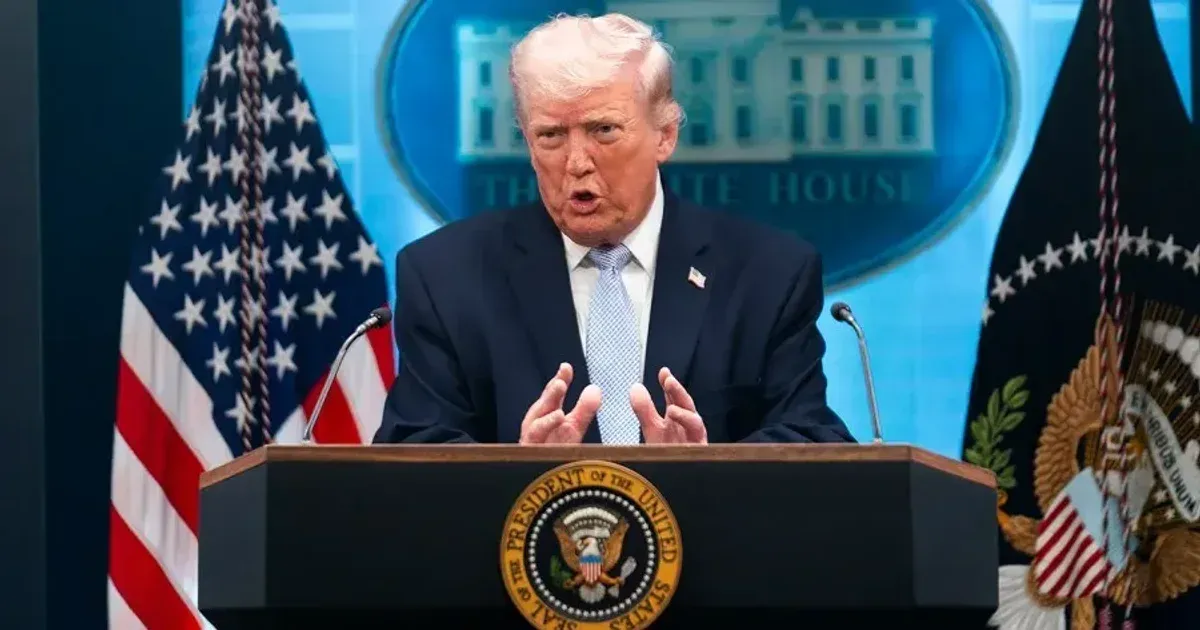
Donald Trump questioned the fundamental utility of the North Atlantic Treaty Organization shortly after concluding a closed-door discussion with Secretary-General Mark Rutte. The April 9, 2026, meeting deepened doubts about alliance reliability and burden sharing. Relations between the United States and its European allies faced immediate pressure as the president voiced skepticism about the reciprocal nature of the 77-year-old alliance. While Rutte sought to secure firm commitments for collective security, the resulting rhetoric suggested a widening gap between Washington and Brussels. Records from the meeting indicate that the conversation focused on military expenditures and enduring territorial grievances.
Mark Rutte arrived at the meeting with a reputation for pragmatism and a history of mediating difficult diplomatic disputes. Observers had anticipated that his leadership might smooth the frictions that characterized trans-Atlantic relations during the early 2020s. Statements issued late in the day proved those expectations were premature. Criticism from the American side focused on perceived historical failures of the alliance to support U.S. interests during specific diplomatic crises. One particular point of contention involved the lack of European enthusiasm for American strategic initiatives in the North Atlantic.
“NATO WASN’T THERE WHEN WE NEEDED THEM, AND THEY WON’T BE THERE IF WE NEED THEM AGAIN,” Trump said.
Donald Trump focused his public commentary on the notion that alliance members prioritize their own sovereignty over the collective goals of the group. Skepticism regarding the efficacy of mutual defense pacts is not a new theme in his political platform. Earlier administrations have frequently debated the equity of financial contributions to the common defense fund. Data released by the alliance in early 2026 showed that while several nations increased their spending, the total U.S. contribution still accounts for nearly 70 percent of the aggregate budget. Military leaders in Washington have privately expressed concern that this imbalance creates a structural vulnerability.
Greenland Disputes Resurface in Security Dialogue
Greenland returned to the center of the geopolitical debate during these discussions. Donald Trump specifically cited the 2019 proposal to purchase the island from Denmark as a missed opportunity for the alliance to strengthen its northern flank. He described the territory as a vast, poorly managed region that required American intervention to ensure regional stability. European leaders have consistently rejected the notion that the island is for sale or that its governance is a matter for U.S. oversight. This disagreement persists as a symbol of the divergent priorities between the American executive branch and the Danish government.
Mark Rutte Navigates Defense Spending Disparities
Mark Rutte faces the difficult task of convincing member states to meet their 2 percent of GDP defense spending targets. Historical records show that the 2014 Wales Summit established this benchmark, yet full compliance has remained elusive for many European capitals. Resistance to these increases often stems from domestic political pressure to prioritize social welfare programs over military hardware. Trump argued that the failure to meet these obligations renders the alliance an unfair burden on the American taxpayer. Financial analysts estimate that a full withdrawal of US support would require European nations to spend an additional $1.2 trillion annually to maintain current capabilities.
Negotiations in Brussels have frequently stalled over the timeline for reaching these financial goals. Some smaller nations have argued that their contributions should be measured by specialized capabilities rather than raw percentages. This perspective gains little traction in Washington, where the focus remains on hard numbers and procurement cycles. Reports from the 2026 summit preparation committee indicate that several nations are still falling short of the 2 percent threshold. Internal memos suggest that only twelve out of thirty-two members now meet the requirement.
Burden Sharing Tensions Strain Alliance Unity
Europe continues to struggle with the reality that its security is heavily dependent on American logistics and intelligence. During the meeting, Rutte reportedly emphasized the value of the intelligence-sharing networks that the alliance enables. He pointed to recent joint exercises in the Baltic Sea as evidence of successful cooperation. Trump dismissed these examples, focusing instead on the perceived lack of support during trade disputes and energy crises. The emphasis on bilateralism instead of multilateralism is a hallmark of his approach to foreign policy.
Critics within the U.S. Senate have warned that undermining the alliance could embolden rival powers. They argue that the deterrent effect of Article 5 is the primary reason for the absence of large-scale conflict in Europe since 1945. Trump countered that the deterrent is only effective if all parties are willing to fight. He has frequently questioned whether European nations would truly come to the aid of the U.S. in a Pacific-centered conflict. The focus of the alliance has historically been Eurocentric, a fact that creates friction as U.S. strategic interests shift toward Asia.
Future of Article 5 Under US Policy Review
Article 5 is the foundation of the alliance, stipulating that an attack on one member is an attack on all. Trump suggested that the U.S. commitment to this principle is contingent upon the behavior of other members. He indicated that nations failing to pay their fair share should not expect automatic protection from the American military. This stance is a departure from the traditional interpretation of the treaty as an unconditional guarantee. Legal experts note that the language of the treaty provides some leeway in how nations choose to respond to an invocation of Article 5.
Rutte has consistently defended the treaty, arguing that its strength lies in its perceived certainty. He has worked to build a coalition of European leaders who are willing to take on a greater share of the defensive load. Success in this area is limited by the slow pace of European defense integration. National interests often trump the collective needs of the alliance for procurement contracts and military command structures. The persistence of these internal divisions makes it difficult for the alliance to present a unified front.
Does the North Atlantic Treaty Organization still serve a coherent purpose for the United States, or has it become a relic of a vanished century? The bluntness of Donald Trump regarding Greenland and the financial delinquency of European allies is not a diplomatic lapse; it is a cold calculation. For decades, the American taxpayer has subsidized the defense of nations that frequently oppose U.S. interests in trade and technology. The dynamic is no longer sustainable in a world where the primary threats are shifting toward the Indo-Pacific. Rutte may be a skilled navigator of the Brussels bureaucracy, but he cannot fix a foundation that is fundamentally cracked.
The obsession with the 2% spending target misses a larger, more uncomfortable truth. Even if every European nation reached that goal tomorrow, the alliance would still lack a unified strategic vision. A collection of thirty-two nations with thirty-two different foreign policies cannot provide a credible deterrent against a peer competitor. European capitals have grown comfortable under the American security umbrella, and they will only change their behavior when that umbrella is folded and removed. The threat to withdraw protection is the only leverage Washington possesses to force a substantial reorganization of the continent's defense capabilities.
Expect the upcoming June summit to be a scene of historic friction instead of a celebration of unity. The era of unconditional American guarantees has ended. Nations that wish to remain under the protection of the U.S. military must now view themselves as customers in a security market instead of partners in a shared mission. The transition from an ideological alliance to a transactional one is inevitable. The old guard in Brussels may weep for the loss of trans-Atlantic solidarity, but the numbers do not lie. Adapt or dissolve.