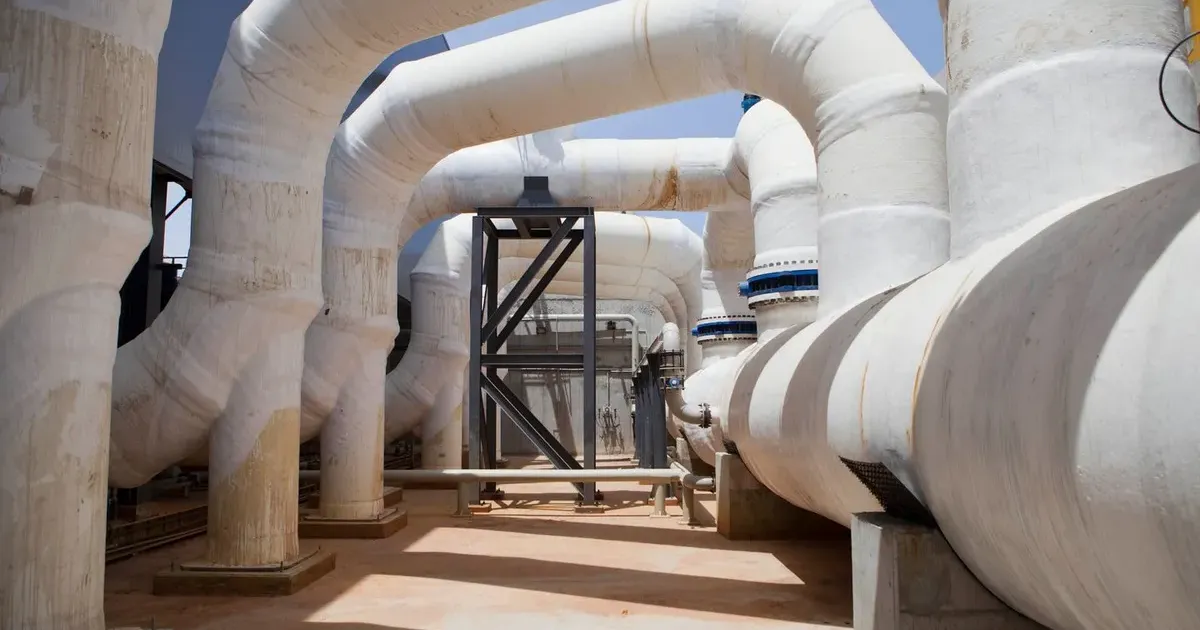
Donald Trump's threat to destroy Iranian desalination plants pushed the U.S.-Iran war debate into a category far more dangerous than ordinary military pressure.
Energy sites, ports, bridges and military infrastructure had already been part of the administration's coercive language. Water systems are different. They sit close to civilian survival, and the legal burden for targeting them is far higher than the rhetoric of toughness suggests.
Even if no strike followed, naming desalination plants as possible targets told Tehran, Gulf governments and international lawyers that Washington was willing to discuss pressure against infrastructure whose public meaning is drinking water, sanitation, hospitals, local economies and emergency services.
Water Is Not A Normal Pressure Point
Military planners often use the term dual-use for infrastructure that serves both civilian and military purposes. Power grids, ports, roads and communications networks can fall into that debate. Desalination plants are harder to fold into it without crossing a serious threshold.
Their primary function is civilian water access. A government may argue that a specific plant supports military facilities, but international humanitarian law still demands distinction, necessity and proportionality. If the predictable effect is a major disruption of drinking water, the justification has to be extremely strong.
The Legal Risk Is Bigger Than The Sound Bite
Legal experts reacted sharply because threats against civilian infrastructure can be read as evidence of intent, not just political theatre. A president can threaten military targets and still keep a campaign inside a recognizable legal frame. Threatening water systems makes that frame much harder to defend.
The key issue is not whether the United States has the capacity to damage Iranian infrastructure. It does. The issue is whether a strike on water facilities would be militarily necessary, proportionate and designed to avoid civilian harm. Casual public language does not solve any of those questions.
Iran's Water Stress Raises The Civilian Cost
Iran does not rely on desalination to the same extent as some Gulf states, but parts of the country face serious water scarcity, drought pressure and urban supply strain. Coastal plants can support local communities, industry and emergency resilience in places where alternatives are limited.
Destroying those systems would not look like a clean strike on a weapons depot. It could mean hospitals scrambling, local authorities rationing, factories shutting down and repair crews working amid damaged power, pumps, chemicals and intake systems.
The Gulf Would Hear The Threat Personally
The threat also creates problems for U.S. partners in the Gulf. Countries such as the UAE, Qatar, Kuwait, Bahrain and Saudi Arabia rely heavily on desalination. They understand that water plants are not ordinary pieces of infrastructure. They are national survival systems.
If Washington normalizes the idea of attacking desalination in Iran, it weakens the taboo that protects similar plants across the region. Gulf governments may want Iran's military pressure reduced, but they do not want a precedent that turns water access into a bargaining chip.
Retaliation Could Spread The Water War
The danger is not only the first strike. Iran could answer by threatening or attacking desalination facilities in Gulf states that host U.S. forces or support American operations. The retaliation could turn a military conflict into a regional water-security crisis.
Desalination networks are concentrated, power-hungry and difficult to repair quickly during conflict. A small number of damaged facilities can produce broad consequences, especially in countries with limited freshwater alternatives.
Environmental Damage Would Not Stay Contained
Desalination plants are coastal industrial systems. They involve pumps, power supply, chemicals, brine discharge, intake structures and marine ecosystems. Destroying them can create contamination risk and long repair timelines.
The aftermath matters because civilian harm is not measured only by the blast. It includes what happens in the days and weeks after the strike: water trucking, hospital resilience, sewage systems, food service, heat exposure and disease risk.
The Threat Weakens The Limited-War Claim
Trump's desalination threat was not strategic discipline. It blurred the line between coercing a government and punishing the population that government controls. The distinction is central to the law of war and to the political legitimacy of any limited campaign.
The United States can damage Iranian targets. Military capacity has never been the question. The question is whether doing so would keep Hormuz open, isolate Tehran, restore diplomacy or protect U.S. partners. Targeting water infrastructure would likely do the opposite: hand Iran a moral argument, frighten Gulf allies and stain the claim that the campaign is bounded by military necessity.