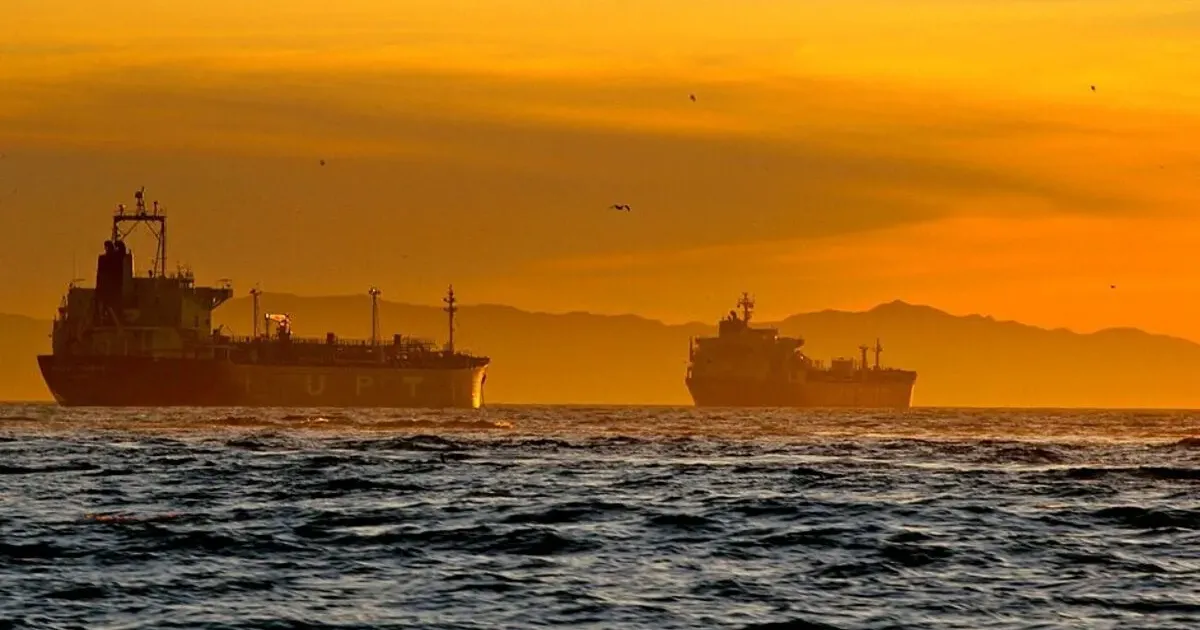
President Donald Trump's earlier willingness to end the Iran military campaign even without fully reopening the Strait of Hormuz looks much weaker after the July return of strikes and shipping attacks. In March, the logic appeared political and economic: reduce U.S. military exposure, avoid a long naval clearance mission and let regional actors carry more of the burden. The approach offered a quick exit from the war story. It did not solve the chokepoint.
Hormuz is not a side dispute in the U.S.-Iran conflict. It is the economic center of gravity. Iran can threaten ships, exploit disputed routing, use drones or missiles and make insurers treat the waterway as unstable even when some traffic still moves. The United States can strike targets, escort vessels and insist the strait is open. Shipping firms still decide whether the route feels safe enough to use at normal cost. The gap is where the March exit idea breaks down.
The Exit Logic Was Built for Politics
There was a clear domestic reason for Trump to want a narrow definition of success. War raises fuel anxiety, inflation pressure, budget strain and voter fatigue. A president heading into a difficult political season has every incentive to say the military objective has been met and shift responsibility for the waterway to others.
The strategy is not irrational. It makes it incomplete. Ending strikes is easier than restoring routine commercial confidence. The United States could damage Iranian assets and still leave Tehran with enough asymmetric leverage to make the route expensive. A campaign can stop on paper while the maritime risk keeps operating.
Hormuz Punishes Half-Settlements
The strait is a narrow passage with outsized leverage. Mines, fast boats, missile batteries, drones, legal claims and route disputes can all change the cost of moving oil and gas without requiring Iran to defeat the U.S. Navy. A settlement therefore that leaves navigation terms vague is not stable. It invites each side to test the boundary.
July showed exactly that danger. Renewed attacks on commercial shipping, U.S. strikes and Iranian claims about control turned the supposed off-ramp into another escalation cycle. Even when officials insisted some lanes remained open, the market question was different: open under what risk, with what escorts, at what insurance price and under whose political authority?
Markets Price Reliability, Not Declarations
Energy markets do not respond only to presidential confidence. They respond to route reliability. If tankers need escorts, if war-risk premiums rise, if crews face missile or drone threats, and if alternate routes become more attractive, the conflict is still imposing a cost. The route can be technically passable and commercially degraded at the same time.
The distinction matters for U.S. credibility. Declaring the strait open is not the same as making normal traffic return. Oil traders, shippers and insurers watch behavior, not speeches. They care whether attacks stop, whether mines are cleared, whether Iran can credibly threaten retaliation and whether the United States is willing to sustain the force posture needed to keep traffic moving.
Iran Does Not Need a Naval Victory
Iran's leverage is not based on winning a conventional sea battle. It is based on making the cost of certainty high. A few attacks, threats or disputed claims can move premiums, delay cargoes and force Washington to spend resources reassuring the market. The uncertainty gives Iran a powerful position for a state trying to outlast U.S. political patience.
This is the weakness in an exit plan that leaves reopening for later. If Iran can keep the waterway abnormal after the United States declares success, Tehran can argue that American pressure did not restore the key economic condition. It does not have to control every mile of Hormuz. It only has to make normalcy feel conditional.
The U.S. Also Faces a Commitment Trap
The opposite path is not clean either. A full campaign to impose reliable navigation could require escorts, mine-clearing assets, repeated strikes, regional basing, diplomatic coordination and a willingness to absorb casualties or retaliation. A sustained commitment is how a limited war becomes a longer commitment with no simple endpoint.
Trump's problem is that both choices carry political cost. Leave too soon and the strait remains a live pressure point. Stay too long and the war becomes the kind of open-ended Middle East burden he has often criticized. The administration's task is not to find a painless option. It is to define the minimum maritime condition that makes withdrawal credible.
Commercial Traffic Sets the Exit Standard
The July escalation makes the earlier exit talk look like a bet that Hormuz could be postponed. It cannot. The strait is where military action, oil prices, insurance markets and diplomatic credibility meet. A ceasefire that does not settle practical navigation rules is a pause, not an exit.
The United States may still avoid a wider war, and it may still push Iran toward limits on maritime pressure. But a clean withdrawal requires more than a statement that ships are moving. It requires enough confidence for ordinary commercial traffic to move without treating every voyage as a political gamble. Until that happens, Hormuz remains the unresolved test of the Iran campaign. Washington can lower the volume of the war, but it cannot close the file while the world's most important oil route still feels contested.