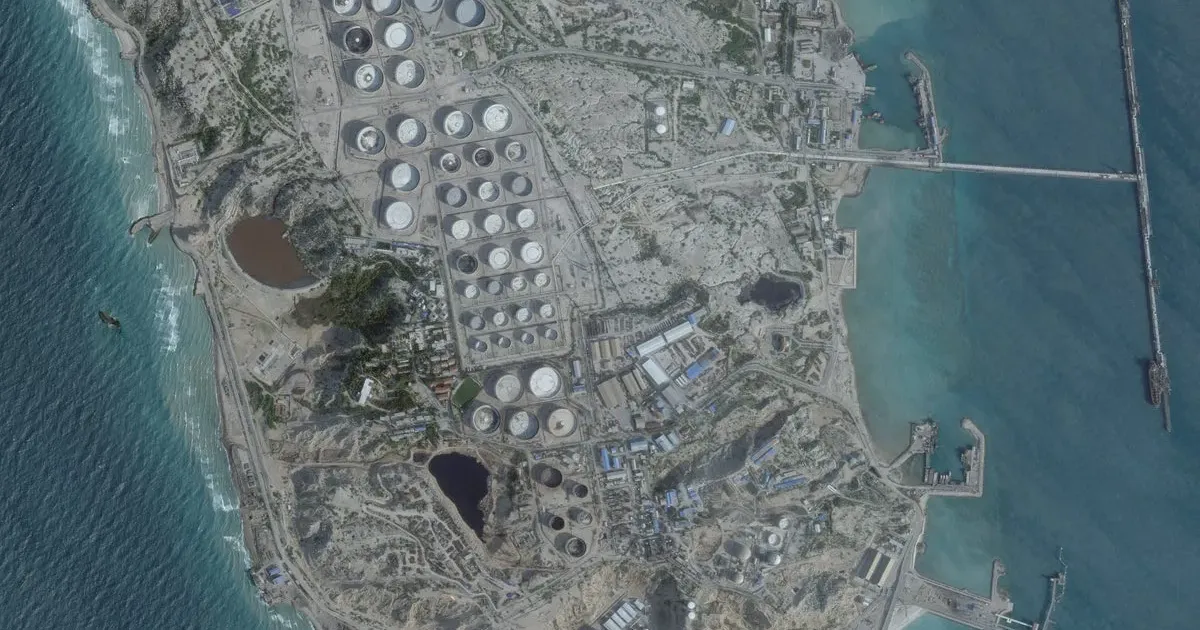
Donald Trump's pressure campaign against Iran has pulled oil infrastructure into the centre of the war debate. After renewed U.S. strikes and a revived blockade posture, Trump warned that Iranian infrastructure could face heavier attack if Tehran did not accept a deal. He also left open, even if cautiously, the possibility of pressure on Kharg Island, Iran's main crude-export hub.
That changed the character of the argument. Striking missile sites, drone facilities or coastal military positions can be framed as a way to protect shipping and reduce immediate threats. Threatening energy infrastructure raises a different set of questions: legal authority, market shock, allied tolerance and whether Washington is using control of oil as leverage because it still lacks a clear diplomatic end state.
Kharg Island Is More Than A Target
Kharg Island is tied directly to Iran's ability to sell crude and convert oil into state revenue. It is not just another point on a military map. Any operation around it would be read through the history of sanctions, export pressure and outside powers trying to control the economic lifelines of states they oppose.
There is a large difference between hitting nearby military capacity and trying to seize, disable or control an export hub. The first may be defended as a military operation linked to shipping security. The second starts to look like coercion against a sovereign state's economic base. At that point, market risk and legal risk begin to merge.
Oil Markets Price The Threat Before The Strike
Markets do not wait for a full closure or occupation. Traders price the possibility of disruption as soon as the threat looks plausible. Tanker routes, insurance costs, refinery planning and Asian import bills all react before the first barrel is physically blocked.
Rhetoric around Kharg, Hormuz and Iranian ports can therefore lift crude prices even when traffic continues. The Gulf is a confidence system as much as a shipping system. If owners believe a vessel could be detained, hit, delayed or priced into a war-risk premium, supply tightens in practice before official volumes fall. The political speech becomes a freight cost.
The Uranium Demand Cannot Be Treated Like Cargo
The nuclear issue belongs in the same pressure campaign, but it should not be blurred into fantasy logistics. U.S. demands around Iran's enriched-uranium stockpile, inspections and enrichment limits are policy questions first. Physically removing sensitive material from fortified Iranian sites during an active conflict would be an extraordinarily dangerous military and technical undertaking.
Treating nuclear material as if it can simply be collected once enough pressure is applied hides the policy's complexity. Verification, chain of custody, site access, Iranian consent and IAEA involvement are all indispensable. Without those pieces, the demand risks becoming another slogan attached to force rather than a workable nonproliferation plan.
Legal Authority Changes With The Objective
A U.S. president has broad practical power to order military action in some circumstances, especially when U.S. forces, allies or shipping are under threat. That does not mean every use of force carries the same legal or political weight. Protecting navigation is one argument. Taking control of sovereign energy assets is another.
Congress, allied governments and international institutions would all have reason to ask where the operation begins and ends. Is the goal to neutralize a military threat to vessels? Is it to force Iran back to talks? Is it to deny Tehran oil revenue? Is it to control an export route until political demands are met? Each answer creates a different legal burden.
Allies Want Containment, Not Chaos
Regional partners want Iran contained, but they also want stable energy flows and predictable U.S. decision-making. Gulf governments live with the geography after Washington's speeches end. They have ports, refineries, airports, desalination plants, expatriate populations and sovereign wealth strategies tied to regional stability.
A policy that turns energy infrastructure into a bargaining chip can pressure Tehran. It can also make every producer wonder where the line is. Once control over export facilities becomes a tool of wartime leverage, the precedent does not stay neatly confined to Iran. It tells the region that sovereignty is conditional when oil becomes strategically useful.
Resource Leverage Can Help Tehran's Story
For Iran, the threat creates both danger and propaganda value. Tehran can use it to argue that the war is not about nuclear restraint or maritime safety, but about taking Iranian resources. The claim need not persuade everyone; it only has to help hardliners frame resistance as national defense rather than regime survival.
Controlling oil is not the same as controlling the conflict. An administration can bomb military sites, threaten export hubs and push markets into fear, but none of that answers what political settlement comes next. If the goal is a safer Gulf, a resource-control posture works against it. It may frighten Tehran. It also frightens everyone else who has to live beside the strait.