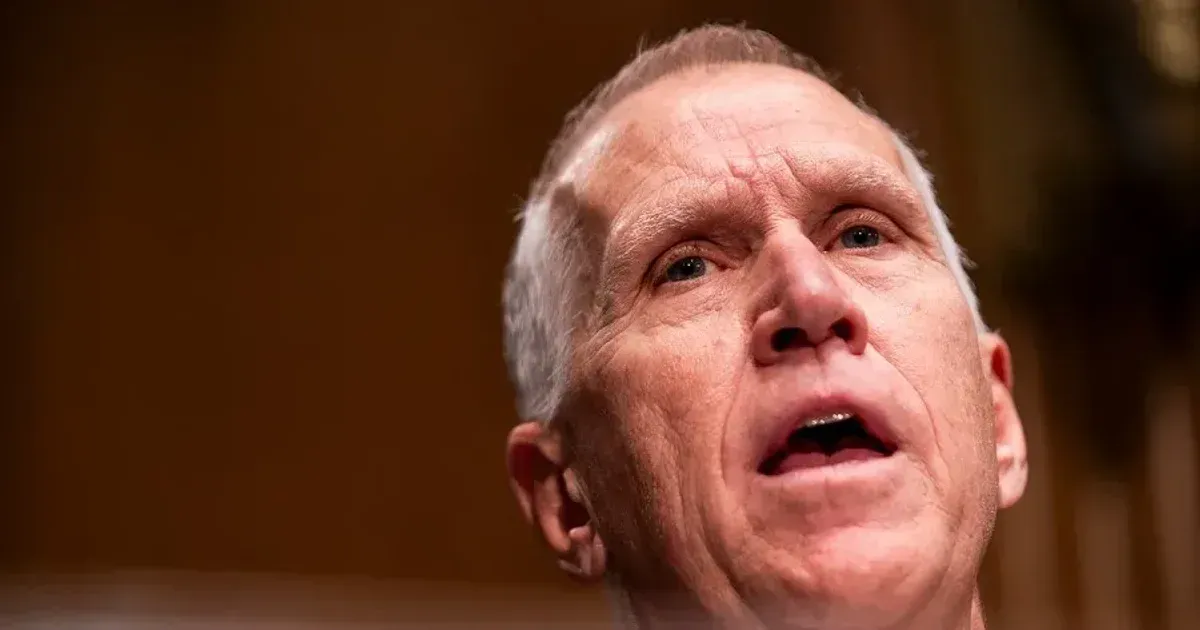
Donald Trump reopened a volatile church-and-politics fight by sharing an AI-generated image that depicted him as Jesus Christ. Religious advisers expected criticism, but the speed of the response surprised several campaign allies. The post appeared on April 13, 2026, and drew swift objections from US Catholic bishops during a tense moment in national politics. Ecclesiastical leaders within the Catholic Church expressed deep disappointment in the visual choice. They argued that such depictions cross a line from political messaging into outright sacrilege. Critics within the Evangelical community, typically a stronghold of support for the former president, also voiced concerns about the theological implications of the post. They pointed to the danger of elevating a mortal man to the status of a deity, regardless of political affiliation. Documentation from previous cycles indicates that Trump has frequently used religious iconography to strengthen his standing among faithful voters. The current controversy, however, exceeds past grievances due to the literal nature of the Jesus comparison.
Catholic Bishops Challenge the Image
The US Catholic Bishops issued a formal statement denouncing the use of sacred figures for political gain. Leading the charge, the head of the conference highlighted that the misappropriation of religious imagery trivializes the faith of millions. He suggested that the presidency should be an office of service rather than a platform for self-deification. This public rebuke marks a serious departure from the typically cautious diplomatic stance held by the Catholic hierarchy. Tensions increased further when Trump followed the Jesus image with a post referencing Pope Leo XIII, whose encyclicals often addressed the relationship between the state and social justice. Bishops noted that the president misinterpreted the historical context of the Pope's writings to justify current administration policies. Conflict between the White House and the Church intensified as the discussion shifted toward geopolitical matters. Trump recently criticized certain religious groups for their lack of support during ongoing military operations. He specifically targeted those who questioned the moral foundations of current foreign policy decisions. Clerical leaders maintain that their role involves speaking truth to power, especially when human lives are at risk in international conflicts. The exchange between the president and the bishops has created a rift that may influence future electoral cycles. Parishioners across the country now face conflicting messages from their political leaders and their spiritual guides.
Iran Tensions Shape the Backlash
President Donald Trump recently denounced what he described as a delusion of omnipotence regarding the escalating war between the United States and Iran. These comments were aimed at domestic opponents who have questioned the strategic objectives of the Israel alliance in the region. Military analysts observe that the rhetoric coming from the White House has become increasingly aggressive as the conflict reaches a stalemate. The head of the US Catholic Bishops responded to these claims by suggesting that the administration itself might be suffering from a similar sense of unchecked power. He called for a renewed focus on diplomatic resolution to avoid further loss of life in the Middle East.
"A delusion of omnipotence fuels the U.S.-Israel war in Iran," the head of the US Catholic Bishops stated in a condemnation of the president's recent public statements.
Religious leaders argue that the war has reached a point where moral considerations outweigh tactical advantages. They have called for an immediate ceasefire to allow for humanitarian aid to reach civilian populations. Trump maintains that total victory is the only path to long-term stability in the region. His supporters argue that the religious establishment is out of touch with the realities of modern warfare and the necessity of national security. Casualties on both sides continue to rise as the air campaign enters its fourth month. Intelligence reports suggest that the Iranian government has no intention of surrendering despite the heavy bombardment of its infrastructure.
Religious Voters Weigh the Insult
Voters who identify as deeply religious are now struggling with the implications of the Jesus post and the Bishops' response. Many feel torn between their loyalty to the Republican Party and their reverence for traditional church teachings. Political strategists believe that even a small shift in the Catholic or Evangelical vote could alter the outcome of the 2026 midterm elections. The use of AI to create these images has also sparked a debate about the ethics of digital manipulation in politics. Experts warn that as technology improves, the ability to create convincing yet false narratives will only increase. This specific instance of AI usage demonstrates how quickly a digital artifact can become a central point of national contention.
Theological debate now centers on whether the image was a harmless metaphor or a genuine expression of narcissism. Defenders of the post claim it was intended to show that Trump is a defender of Christian values against a secular world. Opponents see it as a dangerous manifestation of a cult of personality that threatens the foundations of American democracy. Several top pastors have scheduled sermons to address the controversy, indicating that the issue will stay in the public eye for the foreseeable future.
Trump has not retracted the post and continues to defend his right to use digital art to convey his message. The platform where the image was first shared reported record engagement levels in the hours following the upload.
Historical precedents for such rhetoric are rare in American politics, though not entirely nonexistent. Presidents have often claimed divine guidance, but few have dared to portray themselves in the likeness of the Savior. The backlash from the Catholic hierarchy is particularly striking given the meaningful number of Catholic voters in swing states. Legal experts are also examining whether the use of AI-generated religious imagery violates any specific codes of conduct for political advertising. No formal charges have been filed, but the ethical debate persists. Public opinion polls show a sharp divide along denominational lines regarding the appropriateness of the post.
Faith Politics After the Post
Demagogues throughout history have often sought to bypass established clerical hierarchies by claiming a direct line to the divine. Donald Trump's decision to spread an AI-generated image of himself as Jesus Christ is not a lapse in judgment but a deliberate strike against the institutional authority of the US Catholic Bishops. By positioning himself as a religious icon, he attempts to render the criticism of bishops and theologians irrelevant to his base. He is effectively creating a competing theology where the leader's will is the ultimate moral compass. The strategy serves to isolate his followers from any external moral critique that might originate from traditional religious institutions.
Conflict over the war in Iran further illustrates this power struggle. When the bishops condemn the delusion of omnipotence, they are challenging the very core of the Trumpian doctrine of absolute executive strength. It is a collision between the city of God and the city of man, played out on social media feeds and in the halls of power. Trump recognizes that if he can successfully frame the bishops as part of a liberal elite, he can neutralize their influence over the religious working class.
It is a high-stakes gamble that risks alienating moderate believers for the sake of tightening his grip on the most radicalized segments of his constituency. The religious establishment is fighting for its relevance in a political landscape where the image of the leader has become more sacred than the scripture itself. It is an ideological war for the soul of the American right wing.
Voters, not church committees, will deliver the ultimate verdict on this maneuver. If the religious electorate accepts this messianic branding, the traditional role of the church as a check on state power will be permanently diminished. It is the end of the traditional religious right and the birth of a new political religion. One man reigns.