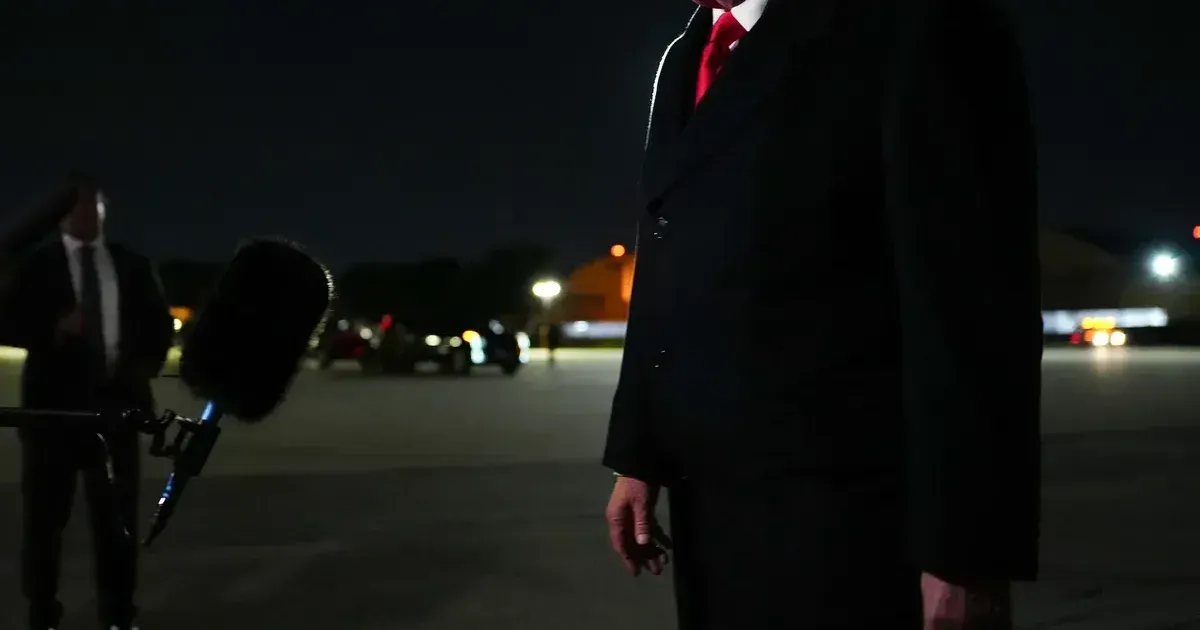
Donald Trump has opened a direct political fight with Pope Leo XIV over war, diplomacy and the loyalties of American Catholics. His attack on the first American pontiff followed Vatican criticism of military escalation in the Middle East. Campaign advisers now have to measure the value of confrontation against the risk of offending Catholic voters. Vatican officials also have to decide how much oxygen to give the dispute. The clash sharpened on April 13, 2026, when Trump's social media message forced both religious and campaign advisers to respond.
Papal Criticisms Focus on Iran War Strategy
Arguments over military intervention in the Middle East have long divided political and religious spheres. Pope Leo XIV has consistently called for a ceasefire and humanitarian aid corridors since the conflict intensified. Trump, by contrast, views these calls for restraint as a failure of leadership. He insisted that the pontiff should focus on spiritual matters instead of attempting to influence foreign policy decisions. One social media post specifically commanded the Pope to stop catering to the radical left in relation to the defense of American interests. National security analysts point out that these comments could polarize Catholic voters who are already divided on the merits of the conflict.
“Stop catering to the Radical Left,” Donald Trump wrote in a social media post on Sunday.
Military planners in Washington have monitored the Vatican's influence on global public opinion regarding the war. Pope Leo XIV holds considerable sway over populations in Europe and Latin America where anti-war sentiment is high. Trump's criticism aims to neutralize this influence by framing the Pope as a partisan actor. Coverage highlighted Trump’s opposition to the pontiff’s approach to global justice. The former president believes that a more aggressive stance is required to protect the West. He continues to claim that the current papal administration is failing to address the realities of modern warfare.
Political Fallout Among American Catholic Voters
Catholic voters represent a critical demographic in the United States, often acting as an indicator for national elections. Trump's decision to attack the first American pope carries large political risks in states with high Catholic populations like Pennsylvania and Wisconsin. Republican strategists, however, believe that the base will prioritize national security over religious affiliation. These advisors suggest that many conservative Catholics already feel alienated by the Pope's views on climate change and wealth redistribution. Leo XIV has often spoken about the moral failures of modern capitalism, which put him at odds with the Republican platform. Trump's rhetoric taps into this existing ideological friction. The feud centers on the necessity of the war in Iran and the resulting military escalation.
Religious identity in America is undergoing a period of intense politicization. Recent polling indicates that traditionalist Catholics are more likely to support Trump than the current occupant of the Vatican. These voters often prioritize issues like border security and judicial appointments over the Pope's social justice initiatives. Trump's accusation that the Pope is weak on crime connects with this specific audience. He has repeatedly used the phrase to describe both domestic political opponents and international figures. By applying the label to a religious leader, he expands the definition of his political enemies to include the papacy.
Leo XIV Breaks Tradition as First American Pontiff
History changed for the Catholic Church when an American cardinal was elected to the papacy. Leo XIV brought a specific cultural perspective to the Vatican that initially suggested a bridge between the United States and the Holy See. This relationship has soured as his tenure progressed and his policy positions shifted further to the left. His American background has not shielded him from domestic political criticism. Instead, his familiarity with the American political system may have made him a more inviting target for Trump. The former president treats him as a domestic political rival from an opposing party.
Tradition usually dictates that American presidents and candidates maintain a level of deference toward the Holy Father. Trump has disregarded these norms since his early political career, previously clashing with Pope Francis over immigration and border walls. The current dispute over Iran is a more direct challenge to the Pope's authority as a global peacemaker. Leo XIV continues to advocate for a diplomatic solution that avoids further bloodshed in the region. Trump views this as a dangerous form of pacifism. He stated that the Pope must change his tune if he wants to remain relevant in the eyes of the American public.
Social media has provided a direct channel for political leaders to bypass diplomatic protocols. Trump's Sunday outburst reached millions of people instantly, forcing the Vatican to consider a formal response. While the Holy See typically avoids engaging in direct political mudslinging, the severity of the weak on crime label may require a clarification. The attack showed that there were no boundaries on whom Trump might target. This includes the leader of the world's largest Christian denomination. Such digital broadsides are now a standard part of his communication strategy.
Voters who identify as Catholic must now reconcile their religious devotion with their political allegiances. Some will find Trump's boldness refreshing while others will see it as a lack of respect for the office of the papacy. Public records show that the Catholic Church remains one of the most influential non-state actors in international relations. Trump's attempt to undermine this influence reflects a broader trend of challenging established institutions. He told his audience that the Pope needs to get his act together to prevent further global instability. The religious leader has yet to issue a statement addressing the specific social media posts from Sunday.
Catholic Voters and War Politics
Does a politician gain anything by picking a fight with a man who speaks for over a billion souls? Donald Trump is betting that the answer is yes. It is not a lapse in judgment or an emotional outburst. It is a calculated demolition of a traditional power structure that he no longer finds useful. By branding Leo XIV as a pawn of the radical left, Trump is effectively excommunicating the Pope from the American conservative movement. He is telling his followers that their loyalty to the MAGA brand must outweigh their loyalty to the Vatican. It is a bold, perhaps reckless, assertion of secular authority over the divine.