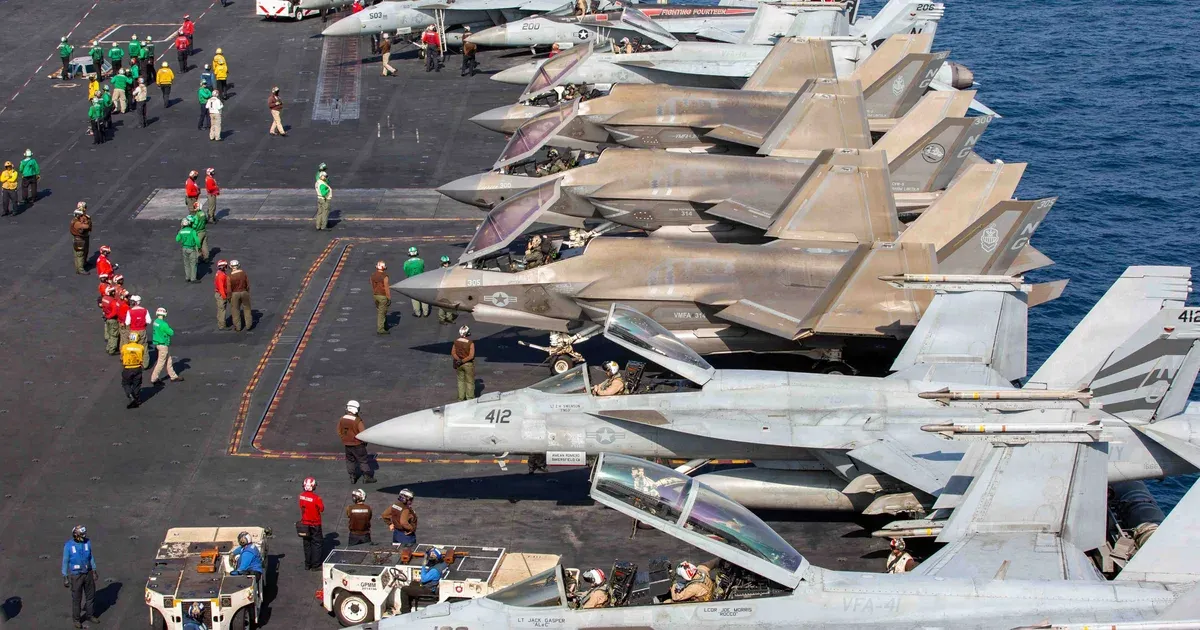
President Donald Trump intensified military pressure on Iran as the maritime blockade in the Persian Gulf moved deeper into a dangerous phase. The April 6, 2026 order put the Strait of Hormuz, energy markets and regional diplomacy under immediate strain. Iranian military forces continue to obstruct the Strait of Hormuz despite repeated warnings from the White House regarding the necessity of free global trade. Conflict between these nations entered a more volatile phase following an Easter message from the president that Iranian officials characterized as vulgar and inflammatory. Tehran responded with threats of further retaliation against Western assets if the naval presence in the region increases. Investors in London and New York are now pricing in a prolonged disruption to energy supplies. Markets remain sensitive to every rhetorical shift from the Oval Office.
Hormuz Shipping Lane Stalemate and Market Volatility
Asian markets opened with modest gains on April 6, 2026, as traders attempted to calculate the risks of a broader regional war. Nikkei 225 and Hang Seng index fluctuations reflect deep uncertainty about whether President Trump will enforce his looming deadline on Tehran. Crude oil prices climbed steadily throughout the morning session as the physical blockade of the Strait of Hormuz enters its third week. Every tanker delayed adds to the mounting insurance premiums for shipping companies operating in the Gulf of Oman. Traders are focusing on the potential for supply chain collapses if the primary artery for Middle Eastern oil remains closed. Economic data from Tokyo suggests a sharp rise in manufacturing costs is already underway.
Tehran maintains its position that the closure of the waterway is a direct response to American economic sanctions. Newsweek reported that Iranian leadership issued a formal warning to the Trump administration following the social media posts shared over the Easter holiday. Military analysts suggest the rhetorical hostility has eliminated any immediate path toward a ceasefire. Diplomatic channels in Switzerland have reportedly gone silent as both sides prepare for further kinetic engagement. Ships currently anchored outside the strait are being advised by maritime security firms to maintain a high state of alert. Projections show global energy prices could reach record highs by the end of the month.
Financial institutions are closely monitoring the White House for any sign of a policy reversal or a sudden escalation. Reuters reported that several large investment banks have revised their global growth forecasts downward based on the maritime standoff. Iranian state media continues to broadcast footage of naval drills meant to demonstrate the difficulty of clearing the mines currently blocking the channel. President Trump has countered these displays by moving additional carrier strike groups into the North Arabian Sea. Defense contractors in the United States have seen a surge in orders for precision-guided munitions. Logistics companies are rerouting vessels around the Cape of Good Hope to avoid the conflict zone.
Casualties Mount From Iranian Missile Strikes in Israel
Missiles launched from Iran struck several urban centers in Israel on April 6, 2026, causing meaningful damage to civilian infrastructure. Joint U.S.-Israeli air defense systems intercepted dozens of projectiles, but several warheads penetrated the shield to hit targets in Haifa and Tel Aviv. Emergency services in Haifa confirmed that multiple casualties have been reported following a direct hit on a residential complex. This strike marks one of the most serious breaches of Israeli airspace since the current hostilities began in February. Smoke rose from the Mediterranean coast as military helicopters transported the wounded to nearby trauma centers. Defense officials in Jerusalem are coordinating with the Pentagon on a proportionate response. Recent missile strikes in Israel have forced regional defenses to prepare for further incoming barrages.
President Donald Trump announced “major combat operations” against Iran on Feb. 28, with large joint U.S.-Israeli strikes.
Action in the northern Galilee region has also intensified as proxy groups affiliated with Tehran launched coordinated rocket barrages. Israeli Defense Forces have responded with artillery fire and targeted airstrikes against launch sites across the border. Casualties on the ground have created a sense of urgency within the Israeli cabinet for a more decisive military solution. President Trump has reaffirmed his commitment to the security of Israel while emphasizing that the United States will not tolerate attacks on its allies. Intelligence reports suggest that the missiles used in the latest barrage were sophisticated long-range models capable of evading traditional radar. Hospitals in central Israel are operating at full capacity to handle the influx of injured residents.
Evidence of the destruction in Haifa has circulated widely on social media, showing debris-strewn streets and damaged utility lines. Local authorities have implemented a mandatory curfew in affected areas to enable search and rescue operations. Iranian officials have stated that these strikes are a legitimate response to the joint operations initiated by Washington and Jerusalem on February 28. Defense analysts observe that the precision of the Iranian strikes has improved since previous encounters. Conflict on the ground is now matched by a fierce information war as both sides release conflicting reports on the number of casualties. Rescue workers are still searching through the rubble of a collapsed shopping center.
White House Deadline and Global Economic Reactions
Administration officials in Washington have set a strict deadline for the cessation of Iranian missile activity and the reopening of shipping lanes. President Trump has indicated that failure to meet these requirements will result in a serious expansion of the current combat operations. Pentagon planners are reportedly reviewing targets associated with Iranian energy production and command centers. Market reactions in the United States have been characterized by a flight to safety, with gold prices reaching new peaks. Bond yields have fluctuated as investors weigh the inflationary impact of a potential oil shock. Global shipping giants like Maersk have suspended all bookings through the region until further notice.
Domestic political pressure is also mounting as energy costs at the pump begin to rise across the American Midwest and Northeast. While some lawmakers have called for restraint, others are pushing for a total blockade of Iranian ports. President Trump has used his public platforms to maintain a hardline stance against what he describes as Iranian aggression. Tehran remains defiant, asserting that it can withstand a long-term conflict through its domestic resource base. Regional powers like Saudi Arabia and the United Arab Emirates have increased their own security postures to prevent a spillover of the violence. The prospect of a wider regional fire is now the primary concern for international diplomats at the United Nations.
Commanders at United States Central Command are overseeing the deployment of stealth fighters to regional airbases. Joint military exercises with regional partners have been transitioned into active patrol missions to protect commercial interests. Intelligence gathered by surveillance drones suggests that Iranian missile batteries are being repositioned to avoid detection by U.S. satellites. Military hardware continues to flow into the region at a pace not seen in decades. President Trump has suggested that the current operations are necessary to restore the international order and ensure the safety of global commerce. Civilian air traffic over the Persian Gulf has been redirected to avoid potential combat zones.
Regional Escalation Risk
Escalation is the only currency in a conflict where both sides have abandoned the pretense of diplomacy. Washington appears to be operating under the delusion that a few high-profile missile strikes and a vulgar social media presence will force a regime like Tehran into submission. Historical precedents suggest that such blatant displays of military theater often embolden the target rather than demoralizing them. By cornering the Iranian leadership while simultaneously threatening the global energy supply, the Trump administration has effectively gambled the stability of the Western economy on a high-stakes maritime bluff.
The closure of the Strait of Hormuz is more than a tactical maneuver; it is a fundamental challenge to the American-led naval order that has existed since the end of the Cold War.
Will the American public tolerate five-dollar-a-gallon gasoline in exchange for a war of choice in the Persian Gulf? This question remains unanswered as the White House continues to prioritize aggressive rhetoric over a coherent exit strategy. The joint strikes with Israel may satisfy a need for immediate retaliation, but they do nothing to address the long-term reality of Iranian regional influence. The evidence shows the slow-motion collapse of Middle Eastern stability. Total failure.