Donald Trump issued fresh warnings against Iranian leadership as his administration prepared potential strikes on energy infrastructure and transport bridges. The April 6, 2026 threat marked a sharper phase in Washington's effort to force movement around the Strait of Hormuz. These threats come during a period of intense military activity across the Persian Gulf where American forces have struggled to secure maritime routes. Washington has set a strict deadline for the reopening of the Strait of Hormuz, which remains blocked by Iranian naval assets. Global energy markets reacted with immediate volatility to the news of potential strikes on civilian and industrial logistics hubs.
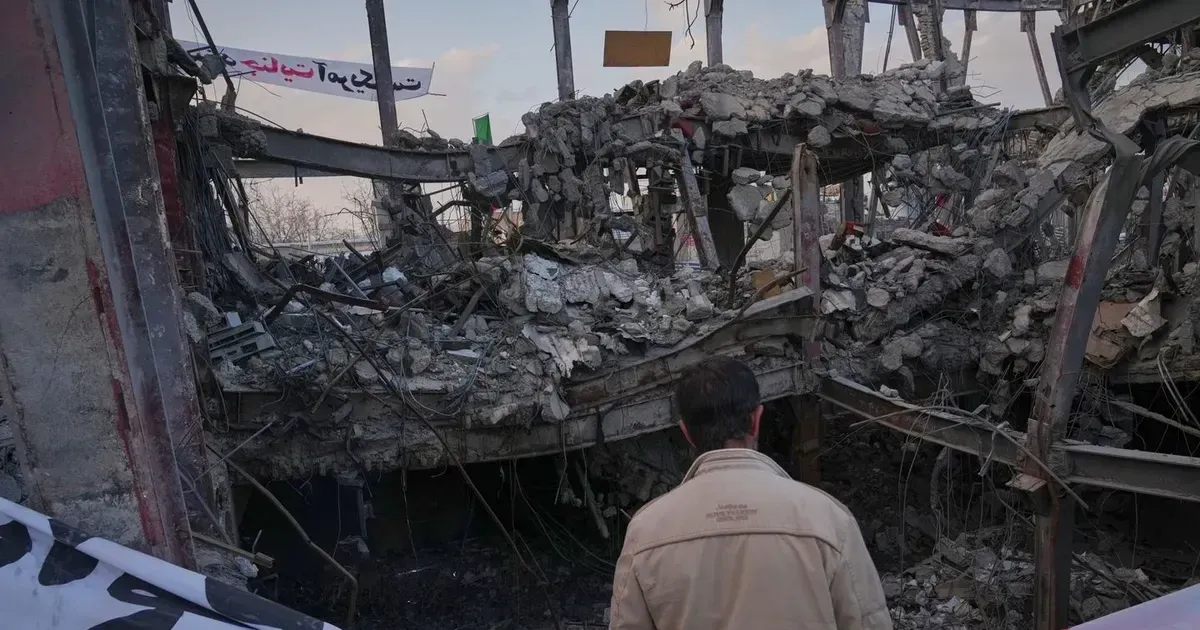
Airstrikes hit a residential building in a city southwest of Tehran early Monday morning, resulting in the deaths of 13 civilians. Iranian state media outlets reported that the structure was completely leveled during the engagement. Local rescue teams spent hours digging through concrete debris to recover bodies while neighboring residents fled the area. This specific strike occurred in a densely populated suburb far from the primary military installations typically targeted by Western forces. Witnesses described the sound of multiple explosions before the four-story apartment block collapsed.
Energy infrastructure in the Khuzestan province remains a primary focus for the Pentagon. Targeting bridges over the Karun River would effectively sever the Iranian military's ability to reinforce its coastal positions. Military analysts suggest that destroying these links would also paralyze the domestic transport of refined petroleum products. President Donald Trump asserted that the current blockade of global shipping lanes could not persist without a severe kinetic response. His administration has consistently linked the safety of the strait to the survival of Iran's industrial heartland.
Residential Casualties in Tehran Suburbs
Casualty figures from the Monday morning strike include several women and children according to hospital records in the capital. Iranian officials characterized the event as a deliberate attack on non-combatants rather than a tactical error. Security footage from the vicinity showed a single projectile impacting the roof of the residential complex. No military equipment or personnel were stationed within the immediate two-block radius of the blast site. Rescue operations were hampered by a lack of heavy machinery in the southwestern suburbs.
Intelligence officials in Washington have not yet confirmed the specific target of the Monday mission. Some sources suggest the strike was intended for a nearby telecommunications relay station used by the Islamic Revolutionary Guard Corps. Discrepancies between the intended coordinates and the actual impact site have raised concerns regarding the accuracy of the current air campaign. Iranian state television broadcast images of the wreckage throughout the afternoon to mobilize domestic public opinion. The building stood as a smoking ruin by sunset.
Nesrine Malik, writing for the Guardian, criticized the overall strategy driving these operations. She noted that the campaign has lacked the precision promised by the White House at the start of the conflict. Malik argued that the administration is fighting an adversary it does not fully comprehend. Her analysis suggests that the hope for a popular uprising triggered by military pressure has not materialized among the Iranian public. Hubris and a lack of cultural understanding continue to dictate the pace of the aerial offensive.
“Ignorance and arrogance were his drivers. The idea that the regime plays by different rules, with its own goals, never occurred to him,” wrote Nesrine Malik in The Guardian.
Instability in global energy markets has driven a significant increase in retail gasoline prices across the country.
Deadline Strategy for the Strait of Hormuz
Deadlines for the reopening of the Strait of Hormuz have passed without a change in the maritime status quo. Iranian naval fast-attack craft continue to harass commercial vessels attempting to enter the narrow waterway. Shipping insurance rates have climbed to levels not seen since the 1980s Tanker War. Major logistics firms like Maersk and MSC have rerouted their fleets around the Cape of Good Hope to avoid the conflict zone. This shift adds serious costs and weeks of delay to global supply chains. Economic pressure on Gulf allies has reached a critical stage as regional exports remain trapped in port. Countries like Kuwait and the United Arab Emirates rely heavily on the free flow of traffic through the strait for their national budgets. Iranian retaliatory strikes have already damaged several desalination plants and oil processing facilities in neighboring states. These attacks demonstrate a capability to project power far beyond the immediate theater of war. Tensions between the US and its regional partners are growing as the conflict enters its sixth week.
Recovery efforts for two downed American aircrew members provided a brief moment of success for the Pentagon. Navy SEAL teams conducted a night-time extraction deep within Iranian territory to bring the pilots home. Despite this tactical achievement, the broader goal of degrading Iranian nuclear capabilities remains unfulfilled. The regime in Tehran has reportedly moved its most sensitive research equipment into deep underground bunkers. Satellite imagery confirms increased activity around these hardened sites.
Tactical Failures of the Air Campaign
Precision strikes were supposed to eliminate threats within days, yet the conflict shows no sign of ending. Iranian air defense systems have proven more resilient than early intelligence assessments suggested. Mobile surface-to-air missile batteries frequently relocate to avoid detection by American drones. The use of electronic jamming technology has also interfered with the guidance systems of Western munitions. Pilots reporting back to the USS Abraham Lincoln describe a highly contested environment over the Iranian mainland.
Washington holds no cards in this game of attrition.
Attritional warfare has replaced the promised lightning strike. Iranian command structures remain intact and continue to issue orders to proxy forces across the Middle East. Hezbollah and Houthi militants have increased their rocket fire into Israel and Saudi Arabia respectively. This multi-front escalation has forced the United States to spread its naval assets thin across three different seas. Efforts to isolate the Iranian government diplomatically have seen mixed results at the United Nations. Tehran maintains its defiant stance despite the mounting civilian death toll.
Crude oil prices surged toward $95 per barrel following the reports of the Tehran strike. Traders fear that a full-scale attack on Iranian energy hubs will lead to a total cessation of exports from the Persian Gulf. Any damage to the Abadan refinery or the Kharg Island terminal would have immediate global consequences. Strategic petroleum reserves in the United States are being tapped to stabilize domestic gasoline prices. Economists warn that a prolonged closure of the strait could trigger a global recession by the end of the year.
Security Implications
Military superiority often creates a mirage of political control. The White House operates under the delusion that enough kinetic pressure will eventually force a rational surrender from a regime that views its survival through an apocalyptic lens. History suggests that air campaigns targeting civilian-adjacent infrastructure rarely achieve the desired political collapse. Instead, they often unify a fractured population against an external aggressor. Washington is currently repeating the errors of the early Vietnam era by prioritizing body counts and bridge strikes over a coherent endgame.
The current path leads only to a wider regional fire. By targeting the bridges of Khuzestan and the suburbs of Tehran, the administration is effectively burning the very avenues it would need for any future diplomatic settlement. The strategy assumes that the Iranian leadership will blink first, yet the last five weeks have proven that Tehran is willing to endure meaningful structural damage to maintain its maritime blockade. The recovery of two pilots, while a striking feat of special operations, does nothing to address the fundamental deadlock in the Persian Gulf.
Will American planners ever recognize that rubble does not build democracies? The tactical successes of individual sorties are being neutralized by a strategic vacuum at the highest levels of government. If the Strait of Hormuz remains closed, the economic fallout will eventually eclipse the military gains. The United States must decide if it is prepared for a decade-long occupation or if it will finally seek a negotiated exit. The alternative is a permanent state of low-intensity war that drains the treasury without securing the oil. A pivot is required.