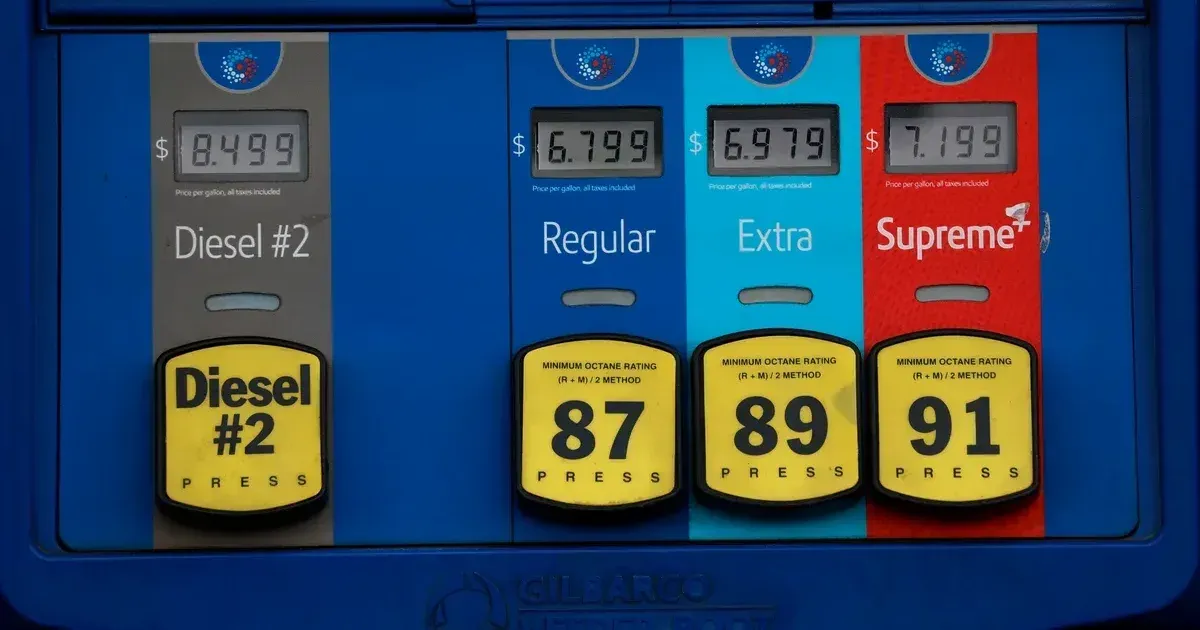
The gas-tax proposal is aimed at giving voters a visible price signal during the Iran conflict. It also raises the question of how Washington would replace transportation revenue. Donald Trump called for an immediate suspension of federal gas taxes on Monday to reduce soaring fuel costs affecting American households. The proposal surfaced during public remarks on May 11, 2026, as the president addressed the economic fallout of the escalating war between Israel and Iran. He advocated for a total pause on the levy until energy markets stabilize and prices return to pre-conflict levels.
Policy details suggest the suspension would target the 18.4 cents per gallon federal tax on gasoline and the 24.4 cents tax on diesel fuel. High energy costs have become a central point of political friction since the maritime conflict began disrupting global supply chains. Rising prices forced commercial transportation costs higher, contributing to broader inflationary pressure across the domestic economy.
He emphasized that the move is a necessary relief measure for the middle class. Critics, however, noted that the executive branch lacks the unilateral authority to alter federal tax rates without legislative intervention. This proposal relies entirely on a cooperative legislative body to move from a campaign promise to an active fiscal policy.
Legislative leaders in Washington received the proposal with skepticism on Tuesday. Any change to the federal tax code requires a majority vote in both chambers of Congress, where bipartisan support for a gas tax holiday has historically remained elusive. Both Democratic and Republican lawmakers previously expressed concerns that removing the tax would deplete funding for critical national infrastructure projects. The Highway Trust Fund, which relies almost exclusively on these fuel taxes, currently faces substantial long-term deficits. NPR noted that suspending the federal gas tax would require an act of Congress.
Revenue shortfalls resulting from a suspension could reach $25 billion over a six-month period. Proponents of the plan argue that the economic stimulus provided by lower pump prices would outweigh the immediate loss in tax collection. Opponents argue that such a pause would provide only negligible savings to the average driver while creating a huge hole in the federal budget.
State-level officials have also voiced concerns about the impact on local matching funds for road repairs. Infrastructure spending usually requires a federal-state partnership that hinges on a reliable stream of fuel tax revenue. Removing the federal component could stall thousands of active construction contracts across the country.
Legislative Barriers in a Divided Congress
Gasoline prices at many stations have already surpassed $5.00 per gallon in major metropolitan areas. This spike followed a series of drone strikes on regional refineries and the closure of key shipping lanes in the Persian Gulf. Federal data shows that the national average has increased by nearly 35% since the commencement of hostilities in late 2025.
The current proposal aims to create a psychological floor for the market. While 18.4 cents per gallon is a fraction of the overall price, supporters believe it indicates a commitment to domestic energy security. They contend that any reduction, however small, provides breathing room for families struggling with rising grocery bills and utility costs. The disruption of global supply chains has been a primary driver for the current surge in oil prices.
Drivers currently face a complex landscape of state and local taxes that often exceed the federal rate. In states like California and Pennsylvania, the total tax burden remains high regardless of federal action. A suspension would therefore provide varying levels of relief depending on the geographic location of the consumer.
Crude oil volatility continues to dictate the final price at the pump more than taxation. Even if Congress agreed to the suspension tomorrow, global market forces could erase the 18.4-cent benefit within a single trading session. The economic reality has led several economists to question the long-term effectiveness of a temporary tax holiday.
Limited Economic Relief for Households
Federal officials at the Department of Transportation warned that a suspension might not be passed through to consumers by fuel retailers. Past attempts at state-level tax holidays showed that some gas station owners maintained higher prices to recoup lost margins during periods of supply instability. Market transparency remains a serious hurdle in ensuring that tax cuts actually reach the pockets of commuters.
Energy analysts suggest that the actual savings for a driver of a standard sedan would amount to roughly $2.50 to $3.50 per fill-up. For families operating multiple vehicles or heavy machinery, these savings could scale, yet they remain secondary to the larger price swings caused by the Iran conflict. The scale of the war-induced surge dwarfed the potential benefit of a tax freeze.
Public opinion on the matter is split along partisan lines. Recent polling indicates that a majority of voters support immediate relief at the pump, but they are less certain about the trade-offs involving road safety and bridge maintenance. Political strategists view the proposal as an attempt to shift the focus toward Washington's handling of the energy crisis.
Market participants are watching for a formal legislative draft. Without a specific bill in the House of Representatives, the proposal exists only as a strategic talking point. The timeline for any potential relief remains tied to the pace of diplomacy in the Middle East.
The Tax Holiday Offers a Clear Number but Limited Relief
Trump's gas tax proposal functions primarily as a political stress test for the current administration. By focusing on a specific, recognizable number like 18.4 cents, the campaign attempts to pin the burden of high energy costs on legislative inaction. It forces opponents into a difficult position where they must either support Trump's economic plan or defend a tax that is unpopular during a period of record inflation.
Tehran's influence on global oil prices provides the necessary backdrop for this maneuver. The logic assumes that voters will prioritize immediate household savings over the theoretical long-term health of the Highway Trust Fund. If the conflict in the Persian Gulf continues through the summer, the pressure on Congress to act will likely reach a breaking point.
Political feasibility hinges on whether a handful of centrist lawmakers can be persuaded to break rank. Most historical gas tax holidays have failed to gain traction because the math rarely favors the consumer in a substantial way. This time, the sheer scale of the 2026 energy crisis might force a different outcome.