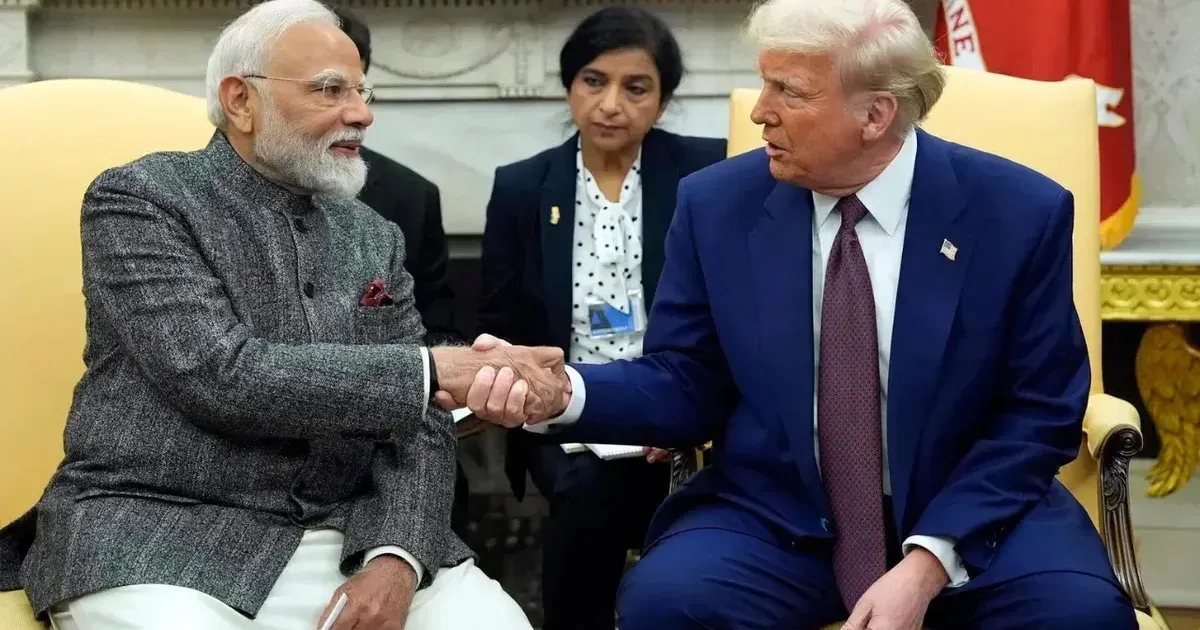
Donald Trump sparked a diplomatic firestorm on April 23, 2026, by sharing a social media post that characterized India as a hellhole. Such rhetoric, spread through a repost on his primary digital platform, immediately strained the enduring strategic alignment between Washington and New Delhi. The content of the shared post disparaged the domestic conditions of both India and China, suggesting that high immigration levels from these nations introduced a lack of loyalty to the United States. US diplomats in the Indian capital began an immediate damage-control operation to prevent a total breakdown in communications with the Indian government.
Diplomatic Firefight at the US Embassy in Delhi
Officials at the US Embassy in New Delhi released an urgent statement to counteract the fallout from the social media activity. These diplomats described India as a great country and emphasized the strength of the bilateral bond. Public messaging from the embassy focused on the personal rapport between the American president and his counterparts in the Indian administration. High-ranking staff sought to reassure the Ministry of External Affairs that the shared post did not reflect official American policy. Records indicate that the embassy staff spent several hours coordinating with State Department officials in Washington to draft a clarification that would satisfy Indian sensibilities. Internal communications highlighted the risk of losing ground on defense cooperation agreements if the insult went unaddressed.
India's government, led by the Ministry of External Affairs, acknowledged the reports but initially maintained a cautious posture. Spokespeople for the ministry confirmed they were monitoring the situation and reviewing the context of the social media engagement. Private discussions between the two nations occurred throughout the afternoon of the incident. This prompted a series of calls between mid-level bureaucrats seeking to ensure that scheduled trade talks remained on track. The US Embassy reiterated that the president has a very good friend at the top of the Indian government.
Security surrounding the US diplomatic compound in Delhi saw a noticeable increase. Several small groups of protesters gathered near the perimeter to voice their displeasure with the characterization of their nation. Local police units established cordons to maintain order and prevent any escalation of the demonstrations. The embassy continued its outreach to local media outlets to broadcast the president's earlier positive descriptions of the country.
Mallikarjun Kharge Questions National Sovereignty
Congress President Mallikarjun Kharge used the controversy to launch a scathing critique of the current Indian administration. Kharge questioned why the government had not issued a more forceful rebuttal to the derogatory language used in the repost. He challenged the silence of the prime minister, suggesting that a failure to respond signaled a weakness in India's international standing. Opposition leaders argued that the dignity of 1.4 billion citizens had been compromised by a foreign leader with whom the government claimed to have a special bond. Kharge released the statement via the official Congress party press bureau late in the evening.
“Modi ji, what are you scared of?” Congress President Mallikarjun Kharge asked during a press briefing in New Delhi.
Critics within the Congress party highlighted the irony of the situation, given the high-profile displays of friendship seen at previous events like the Houston and Ahmedabad rallies. They claimed that the government has failed to protect national interests in past dealings with the United States. Kharge's rhetoric focused on the large contributions Indian immigrants make to the American economy and scientific community. He argued that allowing such insults to pass without a formal protest undermined the leverage India holds as a major global power. The statement from the Congress president forced the ruling party into a defensive communication strategy.
Domestic political pressure mounted as other opposition figures joined the chorus of disapproval. These politicians demanded a clarification on whether the Indian government had registered a formal diplomatic protest through official channels. News cycles in New Delhi remained dominated by the contrast between the private friendship of leaders and the public disparagement of the nation. The Congress party planned further inquiries in the upcoming parliamentary session.
Immigration Rhetoric and the Repost Controversy
Shared content on the president's social media account specifically targeted the loyalty and cultural integration of certain immigrant groups. The post alleged a bias in current immigration systems that favored individuals from regions the author described in derogatory terms. Such claims sparked intense debate within the Indian-American diaspora, a community that matters in US technology and healthcare sectors. Analysts pointed out that the rhetoric could jeopardize future visa negotiations and labor mobility agreements. The original post criticized the perceived lack of assimilation among recent arrivals from the Indian subcontinent. It remained visible for several hours before the ensuing media cycle shifted the focus to the embassy's cleanup efforts.
Labor statistics from the US Department of State show that India consistently receives the largest share of H-1B specialty occupation visas. Any shift in presidential sentiment regarding the quality of these immigrants could have real effects on corporate recruitment and global supply chains. Tech firms in Silicon Valley expressed private concerns to trade representatives about the potential for policy shifts following the president's social media activity. The shared post claimed that certain immigration patterns were harmful to national security. This rhetoric aligns with a broader populist agenda that seeks to restrict legal migration pathways. The post received 450,000 likes before the account activity ceased for the evening.
Indian-American advocacy groups issued statements condemning the language used in the repost. These organizations emphasized the economic value generated by Indian professionals who contribute billions to the US tax base. They called for a more respectful discussion that recognizes the contributions of the diaspora. Despite the controversy, the White House did not issue a formal retraction of the shared content, relying instead on the embassy's local clarifications. The political fallout within the US electorate remained confined to partisan lines.
Strategic Partnership Tensions Under Trump
Bilateral relations between the two largest democracies face periodic volatility due to the unpredictable nature of digital diplomacy. Narendra Modi and the American president have historically prioritized personal chemistry to bridge policy gaps in trade and defense. This incident, however, tests the limits of that approach by introducing an element of public disrespect. Defense analysts suggest that a protracted diplomatic chill could delay the joint production of fighter jet engines and high-altitude drones. The Indian government has invested heavily in diversifying its defense procurement, and such insults provide ammunition to those who favor closer ties with alternative partners. Current projections for bilateral trade reach $11 billion in the next quarter, provided that political tensions do not result in new tariffs.
Every previous encounter between the two leaders has been characterized by mutual praise and enormous public events. The transition from stadium-sized celebrations to digital disparagement creates a narrative problem for the Indian government. Nationalists within India, who typically support the prime minister, found themselves conflicted by the insults directed at their country. Some supporters argued that the repost was an internal American political tool rather than a deliberate attack on India. Others insisted that a sovereign nation must demand respect regardless of the personal friendships of its leaders. The MEA spokesperson declined further comment on whether a formal apology had been requested. Washington's focus on the Indo-Pacific region requires a stable and cooperative India to counter regional rivals. Constant friction caused by social media posts complicates the work of career diplomats who manage the day-to-day operations of the partnership. The US Embassy in Delhi continues to emphasize the long-term benefits of the alliance, even as domestic politicians in both countries use the incident for their own ends. The reliance on personal relationships over institutional frameworks leaves the partnership vulnerable to the whims of individual leaders. Diplomatic cables from the period suggest a growing frustration among staff tasked with explaining the president's digital output to foreign ministries. The resilience of these ties remain tested by the intersection of populist politics and international diplomacy.
Trump Repost Strains the US-India Partnership
Can the transactional nature of the Trump-Modi relationship endure the friction of casual disparagement? Observers often mistake personal chemistry for institutional stability, yet this latest episode reveals the hollow core of celebrity diplomacy. When a head of state validates rhetoric that classifies a strategic partner as a hellhole, the damage extends beyond mere optics. It validates the arguments of isolationists in Washington and provides a potent weapon to opposition parties in New Delhi. The silence from the Indian Prime Minister's office is not a sign of stoicism but a symptom of a trapped foreign policy. Having tethered India's prestige to the persona of the American president, the administration now finds itself unable to defend the national honor without dismantling its own narrative of a special bond. Transactionality is still the only true currency in this alignment. The US needs India as a geographical and military counterweight, while India requires American technology to modernize its aging infrastructure. These cold realities will likely prevent a total collapse of the partnership, but the trust that underpins long-term defense cooperation has been eroded. A partner that insults you in public while praising you in private is not a partner; they are a liability. The Indian government’s refusal to demand a public retraction exposes the asymmetrical nature of this relationship. It suggests that for all the talk of a multipolar world, New Delhi remains exceptionally sensitive to the whims of the American executive branch. The era of stadium diplomacy is dead. Future interactions will be defined by a cautious, guarded pragmatism instead of the theatrical displays of friendship seen in Houston or Ahmedabad. National dignity cannot be traded for a photo opportunity. Transactionality remains the winner.