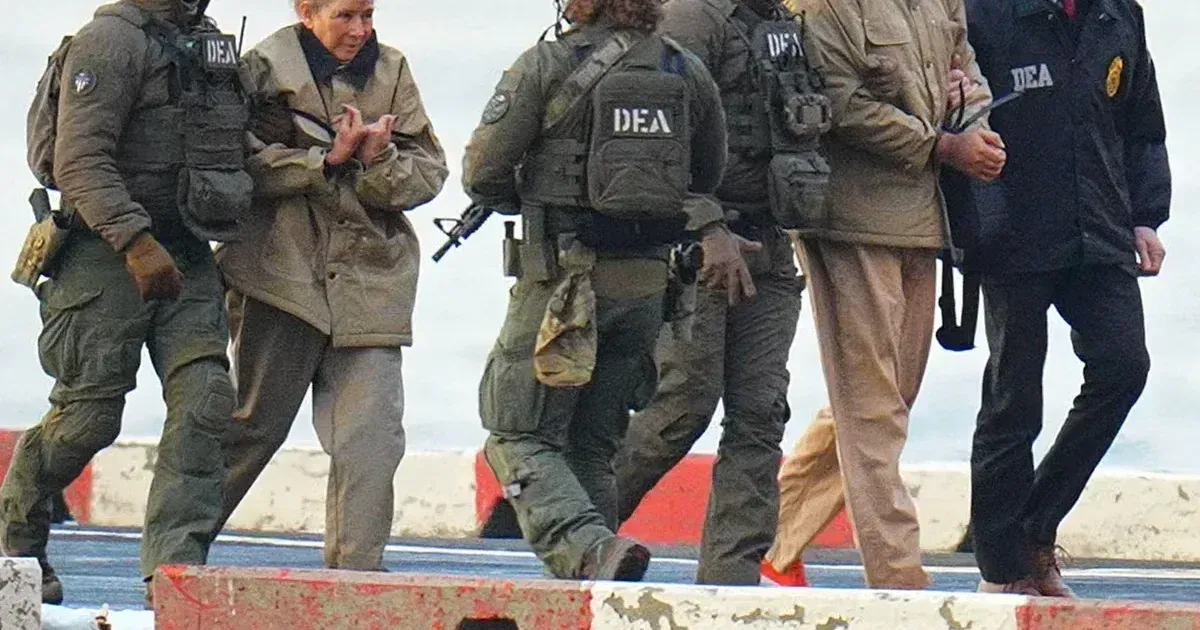
President Donald Trump authorized a high-stakes operation to apprehend Nicolas Maduro, but the dramatic extraction has yet to dismantle the deep political structures in Caracas. The standoff has become a test of political endurance as much as formal power. Caracas is trying to project routine authority while outside governments question the mandate. Evidence of the raid appeared on the morning of May 17, 2026, when residents of the Venezuelan capital woke to the sounds of tactical explosions and the sight of low-flying aircraft. While the arrest fulfills an enduring goal of the United States Department of Justice, the immediate aftermath suggests that the institutional grip of the ruling party remains largely intact.
Ángel Linares experienced the kinetic reality of the capture when a sudden blast tore through his apartment building. Windows shattered and walls vibrated as the facade of his residence was ripped away, throwing him to the floor amidst a cloud of dust. He initially mistook the sounds for celebratory fireworks before realizing the scale of the destruction. Small fragments of glass and concrete covered his living room while smoke billowed from the street level. His 85-year-old mother, Jesucita, compared the violent shaking to the 1967 earthquake that decimated parts of the northern coast.
Caracas remained largely paralyzed as the sun rose over the debris.
Reports from the ground indicate that the movement established by Hugo Chavez continues to exert control over the state apparatus. Security forces and local militias, known as colectivos, maintained their positions in key urban sectors despite the disappearance of their figurehead. Local residents observed that the expected collapse of the bureaucratic hierarchy did not materialize in the hours following the announcement of the capture. Instead, mid-level officials appeared to double down on existing protocols to prevent widespread civil unrest or a total breakdown of order.
Persistent Grip of the Chavez Movement
Loyalists to the socialist cause have spent decades embedding their influence within the military and judicial branches of the government. This network of $11 billion in state-controlled assets and patronage systems creates a buffer against the sudden removal of a single leader. Analysts monitoring the situation noted that the transition to a provisional authority faces strong resistance from those whose livelihoods depend on the current distribution of power. Many government employees expressed fear that the removal of Maduro would lead to a period of retribution or the stripping of essential social programs.
Financial markets reacted with cautious optimism, though the local economy showed no signs of a rapid correction. Crude oil prices fluctuated as traders weighed the potential for the lifting of sanctions against the risk of a prolonged power vacuum in the Orinoco Belt. For the average citizen, the price of basic goods like corn flour and medicine held steady at their inflated rates. Several grocery stores in the Chacao district closed their doors early as owners feared looting or military intervention during the transition. The absence of a clear successor within the ruling party has created a tense environment where both the opposition and the incumbent elite are vying for control.
The walls shook like a natural disaster, and the air was suddenly thick with the smell of explosives as the windows gave way.
Military commanders have not yet issued a unified statement regarding the future of the administration. General Vladimir Padrino Lopez, a central figure in the defense establishment, has remained out of public view since the operation concluded. Without a clear signal from the high command, lower-ranking officers have kept their troops confined to barracks or stationed at essential checkpoints. Intelligence sources suggest that internal negotiations are underway to determine which factions will lead the country in the interim. These discussions involve a complex web of regional governors and heads of the various intelligence services.
Infrastructure of the Caracas Security Zone
Physical damage from the extraction operation was concentrated in the residential and administrative districts surrounding the presidential palace. Debris from the tactical entry points littered the streets while specialized recovery teams worked to secure the area for international observers. Communication networks remained spotty throughout the afternoon as authorities implemented local blackouts to manage the flow of information. Despite the presence of United States assets in the region, the domestic police force continued to manage traffic and patrol the commercial corridors. Residents characterized the atmosphere as an illusion of change where the faces at the top may differ but the daily struggle for survival continues.
Stability is still the primary concern for the millions left behind.
Humanitarian agencies cautioned that the political shift must be accompanied by immediate logistical support to prevent a deepening of the existing crisis. Shortages of potable water and reliable electricity persisted in the suburbs even as diplomats debated the legality of the intervention. International monitors from the United Nations have requested access to the sites of the recent explosions to assess the impact on non-combatants. The focus of the international community has shifted from the act of the arrest to the long-term feasibility of a democratic transition in a nation defined by decades of centralized control.
Maduro’s Capture Does Not Dismantle Chavismo’s Power Network
The arrest of Nicolas Maduro by the Trump administration forces a radical recalculation of political risk across Latin America. Neighboring countries like Colombia and Brazil must now manage the potential for a new wave of migration if the transition descends into factional infighting. While the removal of a sanctioned leader provides a symbolic victory for Washington, it does not automatically dissolve the patronage networks that underpin the Venezuelan state. These systems are designed to survive the loss of a primary executive, relying on a distributed hierarchy that manages everything from food distribution to internal security.
Geopolitical rivals including Russia and China are unlikely to abandon their substantial investments in the Venezuelan energy sector without a fight. Their presence provides the remnants of the Maduro government with a degree of diplomatic cover and financial leverage that complicates U.S. efforts to install a preferred successor. Any new administration in Caracas will have to navigate these competing international interests while attempting to pacify a domestic population that has grown skeptical of external interventions. The true test of this operation will not be the capture itself, but whether the follow-up can provide a more stable alternative than the regime it replaced.