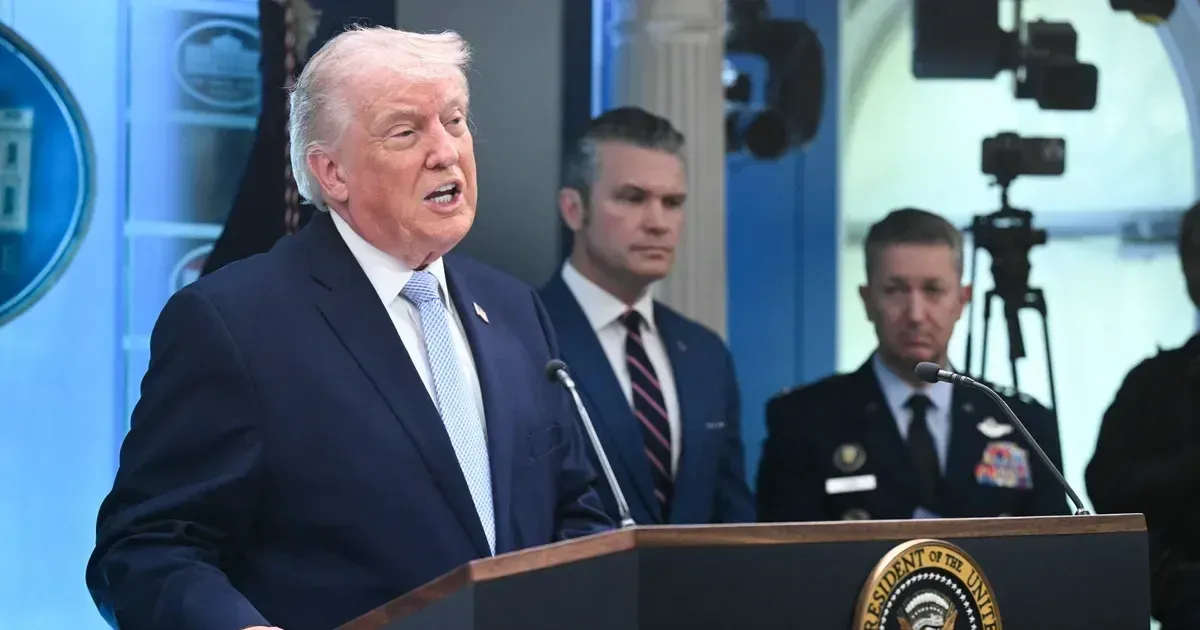
The rescue of a downed American pilot in Iran quickly became a fight over leaks inside Washington. Donald Trump used an April 6, 2026, briefing to threaten criminal consequences for the person who disclosed details about the early rescue delay. The F-15E Strike Eagle crew member had spent 36 hours behind enemy lines after a crash in a remote mountain range. White House officials said the pilot was badly injured before special operations teams reached the site under Iranian surveillance.
Command Center Frustration and the Leak Investigation
Inside the briefing room, the president insisted that identifying the leaker is a matter of paramount national safety. He argued that the revelation of tactical gaps during the mission provides an advantage to adversaries in Tehran. Journalists were told that the administration expects full cooperation in naming the source who provided the sensitive timeline. Legal experts suggest this move could lead to a meaningful First Amendment confrontation. Justice Department officials have not yet filed formal subpoenas, though the rhetoric from the Oval Office indicates an imminent crackdown. Prosecutors are reportedly reviewing phone logs and internal communications to trace the flow of information regarding the rescue operation.
"It's national security, and the person that did the story will go to jail if he doesn't say," Donald Trump said during a Monday briefing.
Medical Conditions of the Recovered Strike Eagle Pilot
Beyond the legal battles in Washington, the physical state of the airman remains a primary concern for the Air Force. Trump provided vivid details about the injuries sustained during the crash and the subsequent evasion period. The pilot was injured quite badly and faced harsh environmental conditions on the mountain before specialized teams reached his location. Medical personnel at a regional military hospital are currently treating the officer for blood loss and shrapnel wounds. He managed to evade Iranian patrols for over a day despite his declining health. Military doctors noted that the survival of the pilot under such extreme duress is rare in modern combat scenarios.
Critics of the administration argue that the leak investigation serves to distract from the initial operational delays. While Sky News reported on the successful recovery of the pilot from the Iranian mountain, the initial reporting focused on the hours when the Pentagon could not establish a secure corridor for the rescue helicopters. This discrepancy has fueled the president's ire toward the press.
Search and rescue teams used advanced thermal imaging to locate the airman in the dark. Iranian ground forces were reportedly closing in on the crash site during the final hours of the mission. Extraction occurred under the cover of night with heavy air support providing a protective bubble over the landing zone.
Former Secretary of Homeland Security Jeh Johnson provided a historical context for the mission during a television appearance. Having served as general counsel for the Department of Defense during the 2011 raid that killed Osama bin Laden, Johnson possesses deep insight into high-stakes extractions. He categorized the Iranian rescue as more complicated than the bin Laden operation due to the active anti-aircraft environment.
Specific challenges included navigating the mountainous terrain while avoiding sophisticated Iranian radar systems. Unlike the 2011 raid in Pakistan, this mission involved a moving target in an area where the US does not have air superiority. Coordination between the CIA and Joint Special Operations Command was essential for the success of the recovery.
Johnson highlighted the risk to the rescue crews who flew into one of the most heavily defended airspaces in the world. Success was not guaranteed at any point during the 36-hour window. The complexity of the operation required real-time intelligence feeds that were nearly interrupted by the very leaks the president is now investigating.
Regarding the broader diplomatic impact, the incident has frozen any potential for de-escalation between Washington and Tehran. Iranian officials have condemned the rescue as a violation of their sovereignty. Tensions on the border have reached their highest point since the start of the current administration. Pentagon officials are monitoring Iranian troop movements near the crash site. Several Iranian military units were reportedly redirected to the mountain range shortly after the F-15E went down. The speed of the American response prevented the pilot from being captured and used as a political pawn.
Military analysts suggest the rescue proves the reach of US special operations even in denied environments. Tehran has not yet officially responded to the president's latest threats against the internal leakers. The F-15E Strike Eagle wreckage was destroyed by a follow-up airstrike to prevent technology from falling into Iranian hands.
Leak Fight After the Rescue
Prioritizing a hunt for whistleblowers over the celebration of a successful rescue mission reveals a presidency deeply insecure about its operational image. While the extraction of the F-15E pilot is a tactical masterstroke, the administration is choosing to spend its political capital on a war with the press. This aggressive posture toward the media suggests that the reported delays in the rescue were more damaging than the White House is willing to admit.
Targeting journalists to find a leaker is a standard diversionary tactic used when the underlying facts of a story are embarrassing. If the military had moved flawlessly, the president would have no reason to threaten the media with jail time. Instead, he is using national security as a shield to hide potential incompetence within the command structure during those first critical hours.