Artemis II reached its lunar milestone while Washington dealt with a separate crisis on Earth. The contrast gives the mission symbolic power, but it also exposes how quickly war can crowd out science.
NASA still has to keep the spacecraft on schedule.
NASA officials confirmed on April 6, 2026, that the Artemis II crew successfully reached the farthest point of their lunar trajectory. Four astronauts inside the Orion capsule are now traversing space farther from Earth than any humans in history. Mission controllers in Houston monitored telemetry data throughout the morning as the craft prepared for its gravitational slingshot around the lunar far side. Technical precision governed every maneuver during the approach to the lunar surface. High-resolution cameras on the vessel captured the first live images of the cratered terrain as the mission attained its maximum distance from the home planet.
Artemis II Technical Trajectory and Lunar Proximity
Flight path data indicates the spacecraft arrived at the moon with a velocity of several thousand miles per hour. Navigation systems used the gravity of the moon to alter the return course toward Earth without additional fuel consumption. Propulsion specialists noted that the European Service Module performed a small correction burn earlier in the day. Precision in these maneuvers is essential for ensuring the capsule enters the terrestrial atmosphere at the correct angle. Heat shield integrity will be tested at temperatures reaching 5,000 degrees Fahrenheit during the reentry phase scheduled for later this month. Detailed sensors are recording every atmospheric interaction.
Public interest in the flyby resulted in millions of viewers logging into NASA TV. Live streams featured real-time commentary from veteran flight directors and mission specialists. Viewers observed the Earth as a small blue marble rising over the lunar horizon. Educational institutions across the United States organized viewing parties to witness the lunar proximity event. NASA officials stated that the visibility of the spacecraft through ground-based telescopes remained high for amateur astronomers in the northern hemisphere. Digital archives are already storing the large influx of visual data.
Geopolitical Tensions Cast Shadow Over NASA Milestone
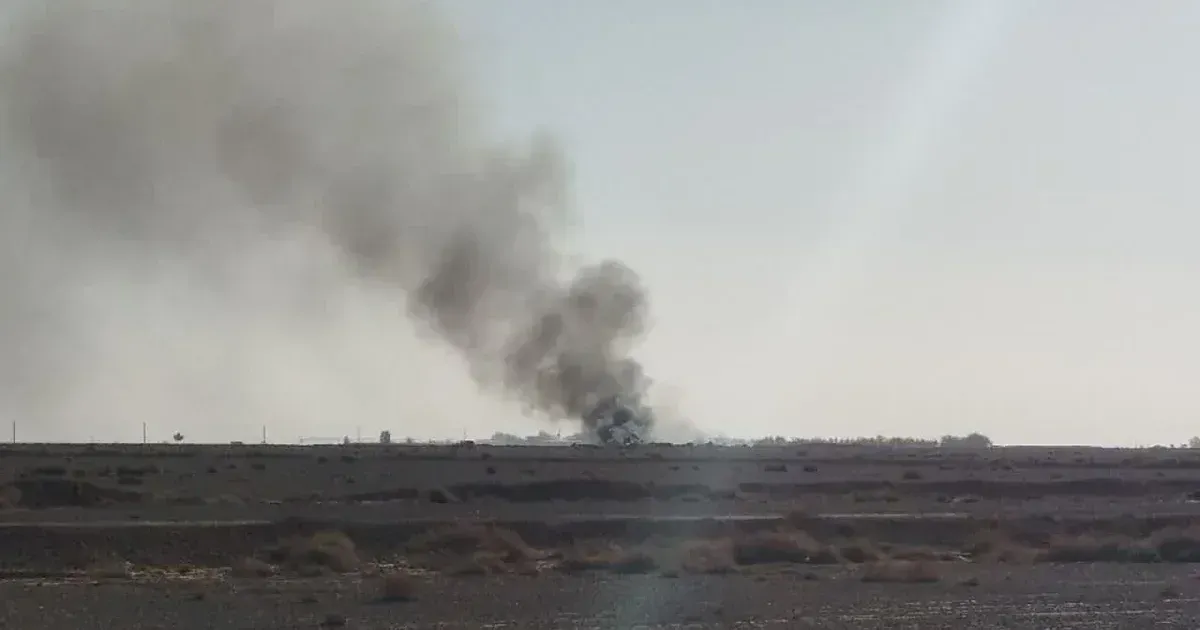
International stability deteriorated simultaneously as Donald Trump issued a series of warnings directed at the Islamic Republic of Iran. Threats involving the potential destruction of power plants and bridges followed a blockade in the Strait of Hormuz. Washington warned that energy infrastructure remains a primary target if maritime transit is not restored. Military analysts suggest that the escalation threatens to overshadow the scientific achievements of the lunar mission. Global energy markets reacted with immediate price fluctuations following the announcement from the White House. Brent crude oil futures climbed by 8 percent in early trading sessions.
Pentagon officials increased the readiness of naval assets stationed in the Persian Gulf. Defense systems are now on high alert to protect shipping lanes from retaliatory strikes. Intelligence reports indicate that Iranian forces have strengthened their defensive positions along the coastline. Communication between the two nations has reached a total standstill. State Department representatives declined to comment on whether the Artemis II mission would be affected by the sudden shift in regional security. The biggest aerospace contractors have interests tied to both civilian and military defense projects. Threats to target Iranian power plants and bridges reflect the escalating tensions in the Persian Gulf.
The United States will bomb Iran's power plants and bridges unless it opens the Strait of Hormuz immediately to international shipping and commerce.
Orion reached a distance exceeding 400,000 kilometers from Earth. This achievement surpasses the record set by the Apollo 13 crew in 1970. Engineers at the Johnson Space Center reported that all life support systems are functioning within expected parameters. Solar arrays continued to provide full power to the service module despite the increased radiation levels in deep space. Ground crews remained focused on the critical communication window required when the craft moves behind the moon. Signal loss is a mechanical certainty during that phase of the flight.
Strategic Recovery Efforts for US Airman in Iran
Intelligence agencies are coordinating a high-stakes mission to extract a United States airman currently detained inside Iranian territory. Operations on the ground involve special forces units and regional allies working to secure a safe passage out of the country. Tehran maintains a heavy security presence around known detention facilities. Diplomats are seeking a resolution through third-party intermediaries to avoid a direct military confrontation. The safety of the airman is the primary focus of the National Security Council this morning. Tactical teams are standing by for any change in the local security environment.
Space Milestone Under Strain
National priorities are currently undergoing a violent collision that the White House seems ill-equipped to manage. While the Artemis II mission offers a sanitized vision of American exceptionalism, the looming threat of a hot war in the Persian Gulf reveals the fragility of that image. Washington is attempting to project strength through two vastly different lenses: one of peaceful scientific exploration and another of total infrastructure annihilation. This duality is unsustainable for a populace already fatigued by economic volatility and erratic executive leadership. Threats to bomb Iranian bridges and power plants go beyond rhetoric; they are a gamble that places global energy security at risk for the sake of a maritime dispute.
Bureaucratic inertia at NASA continues to insulate the lunar program from these earthly anxieties, yet the financial cost of deep-space exploration remains a target for critics during times of war. Funding for the Artemis program rests on an unstable bipartisan consensus that could evaporate if military expenditures in the Middle East balloon. The contrast of a multibillion-dollar lunar slingshot with a desperate rescue mission for a single airman highlights a disturbing disconnect in strategic planning. It is a reality where we can precisely navigate a vacuum 400,000 kilometers away but struggle to secure a six-mile-wide strait. Space is the easy part. Diplomacy is failing.