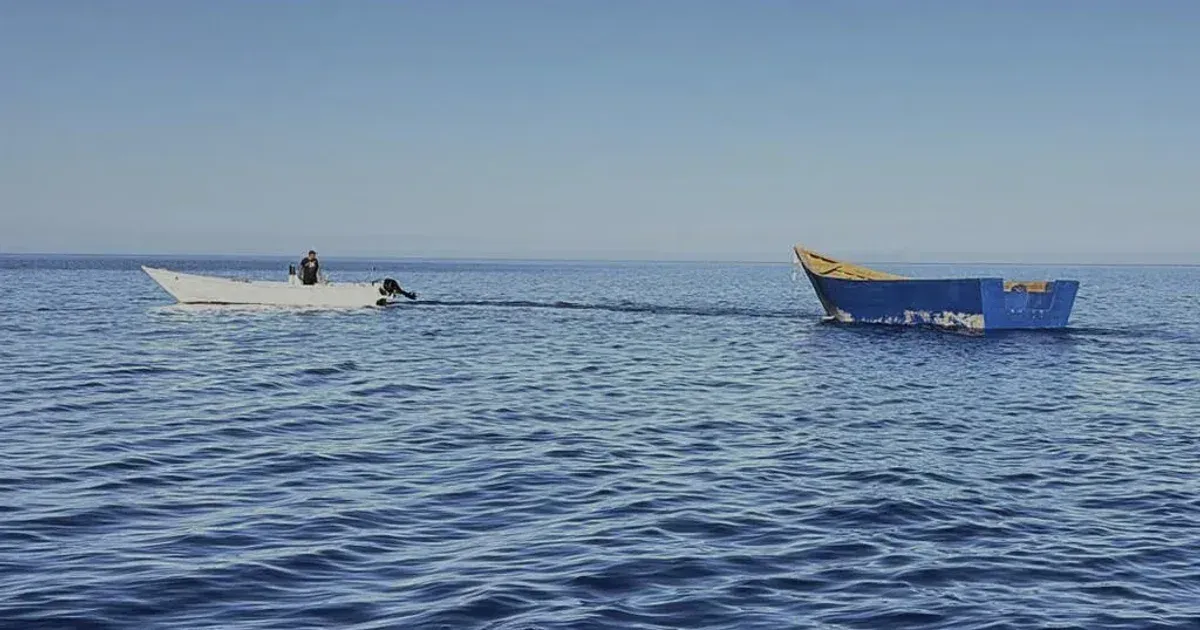
Rescuers pulled survivors from the Mediterranean after a migrant boat capsized near Libya, leaving two confirmed dead and roughly 70 people missing. The boat had carried more than 100 people before it lost structural integrity near the Libyan coast. The rescue picture became clear on April 5, 2026, as an Italian NGO and maritime authorities worked from survivor accounts, recovered bodies and debris in the water.
Italian NGO officials alerted maritime authorities after discovering the wreckage and the small group of survivors clinging to debris. Only 32 individuals are known to have survived the ordeal, leaving a large search operation to account for those still missing. Search teams faced moderate sea conditions while combing the area for any sign of life. Libya was the departure point for the voyage, a common launch site for those attempting to reach European shores.
Vessels used by smuggling networks often lack basic safety equipment, making them prone to disasters in open water. Human traffickers typically pack these boats well beyond their intended capacity to maximize profit. Survivors described a scene of total chaos as the hull began to take on water in the middle of the night. Most passengers lacked life jackets or flotation devices.
Italian NGO Details Rescue Efforts
Communication between the Italian NGO and regional coast guards began early Sunday morning as the scale of the tragedy became clear. While initial sightings suggested a small number of people in distress, the true figure of those on board exceeded 100. Rescue workers spent hours identifying the location of the capsizing using limited radar data and survivor testimony. Efforts to find more survivors continued through the afternoon with little success.
"Two people died and 32 were rescued from the vessels," said the Italian NGO.
Emergency medical teams met the survivors at local ports to provide immediate care for hypothermia and exhaustion. Many of those pulled from the water had spent several hours in the Mediterranean Sea before help arrived. One survivor told local media that the boat had left the Libyan coast several days prior to the accident. Food and water supplies had already run low before the vessel encountered heavy waves.
Italian authorities have frequently clashed with NGOs over rescue protocols in these international waters. Maritime law dictates that any vessel in distress must be assisted, but political tensions often complicate the landing process for survivors. Current records show a serious increase in attempted crossings during the spring months as weather patterns stabilize. Deaths on this specific route have reached a three-year high. Recent debates surrounding European Union migration policy have intensified as officials weigh humanitarian obligations against aggressive border containment strategies.
Libyan Port Security and Smuggling Networks
Libya persists as a central hub for migration due to its fragmented political landscape and lengthy coastline. Smuggling operations in cities like Sabratha and Zawiya operate with varying degrees of interference from local militias. Migrants from across the African continent and the Middle East pay thousands of dollars for a seat on these unseaworthy crafts. Border security remains porous despite international efforts to fund and train the Libyan Coast Guard.
Reports from Libya indicate that the migrant boat departed from a remote beach under the cover of darkness. Intelligence gathered by maritime agencies suggests that traffickers have recently shifted to smaller, less stable rubber dinghies to avoid detection by aerial surveillance. These inflatable boats are particularly vulnerable to punctures and engine failure. Total losses at sea are often underreported because many boats disappear without a single survivor to recount the event.
Economic instability in the region continues to drive the demand for these dangerous crossings. Thousands of people remain in detention centers across western Libya, waiting for an opportunity to board a vessel headed north. Conditions in these centers have been widely criticized by international human rights organizations. Many migrants view the sea crossing as their only escape despite the documented risks.
European Union Migration Policy Under Scrutiny
European Union officials face renewed pressure to reform search and rescue operations following this latest disaster. Recent policy shifts have focused on strengthening the external borders of the bloc rather than expanding naval rescue missions. Critics argue that this approach leaves a vacuum that NGOs struggle to fill with limited resources. Funding for the Libyan Coast Guard has been a central foundation of the EU strategy for several years.
Surveillance drones and satellites provide constant monitoring of the Mediterranean Sea, yet intercepts do not always happen in time. Some member states have called for a more proactive European naval presence to prevent mass casualty events. Opposition parties in Italy and Greece frequently debate the cost and legal implications of hosting large numbers of rescued migrants. No unified agreement on a redistribution mechanism currently exists among the 27 member states.
Statistics from the International Organization for Migration suggest that over 2,500 people died or went missing on the Central Mediterranean route last year. This latest incident adds to a growing tally of maritime tragedies that have defined regional politics for over a decade. Governments in the Mediterranean region continue to seek a balance between border security and humanitarian obligations. Legal challenges regarding the impoundment of NGO rescue ships are currently moving through European courts.
Mediterranean Migration Failure
Europe cannot continue to outsource its moral obligations to Libyan militias and expect a different result. The April 5 capsizing is the inevitable outcome of a policy that prioritizes containment over human life. By funding the Libyan Coast Guard to intercept migrants, the European Union has created a cycle of detention and dangerous re-entry attempts. This strategy does not deter migration; it merely increases the lethality of the journey. We are looking at a system designed to fail the most vulnerable while providing political cover for Brussels.
Skepticism toward NGO rescue efforts is often a convenient distraction for national governments. While politicians argue over port access and maritime jurisdictions, the Mediterranean is becoming a graveyard for the anonymous and the desperate. The reliance on private organizations to perform the duties of sovereign states is a dereliction of duty. We must acknowledge that the "pull factor" argument is a myth used to justify inaction despite mass drowning. Real border security requires stable partners and legal pathways, neither of which exists in the current Libyan framework. Failure to act now ensures that the next 100 people to board a rubber boat will face the same grim fate. The price of indifference is paid in blood.