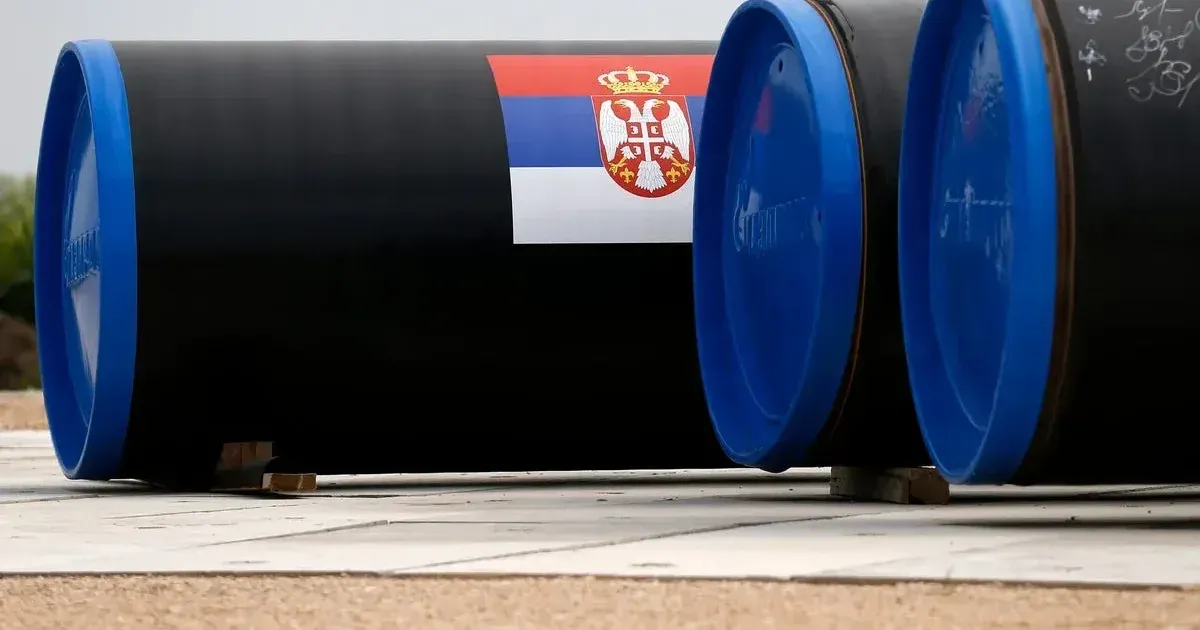
Serbian authorities said two packages of powerful explosives with detonators were found near the Balkan Stream gas pipeline in the northern municipality of Kanjiža. The April 5, 2026 discovery raised a genuine infrastructure-security concern while also becoming part of Hungary's election campaign one week before voters were due to go to the polls.
Two Backpacks Were Found Near the Pipeline
Serbian President Aleksandar Vučić said army and police units found two backpacks containing large packages of explosives and detonators near the village of Velebit, a few hundred metres from the pipeline. He described the material as having “devastating power” and said the authorities had prevented an action against Serbia's vital interests.
Officials did not immediately identify a suspect, establish who placed the explosives or publicly explain the intended target. No explosion damaged the pipeline and gas continued to flow. Those limits are central to the account: Serbia announced a serious discovery near critical infrastructure, but the investigation had not yet produced a public finding about responsibility or motive.
Vučić said two large packages of explosives with detonators were found a few hundred metres from the Balkan Stream pipeline.
Balkan Stream Supplies Russian Gas to Hungary
Balkan Stream is an extension of TurkStream, carrying Russian natural gas through Turkey and Bulgaria into Serbia and Hungary. Hungarian Prime Minister Viktor Orbán said the route supplied about 60 percent of Hungary's gas consumption, making any credible threat to it an energy-security issue for both countries.
After speaking with Vučić, Orbán convened an emergency meeting of Hungary's Defence Council and ordered stronger military protection for the Hungarian section of the pipeline. The response reflected the importance of the route, but it did not establish who was behind the material found in Serbia.
The Discovery Entered Hungary's Election Campaign
The timing made the incident politically explosive. Hungary's parliamentary election was scheduled for April 12, and Orbán's Fidesz party was trailing the leading opposition force in some polls. Orbán had already made energy security, the war in Ukraine and alleged foreign interference central themes of his campaign.
Opposition leader Péter Magyar said Hungarians had reason to fear a possible false-flag operation intended to create panic and influence the vote. Independent reporting also pointed to earlier warnings about a possible staged incident involving infrastructure on the Serbian side of the border. Those claims increased pressure for an independent and transparent investigation, but they did not prove that the explosives were planted by either government or by Russia.
Ukraine rejected any attempt to connect it to the discovery. Its foreign ministry spokesperson suggested that a Russian false-flag operation was more likely. That statement was also an allegation rather than a finding supported by evidence released from the site.
The Investigation Has to Answer Basic Questions
The credibility of the official account depends on evidence that can be examined beyond campaign statements. Investigators need to establish where the explosives came from, how long they had been at the site, whether they were configured for an attack and whether the pipeline was the intended target. A clear chain of custody and public explanation matter because political actors on several sides immediately tried to assign blame.
The absence of an identified suspect does not make the discovery fictitious. The fact that Serbian authorities found explosives does not prove the wider political story attached to them. Treating either conclusion as settled would replace an investigation with partisan convenience.
Energy Dependence Magnifies the Political Stakes
The timing demands skepticism, but skepticism is not a licence to declare the incident staged without evidence. Orbán used the discovery to reinforce his security message, while opponents used the same uncertainty to question his credibility. Both moves were politically predictable.
The harder fact is Hungary's dependence on one Russian-linked route for a majority of its gas. That concentration creates a real physical vulnerability and gives every threat near the pipeline immediate political force. It also allows a government to present pipeline security as inseparable from its own survival.
A credible investigation must separate those two issues. Serbia has to prove what was found and who intended to use it. Hungary's voters have to decide whether the government's response was proportionate or opportunistic. Until the evidence identifies a perpetrator and a plan, neither sabotage nor false flag should be presented as a solved case.