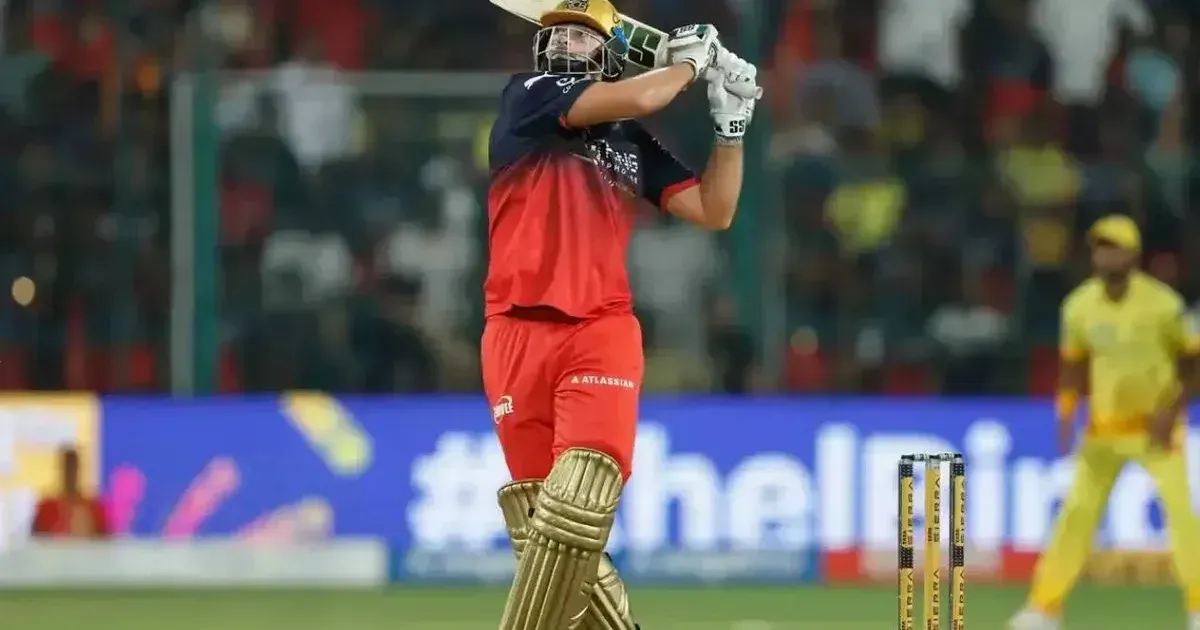
April 5, 2026, Royal Challengers Bengaluru (RCB) dismantled the Chennai Super Kings (CSK) bowling attack with a relentless display of power hitting that rewrote the record books for the current season. Spectators at the venue witnessed a transformation of the game during the final stages of the innings as the batting side capitalized on every delivery. Tim David became the primary designer of this destruction, clearing the boundary with a 106-meter strike that exited the stadium entirely. Statistics from the match confirm David scored 70 runs off just 25 deliveries, a performance that anchored a late-inning surge.

This momentum shifted the balance of power in what has historically been one of the most competitive rivalries in the league. Chennai bowlers struggled to find a length that could contain the Australian international. Power hitting of this magnitude effectively neutralized the tactical adjustments attempted by the fielding side.

Devdutt Padikkal provided the initial acceleration by contributing 50 runs from 29 balls before the specialists took over. His role established a platform that allowed the middle order to play without the usual constraints of scoreboard pressure. When David arrived at the crease, the run rate sat at a respectable level, but his intervention pushed it into record-breaking territory. One specific over saw David extract 30 runs from the bowler, a sequence involving multiple sixes and precise placement. Bengaluru reached their highest total of the 2026 season because of this efficiency in the death overs. Impact players often define these high-stakes matches through individual brilliance. David finished the over by sending the ball over the roof of the stands.

Tim David Dominates Chennai Super Kings Death Overs

Captain Rajat Patidar joined the fray to ensure the pressure never dissipated. Patidar remained unbeaten on 48 runs from 19 balls, showing a level of composure that complemented the raw aggression of David. Together, they orchestrated a 97-run barrage during the closing stages of the innings. Such a high volume of runs in the final five overs often proves impossible for chasing teams to overcome. Chennai Super Kings defenders appeared shell-shocked as the ball repeatedly cleared the ropes. Analytical data shows the strike rate for the final partnership exceeded 240.

Record-keeping officials confirmed the total surpassed all previous benchmarks set earlier in the 2026 campaign. Royal Challengers Bengaluru posted a score that forced Chennai into a defensive mindset before the second innings even started.

Cricket analysts noted the shift in batting mechanics employed by David during his 25-ball cameo. He focused on a stable base and extreme bat speed, a combination that made his 106-meter six possible. Fans in the upper tiers of the stadium were forced to watch the ball disappear into the night sky. The sheer velocity of the strikes meant that even mishits were finding the boundary. Pressure began to mount on the Chennai captain as field placements became irrelevant against such clean striking. 70 runs in under half an hour turned a competitive match into a one-sided affair. Bengaluru moved to the top of the batting efficiency charts with this performance.

Lucknow Super Giants Ownership Tension and Public Reconciliation

Away from the scoreboard drama in Bengaluru, the Lucknow Super Giants (LSG) found themselves at the center of a different kind of media storm. Sanjiv Goenka, the franchise owner, made headlines for a sudden change in his public demeanor toward star player Rishabh Pant. A viral video captured the two sharing a warm hug on the field on April 5, 2026, a move that contrasted sharply with their recent history. Only days prior, cameras had caught a heated exchange between the two that suggested deep internal fractures within the organization.

Observers characterized the previous interaction as a display of owner overreach. Critics of the franchise model often point to these moments as evidence of a toxic power dynamic. Public opinion had turned against Goenka following the initial incident. This specific hug was interpreted by many as a calculated effort to repair the team's public image.

The LSG owner's warm on-field hug with Pant follows days after a heated exchange sparked criticism and debate over franchise dynamics.

Reputation management plays a large role in the modern sports economy. Goenka, a billionaire with diverse business interests, understands the impact of negative optics on brand value. Rishabh Pant remains one of the most marketable figures in Indian sports. Alienating such a player carries serious financial and competitive risks. Lucknow Super Giants need internal stability to maintain their pursuit of a playoff spot. Tensions between billionaire owners and elite athletes are not new to the league. However, the speed of this public reconciliation suggests an urgent intervention by PR consultants. Fans remain divided on whether the hug is a genuine truce or a temporary mask for ongoing friction.

Strategic Evolution of Indian Premier League Power Hitting

Technical experts at the National Cricket Academy have begun studying the 97-run death-over surge as a template for future batting strategies. The ability to generate nearly 20 runs per over consistently during the final phase has changed the definition of a safe total. Sanjiv Goenka and other owners are now looking for players who possess the specific physiological traits required for this level of output. Power hitting is no longer a luxury but a fundamental requirement for the modern T20 cricketer. David's ability to hit a ball 106 meters is the result of specialized strength conditioning and biomechanical analysis.

Data from the RCB innings show that every player in the top five maintained a strike rate above 150. Such consistency across the lineup creates a compounding effect on the final score. Bowling units are now forced to develop new variations to survive these final-over assaults.

Global scouts are increasingly prioritizing players who can replicate the David-Patidar dynamic. Franchise owners recognize that individual brilliance can drive viewership numbers and sponsorship deals. The 2026 season has seen a 15 percent increase in sixes hit compared to the previous year. This trend indicates a league-wide shift toward high-risk, high-reward offensive play. Bengaluru has led this charge by recruiting specialists for every phase of the game. Their success against Chennai is a blueprint for other teams struggling with middle-order stagnation. Every run scored in those final five overs adds millions in theoretical value to a player's next contract. Market forces continue to dictate the evolution of player roles on the pitch.

Cultural Impact of Franchise Owner Conduct

Social media platforms recorded a huge surge in engagement regarding the Goenka-Pant interaction. Viral clips of the hug reached over 10 million views within hours of the match ending. Sports psychologists suggest that these public displays of unity are essential for maintaining locker room morale. A divided team rarely succeeds in the high-pressure environment of the playoffs. Rishabh Pant handled the previous public criticism with a level of professionalism that enhanced his reputation among peers. Many former players have voiced their disapproval of owners involving themselves in technical matters on the field.

The boundary between management and the dressing room is becoming increasingly blurred. Lucknow must now prove that this reconciliation is more than a superficial gesture for the cameras. Consistency in leadership is the only way to silence the critics. Bengaluru continues to focus on-field results while Lucknow manages off-field narratives.

Impact on the league's global brand is a primary concern for the governing body. Incidents of public conflict between owners and players can deter international talent from joining the competition. The IPL relies on its image as a professional, world-class sporting event. When the focus shifts from cricket to corporate egos, the product suffers. Lucknow Super Giants will likely implement new protocols regarding owner presence on the field during matches. Stability within the franchise hierarchy is essential for long-term success. Bengaluru has shown that focusing on performance leads to positive headlines. Every viral moment carries the potential to redefine a franchise's legacy. April 5, 2026, will be remembered for record-breaking batting and strategic damage control.

The Elite Tribune Strategic Analysis

Ownership interference is the silent cancer of modern franchise sports, and Sanjiv Goenka is merely the latest symptom. The performative reconciliation with Rishabh Pant on April 5, 2026, is an exercise in corporate damage control rather than a genuine shift in management philosophy. When billionaires treat elite athletes like line-item assets instead of partners, the resulting friction is inevitable. Goenka’s public hug was a calculated pivot to protect the Lucknow Super Giants brand after his previous outburst triggered a national backlash. It creates a dangerous precedent where player dignity is negotiable based on the owner's immediate PR needs.

Professionalism requires a hard boundary between the boardroom and the dugout. The current IPL structure allows owners too much proximity to the heat of competition, leading to embarrassing displays of ego that undermine team cohesion. While Tim David and Royal Challengers Bengaluru focus on the physics of the 106-meter six, Lucknow is stuck in a cycle of ego-driven crisis management. Fans should stop applauding these viral moments of 'unity' and start questioning why such toxic outbursts occur in the first place. The league is rapidly becoming a vanity project for India’s industrial elite.

If this trend persists, the technical brilliance of the players will be permanently overshadowed by the tantrums of the men who sign their checks. Control is not leadership.