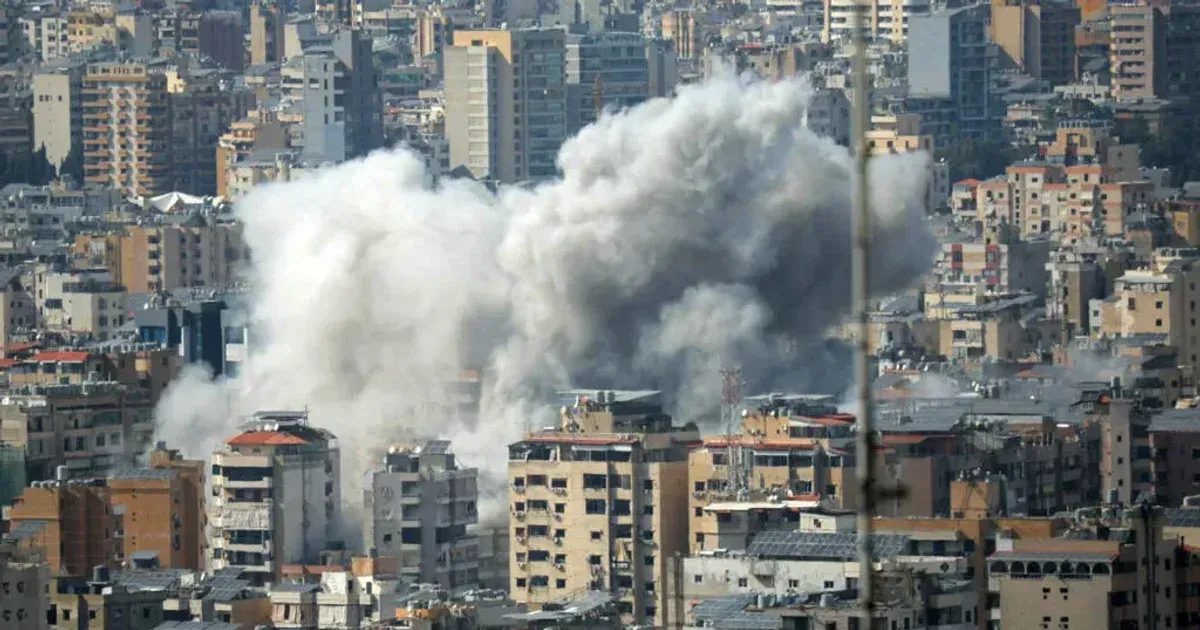
Israel launched coordinated strikes across Lebanon while closing a key Syrian border crossing, expanding a conflict already drawing in Hezbollah fire and Iranian missile activity. Civil defense teams reported casualties in Beirut and southern areas as Israeli ground units pressed deeper into Lebanese territory. The border closure became central on April 5, 2026, because the crossing was described as a route for civilians, goods and suspected supply lines.
Frontier security collapsed at the main crossing between Lebanon and Syria as Israeli jets targeted infrastructure near the Masnaa region. Military officials stated the objective was to sever supply lines used for transporting advanced weaponry. Thousands of civilians seeking refuge in Syria found themselves trapped at the border as the transit route became impassable. Six members of a single family were confirmed dead in a separate strike in southern Lebanon earlier that morning. Chaos at the border prevents humanitarian aid from reaching displaced populations in the Bekaa Valley.
Beirut Casualties and Syrian Border Closure
Fatalities in the Lebanese capital rose sharply as strikes leveled residential structures in the Dahiyeh district. Emergency responders recovered eleven bodies from debris in southern Lebanon, where a family of six perished inside their home. Heavy ordnance damaged the primary asphalt route connecting Beirut to Damascus, rendering the transit point useless for heavy vehicles. Logistical experts estimate the closure will disrupt nearly 70 percent of land-based commercial activity into the country. Regardless of international calls for restraint, the Israeli Air Force expanded its target list to include fuel depots and communication nodes. One specific strike on a residential apartment in South Beirut claimed four lives instantly.
Damascus officials condemned the destruction of the crossing, citing a violation of international protocols regarding civilian corridors. Lebanese authorities struggled to reroute traffic to smaller, secondary mountain passes that lack the capacity for major logistics. Israeli commanders maintain that the crossing was a conduit for Hezbollah logistical cells. Destruction of the transit point effectively isolates Lebanon from its primary overland neighbor. Syrian officials have not yet announced a timeline for reopening the facility.
Iranian Missile Impacts Ramat Hovav Industrial Site
Iranian ballistic missiles struck the Ramat Hovav industrial area in southern Israel, penetrating several layers of aerial defense systems. Video footage verified by analysts shows a high-velocity impact near a chemical processing facility. Israeli authorities confirmed the strike but limited details regarding the extent of the damage to sensitive infrastructure. Ramat Hovav is a critical center for energy production and hazardous material management within the Negev. Smoke from the impact site was visible from the outskirts of Beersheba for several hours. This specific attack is a serious escalation in direct kinetic engagement between Tehran and West Jerusalem.
Defense analysts suggest the missile used advanced terminal guidance to evade interceptors stationed near the Ramon Airbase. Impact craters indicate the use of heavy conventional warheads designed to penetrate reinforced concrete structures. Israel's Home Front Command issued immediate warnings to residents in the surrounding desert regions. Local industrial workers were evacuated to underground shelters minutes before the impact occurred. Preliminary assessments indicate no hazardous chemical leaks resulted from the explosion.
Hezbollah Projectiles Strike Northern Israel
Hezbollah militants launched a meaningful barrage of rockets toward the Galilee panhandle, forcing thousands into bomb shelters. Israeli military sources tracked over 60 projectiles crossing the border within a two-hour window. Interceptor batteries engaged multiple targets over Kiryat Shmona and Metula, though some debris caused localized fires in agricultural fields. Tactical shifts by the militant group involve the use of shorter-range, high-explosive munitions that offer minimal warning time for civilians. Retaliatory artillery fire from Israeli positions targeted launch sites in the hills of Kfar Kila.
The attacks also forced the closure of Lebanon's main border crossing with Syria, as the conflict intensifies across multiple fronts.
Ground operations in southern Lebanon pushed deeper into the rugged terrain of the border belt. Israeli infantry supported by armored units engaged in direct firefights with militant cells in several border villages. Reports from the front lines indicate that Hezbollah is using a network of tunnels and fortified bunkers to slow the Israeli advance. Casualty figures for combatants on both sides remain classified by their respective military commands. Civilian evacuations from southern Lebanese towns continue under heavy fire.
Israeli Troops Push Deeper into South Lebanon
Infantry units moved into the second line of Lebanese villages, expanding the buffer zone established during the initial phases of the ground campaign. Commanders on the ground reported the discovery of serious weapon caches, including anti-tank missiles and suicide drones. Israeli engineering corps began clearing minefields along the Blue Line to enable the movement of heavy artillery batteries. Air support remains constant, with drones providing real-time surveillance of movement in the Litani River basin. Combat conditions in the region are described as volatile due to the density of the undergrowth and the elevation changes. Israeli forces have not specified a permanent depth for the current incursion.
Urban warfare in the southern suburbs of Beirut continues to claim lives as airstrikes target high-ranking officials. The strike reported by France 24 destroyed a three-story building in a densely populated neighborhood. Local hospitals reported they are nearing capacity as the influx of wounded from the southern districts increases daily. Medical supplies are dwindling due to the disruption of the Syrian border crossing. Healthcare workers are operating under emergency protocols with limited electricity and fuel for generators. At least 14 people were killed in a single wave of strikes across various Lebanese governorates.
Cross-Border Escalation Test
Expecting the current cycle of escalation to result in anything short of a full-scale regional realignment is a failure of geopolitical imagination. The direct strike on Ramat Hovav by Iranian missiles confirms that the era of proxy-only warfare has ended, replaced by a high-stakes kinetic exchange that threatens the industrial core of the Israeli state. By targeting critical infrastructure in the Negev, Tehran is signaling its willingness to bypass Hezbollah and engage directly with Israeli defenses. West Jerusalem, by contrast, has decided that the risk of total isolation for Lebanon outweighs the diplomatic cost of closing the Syrian border.
This move to sever the Masnaa crossing is more than a tactical maneuver; it is a strategic attempt to starve Hezbollah of its lifeblood, even at the expense of a growing humanitarian catastrophe.
Sovereignty in the Levant is currently being redefined by the reach of an F-35 or the flight path of a ballistic missile. The closure of the border with Syria effectively turns Lebanon into an island, dependent on a vulnerable Mediterranean coastline for all future supplies. If the Israeli ground push continues toward the Litani, the likelihood of a broader intervention by regional actors increases rapidly. The logic of deterrence has collapsed, replaced by a logic of attrition where civilian infrastructure is no longer off-limits. Diplomacy is dead.