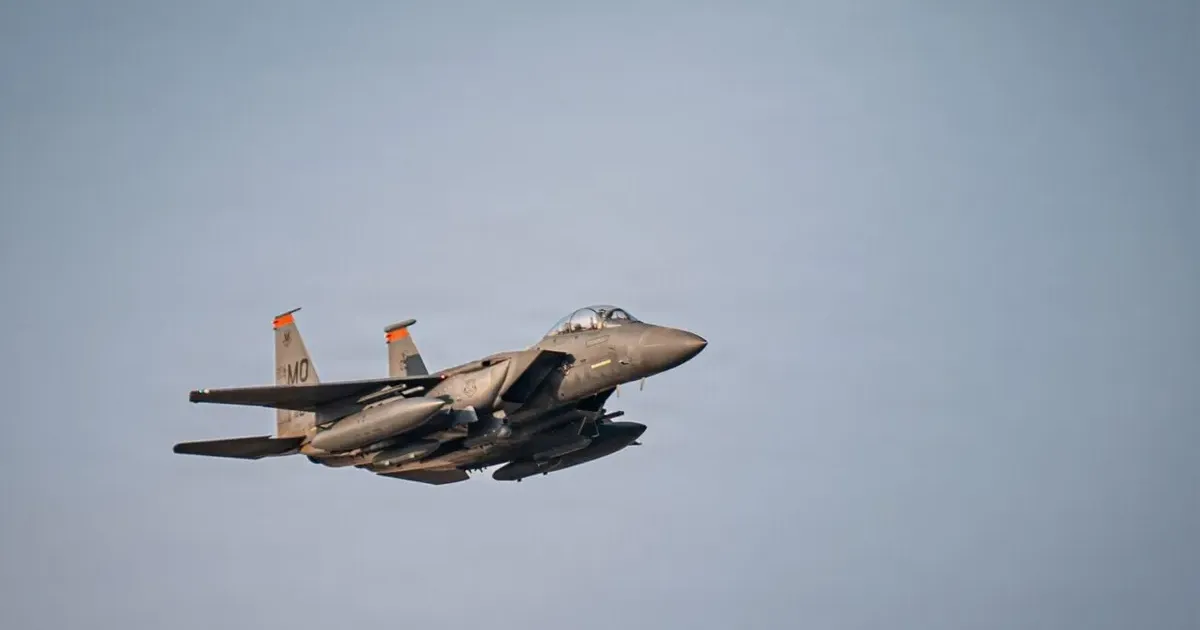
United States Air Force officials confirmed that two combat aircraft went down during a patrol near the Iranian border. Military personnel began search and rescue operations immediately across the rugged terrain where contact with the flight crews was lost. Initial reports indicate the planes were F-15E Strike Eagles operating from a regional base. Defense Department representatives have not yet confirmed the status of the four crew members involved in the incident.
Search efforts are currently concentrated in a sensitive corridor where international airspace meets territorial boundaries. General Mark Richardson stated that technical malfunctions or hostile action could not be ruled out at this early stage. Radar data suggests the two aircraft disappeared from tracking screens within seconds of each other. Ground units are moving toward the last known coordinates despite deteriorating weather conditions in the mountain ranges.
United States Air Force recovery teams face substantial logistical hurdles due to the proximity of the crash sites to the Iranian frontier. Command centers in the region moved to a heightened state of alert to prevent any further escalation. Intelligence analysts are reviewing communication logs to determine if the pilots reported any system failures prior to the descent. $11 billion in annual regional military spending has focused on maintaining these aging airframes for long-range surveillance missions.
Air Force Deploys Search Teams Near Iranian Border
Tehran denied any involvement in the disappearance of the American jets through a brief statement on state television. Iranian military officials claimed their air defense systems were not active in the sector at the time of the event. Regional observers noted that several Iranian interceptors were seen patrolling the area hours after the crash was first reported. Tensions in the Persian Gulf have intensified as both nations increase their military presence in disputed waters.
Military aviation experts point to the extreme heat and dust of the region as potential factors in engine degradation. Maintenance crews have frequently warned that high-tempo operations put excessive strain on the Boeing-manufactured propulsion systems. The mechanical concerns are often worsened by the need for low-altitude maneuvers to evade detection by ground-based radar. Investigators expect to find debris scattered across a five-mile radius based on the altitude of the aircraft during the last transmission.
Pentagon officials have remained silent regarding the specific mission parameters of the downed jets. Security protocols prevent the disclosure of whether the aircraft were carrying live munitions or specialized surveillance equipment. Local residents in border villages reported hearing two distinct explosions followed by a persistent trail of dark smoke. The incident marks the third major aviation loss for the coalition in the past twelve months. The military incident has further destabilized global fuel and shipping markets, impacting both aviation costs and energy supply.
United and JetBlue Adjust Fees for Aviation Fuel
United Airlines and JetBlue announced price increases for checked baggage as global oil markets reacted to the military instability. Brent crude prices surged following the news of the crashes, pushing the cost of refined jet fuel to its highest point since 2024. United Airlines confirmed its pricing strategy is tied directly to the volatility of global jet fuel markets. Travelers will now pay higher rates for both first and second checked bags on all domestic routes.
"United Airlines must adjust its ancillary pricing structure to offset the rapid rises in operating costs caused by recent geopolitical instability in the Middle East," said a company spokesperson during a press briefing.
JetBlue representatives echoed the concern by highlighting the thin profit margins currently seen in the low-cost carrier sector. Analysts at Wall Street firms expect other major airlines to follow suit with similar fee adjustments within the month. Fuel expenses typically account for nearly 30 percent of an airline's total operating budget. JetBlue shares fell 4 percent in early trading as investors weighed the impact of higher costs on summer travel demand.
Commercial aviation routes over the Middle East are being rerouted to avoid the corridor where the military aircraft went down. Longer flight paths result in higher fuel consumption and increased crew overtime pay. The logistical shifts are forced upon carriers who must prioritize the safety of passengers over fuel efficiency. Industry data shows that a 10 percent rise in crude oil prices leads to a 2 percent increase in overall ticket prices. Iran maintains significant influence over the primary shipping lanes that transport the world's energy supply.
Fake videos depicting the crash site began circulating on social media platforms minutes after the first official confirmation. Automated accounts used computer-generated imagery to simulate fireballs and wreckage that did not match the actual geography of the border region. Security researchers at digital forensic firms identified several coordinated bot networks pushing the deceptive clips. Most of the accounts appear to be operated by state-sponsored actors seeking to influence public opinion.
Misinformation spreads rapidly when verified information is scarce during the early hours of a military crisis. Fact-checking organizations have flagged over 200 distinct videos as being entirely fabricated or repurposed from older conflicts. Users on X and TikTok are being warned to verify sources before sharing dramatic footage of the supposed debris fields. One widely shared video used audio from a 2018 training accident to give the illusion of authenticity. Digital literacy experts claim the campaigns are designed to create confusion and slow the official response.
Platform moderators are struggling to remove the content as quickly as it is generated by artificial intelligence tools. Sophisticated algorithms can now produce photorealistic military hardware in various states of destruction. This technology allows bad actors to flood the information space with conflicting narratives about how the planes were lost. Public trust in official military statements is often eroded by the sheer volume of contradictory visual evidence available online. The Pentagon has established a dedicated task force to counter the digital threats.
Border Crashes Expose Readiness Strain
The crash of two American combat jets near the Iranian border is both a tactical loss and a glaring exposure of the vulnerabilities within the United States military presence in the Middle East. Why are aging F-15E platforms being pushed to their absolute limits in one of the most hostile electronic warfare environments on the planet? The Pentagon continues to rely on legacy hardware while its adversaries have spent the last decade perfecting denial-of-service and jamming technologies that render traditional air superiority obsolete. If these aircraft were taken down by non-kinetic means, the entire American defensive posture in the Persian Gulf is currently built on a foundation of sand.
Airlines like United and JetBlue are using the resulting oil volatility as a convenient excuse to gouge consumers with predatory baggage fees. This transparent attempt to capitalize on a military tragedy hides a deeper rot in the commercial aviation industry where fuel surcharges never seem to decrease when oil prices stabilize. The narrative that bag fees are necessary for survival is a fabrication intended to protect executive bonuses at the expense of the flying public. One must ask if these corporations are more interested in national security or the quarterly earnings report. The answer is obvious. Profit always precedes patriotism.
Digital disinformation has finally outpaced the ability of democratic institutions to respond with facts. When a foreign power can convince half the world of a false narrative before a search team even reaches the crash site, the battle for the truth is already lost. Governments are brought to a standstill by pixels. It is time to treat digital deception as a kinetic weapon rather than a social media nuisance. Truth is dead.