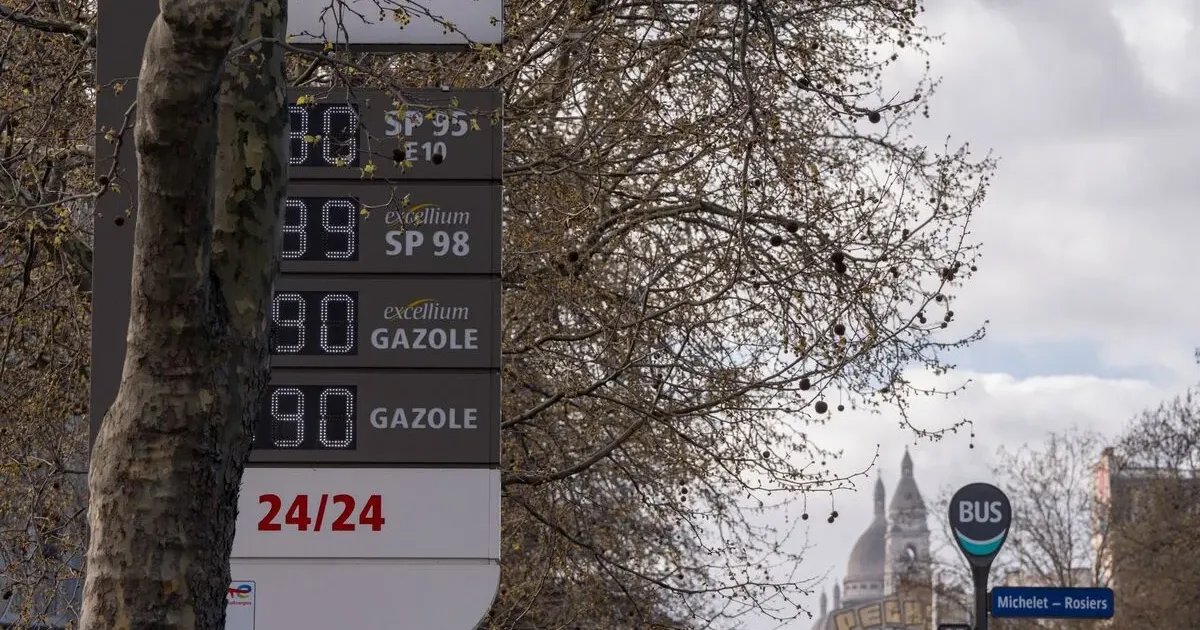
Sébastien Lecornu, the Prime Minister of France, ordered his cabinet to draft urgent fuel subsidies as the conflict in Iran destabilizes global energy markets. Shipping disruptions in the Persian Gulf and rising crude costs have forced Paris into a defensive economic posture. Ministers now face the difficult task of shielding motorists without creating a permanent deficit in the national accounts. These targeted measures prioritize individuals who depend on personal vehicles for employment in rural and suburban districts.
France and its neighbors struggle to contain a cost-of-living crisis that has moved from economic forecasts to the reality of the petrol station. The April 3, 2026, order reflects the speed at which the Iran conflict is reaching European households. Prices at the pump have climbed to levels that threaten household stability across the European Union. Energy security now dictates every facet of national budgetary planning in the Mediterranean.
France and Italy Deploy Fuel Subsidies
Lecornu requested specific interventions from his cabinet to reduce the immediate shock of price spikes. French officials remain concerned that high energy costs will trigger civil unrest similar to previous decades. Civil servants in the finance ministry are currently modeling the cost of direct rebates versus tax exemptions. Projections suggest that the cost of inaction outweighs the immediate fiscal burden of these subsidies.
Italy, meanwhile, committed €500 million to extend its existing fuel tax cuts through May 1. Prime Minister Giorgia Meloni authorized the added funds to blunt the impact of higher energy prices caused by the hostilities. This commitment brings the total Italian expenditure on energy relief to approximately $577 million in the current quarter alone. Rome intends to prevent a sharp contraction in consumer spending during the spring travel season.
Fiscal policy in the Eurozone has become a reactive tool against geopolitical volatility. Officials in Rome and Paris are coordinating their responses to ensure market parity. The resilience of the regional economy depends on the ability of governments to absorb these sudden shocks. Public transit authorities have also requested emergency funding to maintain service levels as operational costs rise. Meloni’s administration faces serious pressure from the industrial sector to expand these tax breaks. Italian manufacturers report that logistical expenses have increased by 15 percent since the start of the military campaign. Small and medium enterprises are particularly vulnerable to the fluctuating price of diesel. Market volatility has effectively erased the post-pandemic recovery gains for the European transport sector.
Critics, however, suggest that these temporary fixes do not address the underlying dependency on foreign oil. Debt levels in Italy continue to rise as the government borrows to fund these emergency measures. Investors are closely watching the spread between Italian and German bonds for signs of fiscal stress. Revenue from standard fuel taxes has plummeted since the introduction of the cuts.
Chinese airlines have adopted a range of measures in response to the surge in oil prices resulting from the Middle East conflict, a report from China Eastern Airlines stated on April 3, 2026.
Beijing has taken a different approach by forcing its state-owned entities to optimize internal efficiencies. Chinese aviation firms are currently leading the global effort to reduce fuel consumption through technical adjustments. Every kilogram of weight removed from an aircraft translates to thousands of dollars in annual savings. Engineers are now auditing everything from onboard catering equipment to the thickness of seat fabrics.
Chinese Aviation Networks Pivot to Russian Airspace
China Eastern Airlines and other major carriers have intensified weight-reduction protocols to protect their margins. These airlines are removing non-essential items like physical magazines and heavy glassware from cabins. Flight crews are also refining their fuel-loading procedures to carry only the minimum safety reserves required by international law. Precise weight management is no longer a luxury but a requirement for survival in the current market.
Geopolitical alignments have allowed Chinese carriers to leverage routes over Russia to save time and fuel. While Western airlines are forced to circumnavigate Russian territory, flights from Shanghai and Beijing are using shorter paths to Europe. The geographical advantage reduces the total burn of jet fuel per passenger mile. Competitive pressure is mounting on European and American carriers that do not have access to these northern corridors.
Aviation experts note that the use of Russian airspace provides a cost buffer against rising oil prices. Chinese airlines are adding more frequencies to European destinations to capture market share from more expensive rivals. Operating costs for a flight from Beijing to London are roughly 20 percent lower when using the trans-Siberian route. Profits in the aviation sector are now tied directly to diplomatic relationships and fuel efficiency.
Global shipping routes are undergoing a similar transformation as the conflict persists. Tankers and container ships are avoiding the Strait of Hormuz, opting instead for longer journeys around the Cape of Good Hope. The detour adds up to 14 days to the transit time between Asia and Northern Europe. Charter rates for large vessels have tripled since the escalation of the war.
Insurance premiums for maritime assets have reached prohibitive levels for smaller operators. Major logistics firms are passing these costs directly to consumers through fuel surcharges. Supply-chain managers are reporting delays in the delivery of critical components for the automotive and electronics industries. Inflationary pressure from the shipping sector is likely to persist through the end of the fiscal year.
Fuel Routes Become the Security Test
Fiscal intervention by Western democracies has become a predictable sedative for populations addicted to cheap energy. The decision by France and Italy to burn through billions of euros in subsidies is a short-term political survival tactic rather than a coherent economic strategy. By artificially depressing prices at the pump, these governments are shielding their citizens from the harsh reality of their own energy vulnerability. The strategy effectively transfers public wealth into the coffers of oil producers while delaying the necessary structural shifts in transportation and consumption.
China is playing a more calculated game. By leveraging its relationship with Moscow to secure shorter flight paths and cheaper fuel, Beijing is methodically dismantling the competitive position of Western aviation. While Paris and Rome worry about the next election cycle, China Eastern Airlines is building a logistical moat that will be difficult to bridge once the war ends. The use of Russian airspace is not just a convenience; it is a geopolitical weapon that grants Chinese industry a permanent cost advantage over its G7 rivals.
Europe’s insistence on subsidizing the status quo will ultimately lead to a fiscal reckoning. Governments cannot indefinitely borrow against the future to pay for the fuel of the past. The crisis is a brutal diagnostic tool revealing that the West is unprepared for a world where energy flows are determined by military force instead of market demands. Either Europe accelerates its energy independence, or it will continue to be a hostage to the next conflict in the Persian Gulf. The cost is already visible.