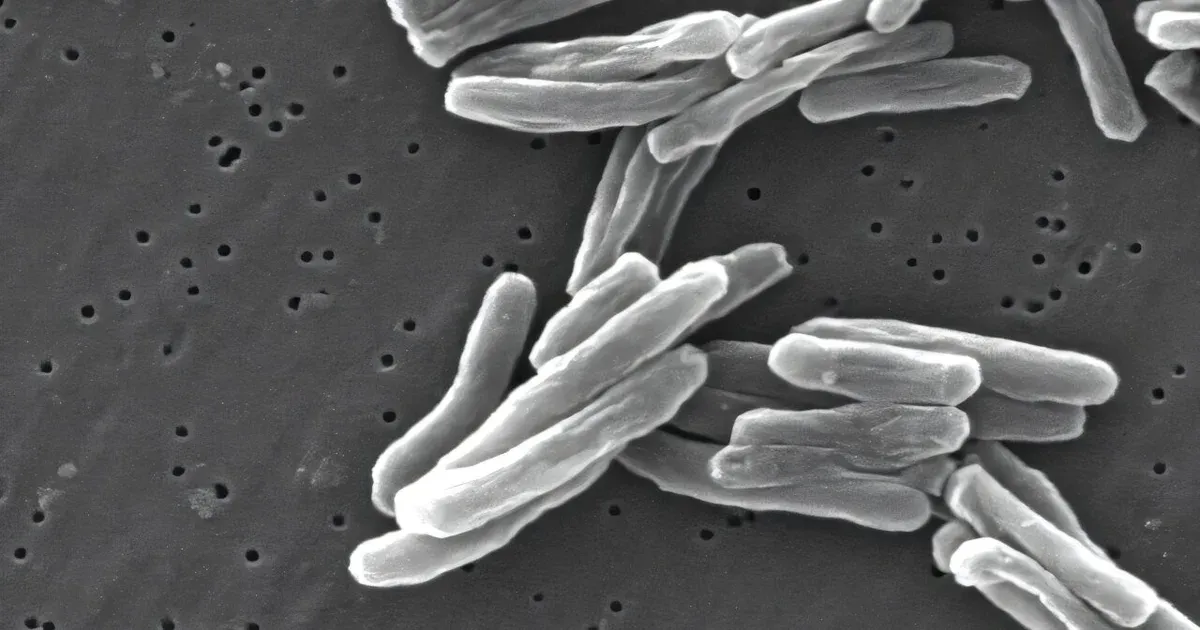
A UC Davis-led blood test may help triage people for active tuberculosis, but the published evidence does not support calling it a definitive test for contagious disease. A blinded trial in India evaluated 408 blood-plasma samples across several forms of tuberculosis and two control groups. Accuracy varied substantially by patient category.
The test looks for antibodies against 12 proteins from Mycobacterium tuberculosis. It produced results in about two hours without requiring sputum, an important advantage for children and people with extrapulmonary disease who may struggle to provide a respiratory sample. But it does not directly detect the bacterium, determine whether a person can transmit TB or identify drug resistance.
UC Davis announced the work in March 2026, describing a trial of more than 600 participants conducted in India. The peer-reviewed paper published on May 26 reported the blinded analysis of 408 samples collected at a specialist hospital between October 2019 and December 2021. The published results provide the firmer basis for judging what the assay can and cannot do.
The Trial Found Strong and Weak Performance in Different Groups
The analysis included 130 adults with pulmonary TB confirmed by culture and the Xpert molecular test. In this group, the assay's sensitivity was 90.8%, meaning it correctly identified about nine in ten cases. Sensitivity was 87.0% among 23 pediatric cases, 75.0% among 24 people with HIV and TB, and 64.5% among 62 people with extrapulmonary TB.
The weakest result came from 23 adults whose pulmonary TB was diagnosed clinically despite negative smear, culture and Xpert results. Sensitivity in that group was 52.2%. Those patients had failed to improve with broad-spectrum antibiotics and later improved after completing TB treatment, but the absence of microbiological confirmation makes this a difficult group to classify.
Specificity also depended on the comparison group. The test was negative in 90.3% of 72 healthy controls, including people with positive and negative interferon-gamma release assays. Among 74 patients with other lung conditions, including pneumonia, chronic obstructive pulmonary disease, asthma, lung cancer and interstitial lung disease, specificity fell to 78.4%. In practical terms, about one in five disease-control samples tested positive.
The authors argued that some apparent false positives could have been TB missed by culture. That is possible in a high-burden setting, but it was not proven for those samples. The lower disease-control specificity remains a limitation because real diagnostic use involves people who are ill, not only healthy volunteers.
This Is an Antibody Assay, Not Direct Detection of TB
Researchers drew five milliliters of blood, separated the plasma and measured immunoglobulin G antibodies against 12 TB antigens using a Luminex microbead platform. A sample was classified as positive when its antibody response exceeded a preset cutoff for at least one antigen. The cutoffs were developed using a separate local control group and then applied to the blinded samples.
This differs from an interferon-gamma release assay, or IGRA, which measures a cellular immune response and is used to detect TB infection. It also differs from sputum molecular testing and culture, which look for evidence of the organism. The new assay is intended to recognize an antibody pattern associated with active disease, but a positive result is still an immune signal rather than proof that live bacteria are present.
That distinction matters because active TB and infectious TB are not interchangeable labels. Pulmonary or laryngeal TB can spread through the air, while extrapulmonary disease is generally not contagious unless the lungs or airway are also involved. The trial included extrapulmonary cases and did not measure transmission. It therefore cannot show that a positive blood result identifies who is contagious.
Two Hours Does Not Mean Immediate Point-of-Care Diagnosis
The approximately two-hour processing time is faster than culture, which can take weeks. Yet the study used purified plasma, antigen-coated microbeads, a MAGPIX analyzer and trained laboratory procedures. Samples were stored at minus 80 degrees Celsius before testing. This was not a bedside strip or a finger-prick device used by community health workers.
The researchers said the platform could process up to 360 samples during an eight-hour laboratory day and could be adapted to other high-throughput or point-of-care systems. They also reported preliminary compatibility with dried blood spots. Neither a point-of-care version nor dried blood spots were evaluated in this trial, so claims about rural deployment, cost and same-visit clinical decisions remain prospective.
The assay also does not replace the rest of a TB evaluation. Current CDC guidance combines history, examination, chest imaging and bacteriological testing. Culture remains the microbiological gold standard, while nucleic acid amplification and drug-susceptibility testing guide treatment and infection-control decisions. An antibody triage result cannot determine which antibiotics will work.
The paper identified two study limitations: pediatric pulmonary and extrapulmonary cases were combined, and no control group with nontuberculous mycobacterial disease was included. The study was conducted at a tertiary referral institute in northern India, so performance must be tested in other populations and routine care settings. Several authors worked for diagnostics companies involved in the project, and UC Davis researcher Imran Khan co-founded AppGenex Diagnostics to commercialize the test.
A Useful Triage Test Still Needs Independent Validation
The unmet need is real. WHO estimated that 10.7 million people developed TB and 1.23 million died from it in 2024. About 2.4 million people who became ill were not diagnosed or were not officially reported. A non-sputum test that reliably directs patients toward confirmatory testing could help close part of that gap.
But the current numbers do not support a claim that this assay already separates every active case from latent infection, saves billions or prevents millions of transmissions. The study did not measure treatment timing, onward transmission, mortality, health-system costs or infections prevented. It measured diagnostic classification in stored samples.
The responsible next step is independent prospective validation among people seeking care, with prespecified thresholds, comparison against a complete diagnostic workup and transparent reporting across age, HIV status, disease site and competing lung conditions. Regulators and national TB programs would also need evidence on manufacturing consistency, affordability and workflow.
The test's most credible promise is narrower and still meaningful: a two-hour blood-based triage signal for several forms of active TB, including cases where sputum is difficult to obtain. Overselling it as a stand-alone detector of contagious patients would turn a promising diagnostic candidate into the kind of certainty the trial itself does not provide.