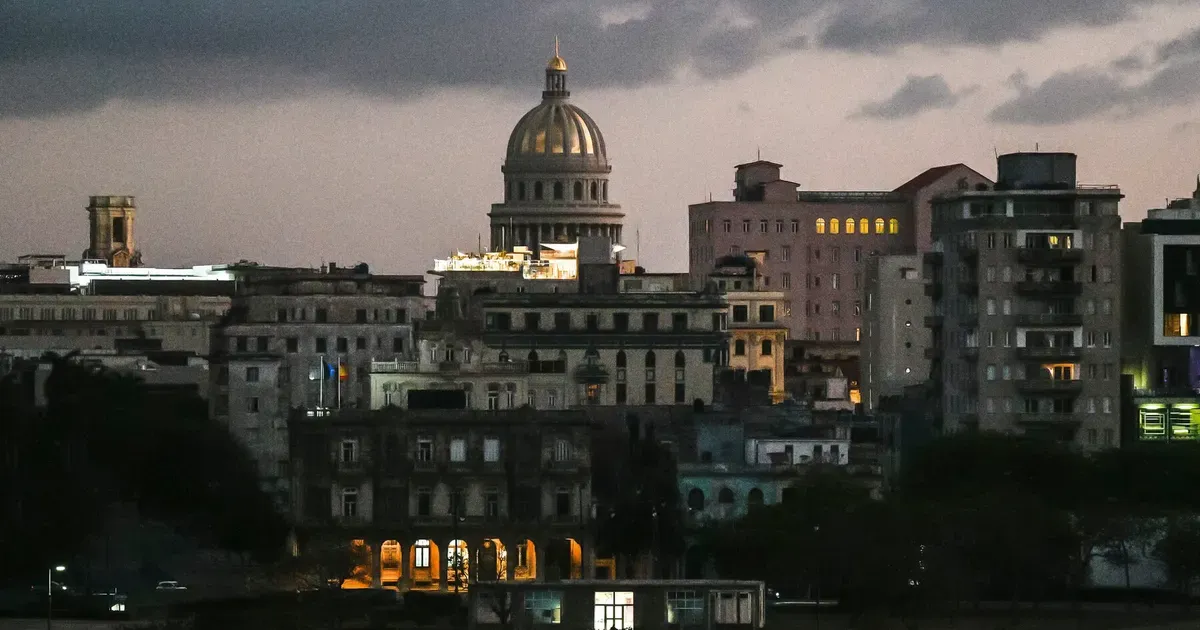
The United States allowed the Russian tanker Anatoly Kolodkin to reach Cuba with roughly 700,000 to 730,000 barrels of crude, giving Havana a short-term fuel lifeline and exposing the practical limits of sanctions pressure close to Florida. The vessel had loaded at Primorsk and arrived at Matanzas after days of uncertainty over whether Washington would try to stop the shipment.
The important correction is political as well as factual: this was a Trump administration decision in March 2026, not a leftover move from a previous sanctions posture. Trump indicated that Washington would not object if Cuba needed the fuel to survive. That turned a maritime enforcement question into a public signal of selective restraint.
Cuba Needed The Cargo
Cuba's energy crisis made the shipment more than a diplomatic symbol. The island had faced repeated blackouts, fuel shortages, foreign-currency stress and pressure on basic services. One tanker cannot rebuild an old grid or stabilize a weak economy, but it can help power generation and refining operations long enough to ease the worst immediate pressure.
The humanitarian argument therefore had force. Blocking the tanker might have increased leverage over Havana and Moscow, but it also could have deepened civilian hardship. In Cuba, energy failure quickly becomes a public-order problem, a health-system problem and a migration problem. Washington can treat sanctions as pressure, but geography makes the consequences difficult to outsource.
The Sanctions Message Got Messier
The tanker mattered because it was Russian and sanctioned. U.S. pressure on Russian oil was supposed to be predictable, especially after years of scrutiny over Moscow's shadow-fleet movements and wartime energy revenue. Allowing a sanctioned vessel to unload near U.S. waters complicates that message, even if the exception was made for humanitarian reasons.
Sanctions work partly through expectation. Traders, insurers, ports and governments need to believe the rule will be enforced. A case-by-case exception may be pragmatic, but it also invites every target to test where the exceptions begin. If Moscow can present the delivery as proof that U.S. pressure bends under local risk, the political value of the shipment becomes larger than the crude itself.
Havana's Relief Is Also Dependency
For Cuba, the delivery was a relief and a reminder of weakness. The country has struggled for years with aging power plants, limited foreign exchange and unreliable fuel supply. Venezuelan flows have faltered, alternative suppliers carry political costs and U.S. pressure has made every tanker a strategic event.
Russian crude buys time, not resilience. It does not modernize generation, fix payment constraints or reduce the island's exposure to whoever is willing to ship fuel under pressure. That is the underlying reality for Havana: every emergency cargo solves one week while proving the next crisis is still structurally waiting.
Washington Chose Instability Management
For the United States, the calculation was colder than the public phrasing. Blocking the shipment would have been consistent with maximum pressure. Allowing it reduced the chance of a deeper Cuban energy shock that could spill into unrest, migration pressure and regional instability. The exception was not softness as much as risk management.
Sanctions are not magic. They work only when the enforcing state is willing to absorb the second-order effects. In Cuba, those effects land close to American migration policy, Florida politics and coastal security. The Anatoly Kolodkin did not break U.S. power. It showed where that power starts negotiating with reality.