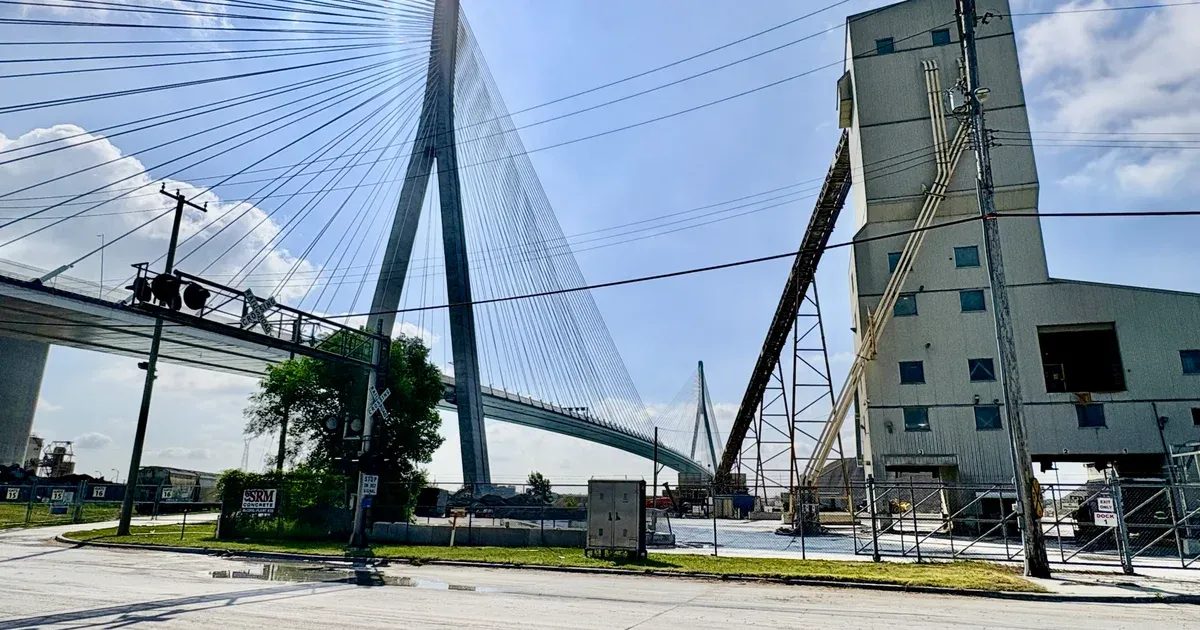
Canada will mark the opening of the Gordie Howe International Bridge without the American officials who were originally expected to share the stage. A ceremony designed around cooperation between Detroit and Windsor has instead become the latest public casualty of the U.S.-Canada tariff dispute.
On July 24, 2026, Canadian dignitaries were due to hold their own event after withdrawing invitations to their U.S. counterparts in response to President Donald Trump’s latest tariff threat. The bridge is still preparing to carry traffic, but its inauguration now reflects a political split over who paid, who controls the asset and who receives its revenue.
A Canadian-Financed Crossing Built Around U.S. Trade
The six-lane cable-stayed bridge spans the Detroit River between Michigan and Ontario, connecting two automotive centers after eight years of construction and repeated delays. Its reported C$6.4 billion cost, about $4.5 billion, was covered by Canada even though the completed crossing will be owned jointly by Ottawa and the state of Michigan.
Canada accepted that financing burden nearly 15 years ago to move the project past political resistance in the United States. The goal was practical: add another route beside the Ambassador Bridge and reduce a bottleneck at North America’s busiest commercial border corridor. More than C$1 billion in goods moves through Windsor and Detroit each day, tying the crossing directly to factory schedules, trucking capacity and regional employment on both sides.
The original financial structure recognized Canada’s upfront cost. Michigan would begin sharing toll revenue after Ottawa recovered what it spent on construction. That arrangement paired joint ownership with a sequence in which the country that financed the work collected revenue first.
Trump’s Ownership Demand Produced a Second Revenue Track
The bridge’s final approach to opening changed early in 2026 when Trump threatened to block it unless Canada agreed to share more authority and ownership. He argued that the United States should control at least half of the asset, even though Michigan was already part of the joint ownership arrangement and Canada had financed construction.
The demand also landed amid longstanding resistance from the owners of the nearby Ambassador Bridge, one of the few privately controlled international crossings. BBC News reported, citing The New York Times, that Ambassador Bridge co-owner and Trump donor Matthew Moroun met U.S. Commerce Secretary Howard Lutnick shortly before the president made his comments. The Gordie Howe project would give commercial traffic another major route across the river.
Canada agreed in June to postpone the opening while the two governments negotiated. Ottawa then accepted a separate arrangement directing half of bridge revenue for the next 15 years to an economic-development fund controlled solely by the U.S. government. Trump presented the revision as a better result for the United States.
Prime Minister Mark Carney has said the earlier cost-recovery agreement between Canada and Michigan remains in force. He described the White House deal as a parallel arrangement, meaning the opening now rests on two revenue tracks rather than a simple replacement of the original contract. That explanation establishes that the first agreement survived, but Canadian critics are still pressing for clarity about how revenue will move through both structures and what the U.S.-controlled fund will finance.
The Ceremony Breaks Before the Supply Chain Does
The bridge was named for Canadian hockey legend Gordie Howe, who spent most of his career with the Detroit Red Wings. The choice gave the project a figure claimed by Canadian identity and Michigan sports history, reinforcing the idea of a shared crossing. A Canadian-only opening strips that symbolism from the ceremony even though the bridge itself still joins the two cities.
The latest tariff threat broke the plan for a joint celebration, not the economic case for the crossing. Businesses and border communities have pressed for the bridge to open because an additional route can preserve freight movement when congestion or disruption hits the existing network. Former Canadian diplomat Colin Robertson called the revenue compromise a concession while still arguing that the connection is necessary for keeping supply chains intact.
Carney faces criticism because the bridge agreement follows other steps that opponents portray as yielding to Washington, including the removal of a digital-services tax opposed by U.S. technology companies and some Canadian retaliatory tariffs. Conservative lawmaker Shuvaloy Majumdar accused the government of negotiating from weakness, while Ontario Premier Doug Ford praised the bridge deal but urged a harder trade response to Trump.
Canada’s provinces are not aligned on how far that response should go. Ford has raised energy and critical-mineral exports as possible leverage. Leaders in Alberta and Saskatchewan have urged restraint, leaving Carney to manage a national trade strategy in which the regions most exposed to retaliation do not share one preferred tactic.
The Bridge Can Open Before Its Revenue Dispute Is Settled
The important separation is between operations and bargaining. Trucks can use a finished bridge even while elected officials dispute tariffs, ownership language and the destination of toll money. Opening the crossing protects the immediate transport function; the two agreements determine how the financial value created by that function is divided over time.
That distinction also explains why Canada accepted a concession without restoring the joint ceremony. Delaying the bridge further would place a daily trade corridor inside a broader political contest, while proceeding preserves an asset Canada spent years financing. The test after opening will be whether the two parallel revenue systems remain compatible in practice or create the next dispute over a bridge whose construction is complete but whose political terms are still being negotiated.