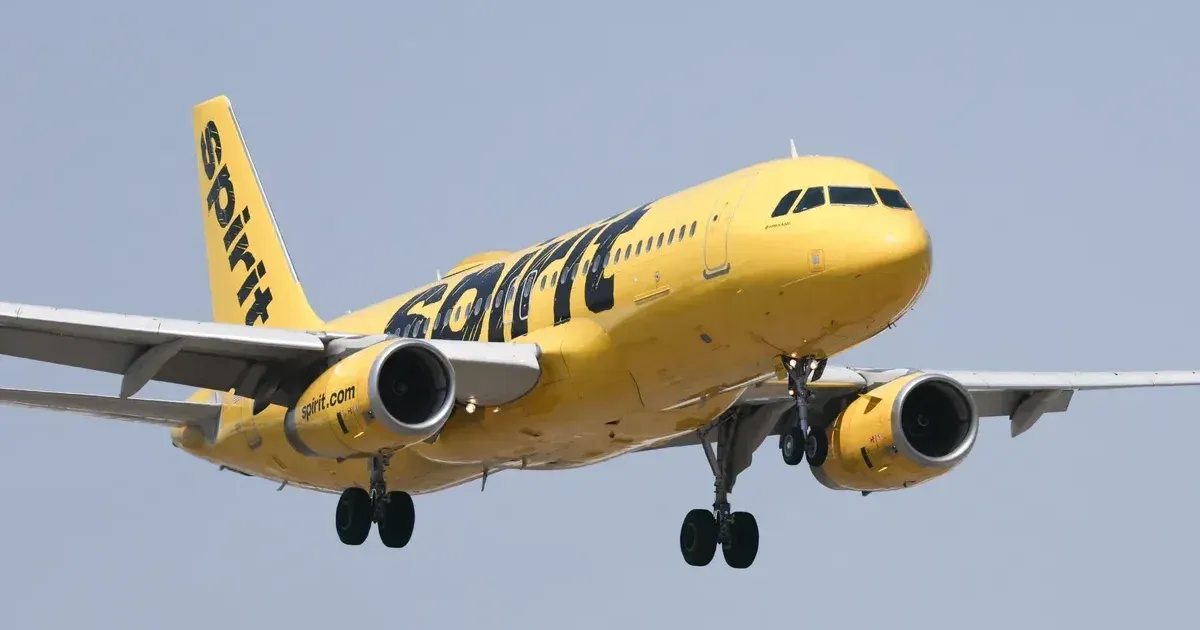
The White House’s proposed $500 million rescue could give the federal government a 90% stake in Spirit Airlines and effectively nationalize the budget carrier. President Donald Trump confirmed on April 22, 2026, that the White House is exploring a $500 million rescue package for Spirit Airlines. Administrative officials are negotiating a deal involving equity warrants that could result in the federal government owning a 90% stake in the struggling carrier. Spirit Airlines, which faced delisting in 2024, currently operates in the over-the-counter market. Intervention by the federal government follows two bankruptcy filings within a single calendar year.
Federal involvement in the aviation sector marks a shift in domestic policy under the current administration. Spirit Airlines shares jumped more than 400% on Wednesday following the announcement. Investors reacted to the possibility of a taxpayer-funded lifeline for a company that traded as a penny stock earlier in the week. Prices hit $1.62 per share, up from just $0.27 on Monday. The week’s gain reached approximately 560%.
Spirit Airlines Equity Warrants and Federal Funding
Negotiations center on a financial structure that trades immediate liquidity for long-term control. Bloomberg reported that the proposed warrants would allow the Treasury Department to purchase nearly the entire company. While the Financial Times suggests the funding totals $500 million, the specifics of the warrant execution remain a point of contention between the airline and federal regulators. Spirit Airlines has struggled with operational costs and debt servicing since its previous reorganization failed to stabilize its balance sheet.
Donald Trump addressed the situation during a televised interview, suggesting that the government should step in to prevent a total collapse. He noted his preference for mergers but indicated that a federal buyout was a viable alternative for this specific carrier. The administration has previously taken stakes in industries deemed essential to the national interest, including mining and semiconductor manufacturing. CNBC captured the president’s comments during a Tuesday broadcast that sparked the initial market rally.
"I don't mind mergers. I think I'd love somebody to buy Spirit, as an example," Donald Trump told CNBC during an interview. "Maybe the federal government should help that one out."
White House officials believe that the budget airline sector provides essential transportation infrastructure for low-income travelers. Previous attempts to find a private-sector buyer for the carrier were unsuccessful, leaving the government as the lender of last resort. The Wall Street Journal reported on Wednesday that the deal was close to completion. Treasury officials have not yet released the final terms of the equity warrants or the repayment schedule for the $500 million loan.
Stock Price Volatility and Over-the-Counter Trading
Markets showed intense volatility as the news of the rescue package circulated through trading desks. Spirit Airlines moved from $0.27 on Monday to over $1.60 within forty-eight hours. Delisting in 2024 forced the company to trade on the over-the-counter market, which typically experiences lower liquidity and higher price swings. Speculative buying drove the 400% surge on Wednesday as retail traders bet on the government’s ability to prevent a liquidation.
Iran war tensions recently pressured global energy prices, yet markets remained surprisingly resilient. Donald Trump expressed surprise during his interview that geopolitical conflicts in the Middle East had not caused a more severe market downturn. High fuel prices have historically crippled budget airlines that operate on razor-thin margins. Spirit Airlines faced additional pressure from these rising costs throughout the early months of 2026.
Analysts at major brokerage firms suggest that a 90% government stake would effectively nationalize the carrier. This move aligns with other second-term investments the White House has made in companies like Intel. Metals and mining sectors became high-growth areas in 2025 after similar federal interventions. Spirit Airlines would be the first major transportation company to receive this specific type of equity-based rescue since the administration began its current economic program.
White House Industrial Policy and National Security
Budget carriers provide a logistical backbone for regional commerce and labor mobility. Government officials argue that allowing Spirit Airlines to dissolve would reduce competition and lead to higher fares for the average American consumer. Operational challenges at the airline have persisted despite two separate bankruptcy processes. Management has failed to find a sustainable path to profitability without substantial external capital.
Critics of the rescue plan argue that taxpayer funds should not be used to prop up failing corporations. Government ownership of a 90% stake would give the administration direct influence over route selection and pricing strategies. Economic advisors within the White House contend that the warrants protect the public interest by ensuring taxpayers benefit from any future recovery. Financial reports indicate that Spirit Airlines remains insolvent without the immediate injection of federal cash.
Terms of the agreement are expected to include strict oversight of executive compensation and operational restructuring. Interest rates on the $500 million loan will likely reflect the high-risk nature of the aviation market in 2026. Spirit Airlines must convince the federal government that it can return to profitability under a new ownership structure. Public filings show the company has suffered from a lack of capital for fleet maintenance and modernization. Failure to secure this funding would likely result in the permanent grounding of its aircraft.
Spirit Rescue Sets a Nationalization Precedent
Does the federal government belong in the cockpit of a discount airline? The proposed 90% stake in Spirit Airlines is not a rescue; it is an acquisition by a state that has become increasingly comfortable with corporate ownership. By treating a failing budget carrier as a strategic asset comparable to a semiconductor plant or a lithium mine, the White House is blurring the line between a market economy and state-led capitalism. The precedent set here suggests that no industry is too small or too poorly managed to be beyond the reach of a federal takeover if the political optics are favorable.
The move is a gamble on a zombie corporation. Spirit Airlines has already proven, through two bankruptcies in twelve months, that its business model is fundamentally broken in a high-fuel-cost environment. Giving the Treasury Department warrants for 90% of a company that traded for twenty-seven cents just days ago provides the illusion of taxpayer protection while masking the reality of a major subsidy. If the goal is competition, the administration should let the carrier fail and allow more efficient competitors to absorb its routes and planes. Instead, the government is choosing to distort the aviation market by keeping an insolvent player on life support. Nationalization is the new standard.