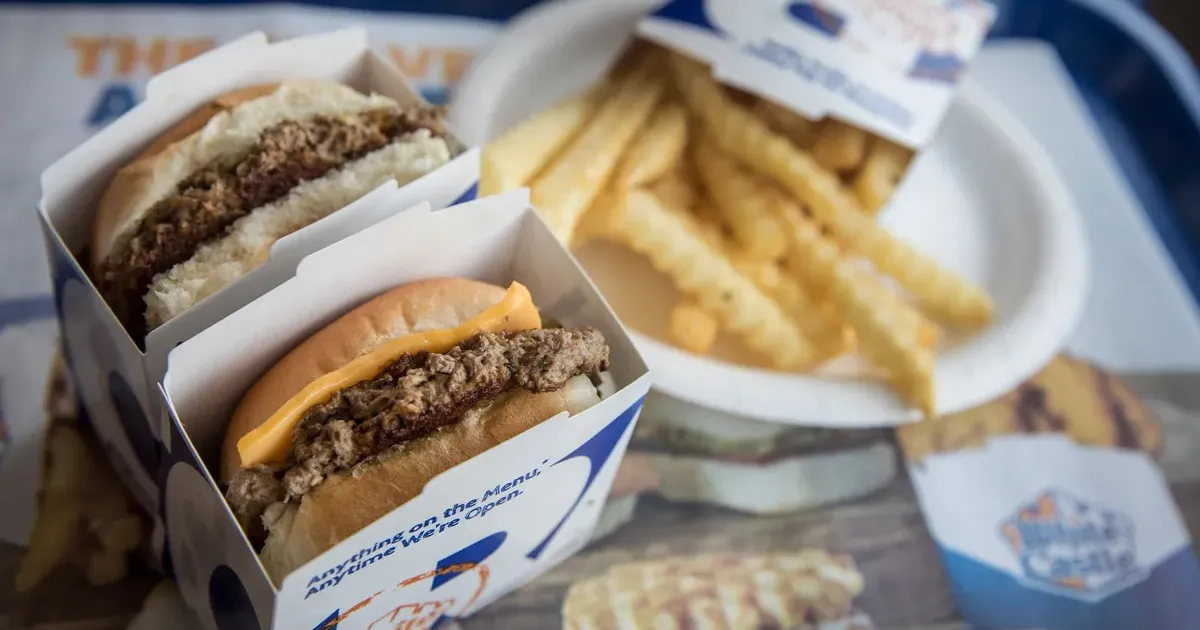
A Mirror Image on the Corner
Porcelain tiles gleamed under the streetlights of 1920s Milwaukee, reflecting a vision of cleanliness that had only recently entered the American fast-food lexicon. Billy Ingram and Walt Anderson had spent five years perfecting this aesthetic in Wichita, Kansas, since founding White Castle in 1921. Their goal was to rehabilitate the reputation of the hamburger, which was then viewed as a dangerous street food served at dirty carnivals. By constructing miniature fortresses of white brick and stainless steel, they convinced the public that their five-cent sliders were safe, standardized, and wholesome. Success invited imitators, but no one embraced the art of the copycat with as much audacity as John E. Saxe and his son, Thomas Saxe.
White Tower System opened its first location in 1926, just a few blocks from where White Castle was expanding. The mimicry was total. The Saxes did not just borrow the idea of a small burger; they hired a former White Castle operator to provide the blueprints for the building. Every detail of the original Kansas chain was replicated with surgical precision. From the crenelated rooflines to the interior counter layout, a customer could step into a White Tower and easily believe they were standing in a White Castle. Even the slogans and the white uniforms worn by staff were nearly identical. This was not mere inspiration but a calculated effort to siphon off the brand equity White Castle had painstakingly built.
Ingram watched as White Tower expanded rapidly across the Midwest and into the Northeast. The Saxes were aggressive, often securing prime real estate in cities before White Castle could arrive. While Ingram focused on slow, steady growth and employee retention, the White Tower founders prioritized speed. They understood that the visual language of the white castle was a shorthand for quality. By the early 1930s, White Tower had dozens of locations, many of which were positioned so close to existing White Castles that legal friction became unavoidable.
The Battle for the Porcelain Fortress
Federal courtrooms in Minnesota became the stage for one of the first major intellectual property battles in the American restaurant industry. White Castle System of Eating Houses filed suit against White Tower System, alleging unfair competition and trademark infringement. The core of the argument rested on the idea that a building itself could function as a brand. At the time, legal protections for architectural styles were less strong than they are today. White Castle had to prove that the public associated the white fortress design specifically with their company and that White Tower was intentionally deceiving customers.
Evidence presented during the trial revealed the depth of the Saxes' deception. Testimony showed they had actively sought out White Castle’s proprietary methods and design secrets. The court heard how White Tower had even copied the font used on the menus. One key witness described the confusion of patrons who walked into a White Tower expecting White Castle’s specific seasoning and service. This was a era when regional chains were just beginning to cross state lines, making brand consistency a revolutionary concept. Such blatant duplication threatened the very foundation of the franchise model.
Judges in the Eighth Circuit Court of Appeals were not sympathetic to the imitators. In a 1934 ruling that remains a foundational case for trade dress law, the court found that White Tower had engaged in a deliberate campaign of piracy. The decision emphasized that while a company cannot own the concept of a hamburger or a white building, it can protect a specific combination of features that identify the source of a product. This legal precedent ensured that a brand's visual identity was not merely decoration; it was a protected asset. The court ordered White Tower to pay damages and, more sharply, to change its appearance.
Forced Transformation and the Path to Obscurity
The ruling required White Tower to remove the battlements and castle-like features from its buildings in territories where White Castle operated. They were also forced to pay a substantial settlement to Billy Ingram’s company. To survive, White Tower had to find a new visual identity. They shifted toward an Art Deco, streamlined look that utilized curves and neon rather than medieval motifs. While this allowed the chain to continue operating, the loss of the castle aesthetic stripped away the immediate brand recognition they had stolen. They were no longer a mirror image of the industry leader, they were just another burger stand in an increasingly crowded market.
Post-ruling years saw the two chains take very different paths. White Castle leaned into its status as the original slider, maintaining its private family ownership and iconic status. Billy Ingram used the victory to further standardize his operations, even creating his own construction company to manufacture the porcelain steel panels for his restaurants. White Tower, meanwhile, struggled to maintain its momentum. Without the shortcut of copying a proven winner, the Saxes had to rely on their own business merit. The chain eventually peaked in the 1950s with over 200 locations, but the rise of giants like McDonald's and Burger King pushed the aging brand toward the margins.
Imitation proved more profitable than innovation only for a fleeting moment.
By the 1970s, White Tower began a slow, terminal decline. Changing consumer tastes and the shift toward suburban drive-thrus left the urban-centered White Tower locations behind. Most of their buildings were demolished or converted into independent diners. Today, only one White Tower remains in operation in Toledo, Ohio, serving as a lonely monument to a company that once tried to build an empire on a stolen blueprint. The legal defeat in the 1930s had effectively capped their ceiling, proving that a brand built on a lie cannot withstand the scrutiny of the law or the passage of time.
The Elite Tribune Perspective
Can we really blame the Saxes for seeing a gold mine and reaching for a shovel? The history of American capitalism is littered with the corpses of innovators who were outmaneuvered by better-funded copycats. What makes the White Tower saga so offensive is not the theft itself, but the utter lack of imagination involved. They didn't just take the burger, they took the soul of the building, the shirt off the cook's back, and the very words off the menu. It was a parasitic business model that deserved the judicial hammer it eventually received.
Corporate cloning remains a rampant plague in the modern food industry, though it now wears the mask of trend-chasing. When one boutique coffee shop succeeds with a specific minimalist aesthetic, a thousand others sprout up with the same blonde wood and Helvetica fonts. The 1934 ruling against White Tower was supposed to be a deterrent, but instead, it simply taught the thieves to be more subtle. We should celebrate the fact that White Castle survived while its doppleganger faded into a historical footnote. It is rare instance where the law actually protected the creator from the scavenger. If you want to build a castle, you should be required to lay your own bricks rather than stealing your neighbor's masonry.