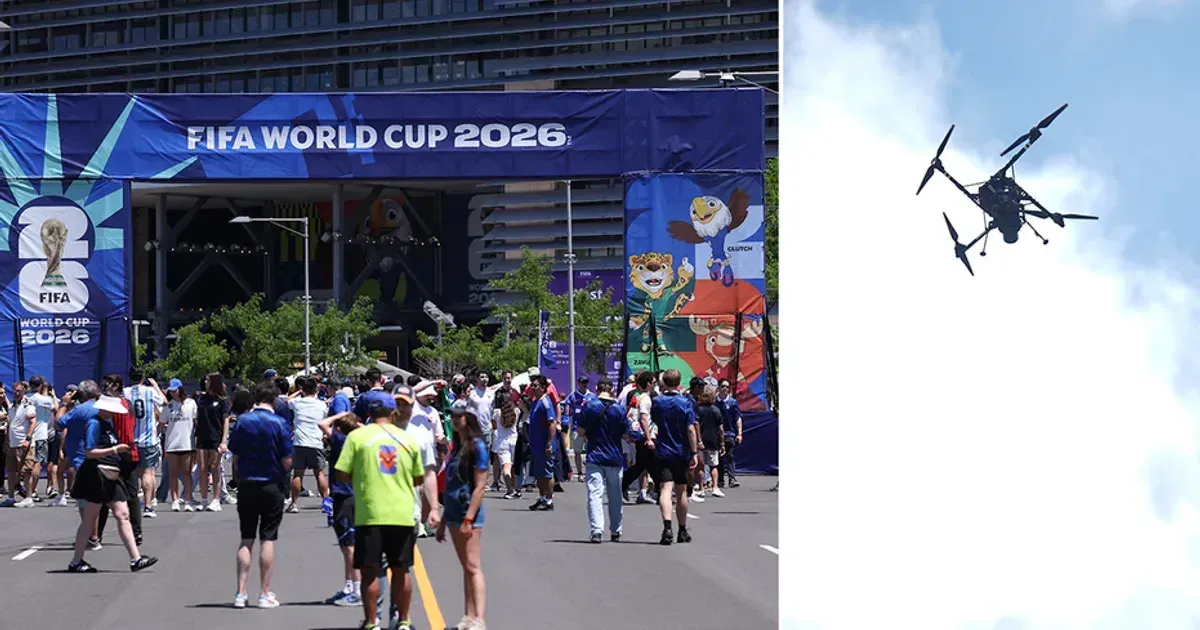
Federal prosecutors have charged four people in cases tied to alleged drone flights near FIFA World Cup events, while the FBI says a wider crackdown has produced more than 400 drone seizures across US host cities, according to Fox News. The enforcement push shows how event security now reaches above stadiums as much as around gates, transit hubs and fan zones.
The central issue is restricted airspace. By June 26, 2026, major sporting events relied on temporary flight restrictions to reduce risks from aircraft, drones and other unauthorized aerial activity. Small drones could still be used casually by fans or content creators, but the same devices could also disrupt play, create crowd risks or force security teams to treat every unknown flight as a potential threat.
That is why the number of seizures matters. More than 400 seizures suggests the problem is not an isolated mistake at one venue. It points to a nationwide compliance challenge across multiple host cities, each with different stadium layouts, police partners and public gathering zones.
Drone Enforcement Becomes A Stadium Test
The World Cup gives federal and local agencies a concentrated test of drone enforcement. Unlike a single championship game, the tournament spreads attention across cities and dates. Security teams have to repeat the same airspace discipline over and over while visitors move between games, outdoor events and public celebrations.
Fox News reported that four people now face federal charges. That is the strongest signal in the story because it moves the issue from warnings and confiscations into criminal enforcement. The decision to charge a small number of cases may be intended to deter a much larger group of drone owners from testing the limits near venues.
The seizures also show the difficulty of public messaging. Many drone owners understand basic registration rules but may not follow temporary restrictions tied to a match day. A tourist who sees an open sky may not understand that the legal airspace has changed around a stadium or fan zone.
Security Risk Is Broader Than The Field
The concern is not only that a drone could interrupt a match. A device flying over a crowd can fall, collide with equipment, trigger panic or distract law enforcement resources. Even a harmless operator can create a serious response because security teams cannot know intent instantly.
For host cities, that means drone detection and seizure are part of a larger operating plan. Police departments, federal agencies, stadium operators and aviation regulators have to share information quickly enough to identify a device, locate an operator and decide whether the situation is a nuisance, a safety threat or a criminal case.
The crackdown also arrives as US cities are already under pressure to manage protests, traffic, ticket scams and crowd safety around major events. Drone enforcement adds another layer that is less visible to fans but highly visible to security planners.
The Deterrence Message Is the Point
The charges are likely to function as a deterrence message as much as a punishment mechanism. With more matches ahead, authorities want drone owners to understand that restricted airspace is not optional. Confiscation may stop one flight; federal charges are meant to influence many more decisions before a drone is launched.
The next measure of success will be whether seizure numbers fall as the tournament continues. If they remain high, agencies may need stronger venue signage, location-based alerts or more coordination with drone software platforms that can warn operators before takeoff.
The World Cup is therefore becoming a live test of how the United States handles low-altitude security at large public events. Stadium perimeters are no longer enough. The air above the crowd is now part of the venue.