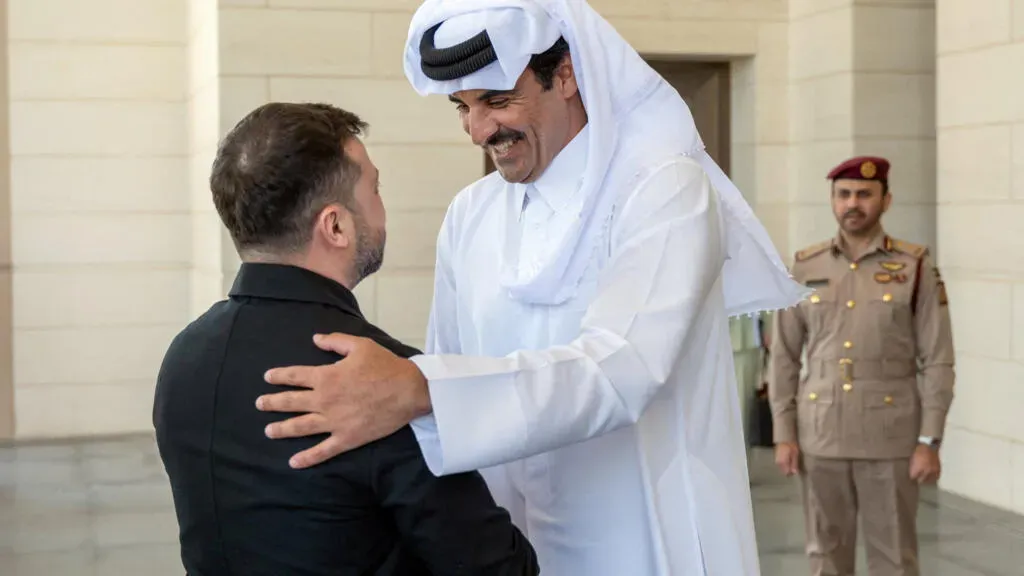
Volodymyr Zelenskyy's Gulf tour showed how Ukraine is turning battlefield experience into diplomatic currency. The trip produced or advanced defense cooperation with Qatar, the United Arab Emirates and Saudi Arabia, focused heavily on countering drones and missiles.
The tour is not a side story to the war with Russia. It is one way Kyiv is converting years of air-defense pressure into influence with states facing Iranian drone and missile threats.
Battlefield Knowledge Became The Offer
Ukraine has spent years studying Shahed-type attack drones, cruise missiles, ballistic salvos, electronic warfare, acoustic detection, mobile fire teams and the economics of interception. Gulf states have expensive Western air-defense systems, but the central drone problem is not only whether a missile can hit a target.
The central question is whether a defender can afford to spend high-end interceptors against low-cost systems at scale. Ukraine's value is that it has been forced to solve that problem under repeated attack and limited stockpiles.
The Gulf Needed Practical Answers
Qatar, the UAE and Saudi Arabia face a regional security environment where Iranian and Iran-linked drone and missile threats are not theoretical. Energy sites, bases, ports, airports and cities all depend on layered defenses that can handle saturation, decoys and cheap incoming systems.
Ukraine cannot copy its battlefield directly into the Gulf. Terrain, targets, command structures and escalation risks differ. But the lessons on sensors, layered defenses, cheaper interceptors, training discipline and cost control travel well.
Ten-Year Frameworks Change The Tone
AP and other reporting described long-term security agreements or frameworks with Saudi Arabia and Qatar, with Kyiv also seeking a similar path with the UAE. The long timeline matters because the deals are not only about one urgent shipment or one photo opportunity.
Longer frameworks let Ukraine present itself as a security partner, not only as a country asking for weapons. The partnership framing changes the conversation. Kyiv can offer training, combat data, production experience and operational lessons while asking for air-defense help in return.
Kyiv Wants Reciprocity, Not Sympathy
Zelenskyy's message to partners has been blunt in substance: countries that want Ukraine's help should help Ukraine defend itself. This is strategic reciprocity, not charity language. It is strategic reciprocity.
Ukraine can share practical defensive methods and drone-interception expertise, but it still needs interceptors, production capacity, financing and political support to survive Russian attacks. Gulf defense ties matter most if they feed back into Ukraine's own air shield.
Gulf governments maintain relationships with Washington, Moscow, Beijing and regional rivals. Ukraine cannot assume automatic alignment. It has to make itself useful in areas where Gulf leaders see immediate national-security value.
Drone defense creates that immediate value. The expertise keeps Kyiv relevant even as global attention shifts among Russia, Iran, oil markets and great-power competition. It also tells Moscow and Tehran that Ukraine's wartime experience will not remain trapped inside Ukraine's borders.
Drone War Is Becoming Exportable Expertise
Ukraine is selling competence because sympathy is not enough. Countries may condemn Russian aggression and still slow-walk assistance when their own interests are unclear. Practical defense cooperation gives them a reason to stay engaged.
Every lesson learned over Kyiv, Odesa or Kharkiv can become part of another country's defense planning. Ukraine remains dependent on foreign help, but it is not empty-handed. In drone warfare, knowledge is a weapon. Zelenskyy is trying to make sure it is also a diplomatic asset.