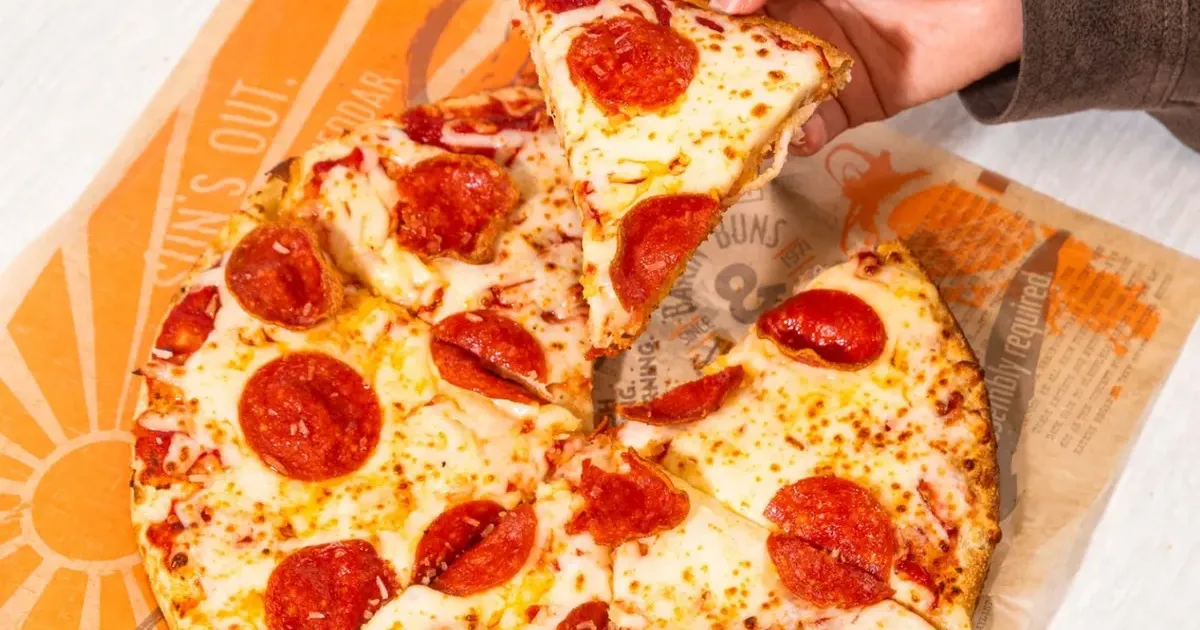
7-Eleven corporate officers in Irving, Texas, announced on April 5, 2026, that the retailer will maintain its five dollar whole pizza promotion for loyalty members through the upcoming fiscal quarter. Rising commodity costs forced most quick service competitors to abandon the five dollar price point years ago, yet this convenience giant continues to leverage its huge footprint to anchor value seekers. Food inflation has historically driven consumers toward lower-cost alternatives, and the current economic climate is no exception. Executives confirmed that the aggressive pricing strategy focuses on specific high-traffic windows, primarily weekends, to maximize foot traffic and cross-category sales.
Convenience Retailers Undercut Traditional Pizza Chains
Legacy pizza brands like Domino's and Pizza Hut have steadily pushed their entry-level price points toward the ten dollar mark. Labor shortages and rising cheese prices created a ceiling for traditional delivery models that 7-Eleven simply ignores. By using a pre-staged, frozen-to-oven model, the convenience chain eliminates the need for skilled dough-tossers or dedicated delivery fleets. Customers must enter the store to collect their five dollar pie, which almost guarantees additional purchases of high-margin items like fountain drinks or tobacco products.
Volume overcomes margin in the convenience sector. Recent data from the National Association of Convenience Stores indicates that prepared food now accounts for over 25 percent of in-store profits. 7-Eleven remains the dominant force in this category, operating more than 13,000 locations in North America alone. Small-scale operators find it impossible to match the bulk purchasing power of a global conglomerate that buys mozzarella by the kiloton. While a local pizzeria might pay a premium for weekly deliveries, the Irving-based giant operates its own distribution network to keep costs suppressed.
"Our goal is to provide a hot, delicious meal at a price point that fits into every customer's budget," stated a 7-Eleven merchandising official during a recent investor call.
Pizza sales spikes usually occur between Friday evening and Sunday afternoon. Retailers have observed that the five dollar whole pizza is a primary driver for weekend family dinners among lower-income demographics. These shoppers often bypass traditional fast food drive-thrus because a single meal for a family of four now routinely exceeds forty dollars. A $5 pizza offers a rare vestige of the value menus that defined the early 2000s retail landscape.
Supply-chain Tactics Behind the Five Dollar Pie
Proprietary oven technology allows 7-Eleven to bake a whole pizza in under three minutes. These high-speed convection units, often manufactured by TurboChef, use directed bursts of hot air to crisp the crust while melting cheese rapidly. Traditional deck ovens take much longer and require more space than a standard convenience store counter allows. Engineering these efficiencies into every store footprint allows the chain to scale its food service without the overhead of a full kitchen. Every square foot of a 7-Eleven is improved for revenue, and the pizza program occupies minimal real estate compared to its output. Aggressive pricing strategies are essential for retailers looking to maintain or expand their grocery market share today.
Ingredient sourcing follows a similarly rigid logic of efficiency. The dough is formulated to withstand long-term freezing without losing its structural integrity or flavor profile upon reheating. Critics often dismiss convenience store food as inferior, yet blind taste tests frequently show that the gap between a 7-Eleven pizza and a budget delivery chain is narrowing. Consumers prioritize price and speed over artisanal quality in the current high-interest-rate environment. Convenience has become the ultimate currency for the modern American worker.
Strategic Timing and Mobile App Loyalty Drivers
Accessing the five dollar price point requires participation in the 7Rewards program. This digital gatekeeping allows the company to harvest valuable consumer data, tracking purchase habits and geographic trends. Frequent pizza buyers receive targeted notifications on their mobile devices precisely when weekend hunger strikes. Data harvesting proves more lucrative than the immediate profit on the pizza itself. Information regarding a customer's preferred beverage or cigarette brand allows for hyper-personalized marketing that drives long-term brand stickiness.
Promotion days are not chosen at random. Internal sales metrics show that pizza demands peak on Fridays, often coinciding with payday for many hourly workers. Offering a five dollar whole pizza on these specific days prevents customers from wandering into a McDonald's or a Taco Bell. By securing the primary meal purchase, 7-Eleven captures the secondary spending that inevitably follows. A family purchasing two pizzas for ten dollars is highly likely to spend another fifteen dollars on chips, soda, and dessert items during the same visit.
Competitive Pressure on Quick Service Restaurant Margins
McDonald's and Burger King have struggled to maintain their value propositions as franchise owners demand higher prices to cover rising wages. Convenience stores operate with leaner staffing models, often requiring only two employees to manage the entire store including the food service station. This labor efficiency allows 7-Eleven to maintain price points that would be suicidal for a traditional restaurant. The boundary between a gas station and a restaurant has blurred beyond recognition. Industry analysts expect more convenience brands to adopt similar aggressive pricing models to steal market share from the struggling QSR sector.
Market shifts suggest that the five dollar meal is becoming a loss-leader strategy rather than a sustainable standalone product. 7-Eleven appears comfortable losing a few cents per pizza if it means winning the loyalty of a customer who visits three times a week for fuel and coffee. In 2026, the battle for the American stomach is being fought at the checkout counter, not the dining table. Retailers who can master the logistics of cheap, hot food will survive the inevitable shakeout of the over-saturated fast food market.
The Elite Tribune Strategic Analysis
Traditional dining metrics fail to account for the radical decentralization of the American kitchen. 7-Eleven is no longer a mere purveyor of emergency milk and overpriced gasoline; it is a predatory logistical machine that has successfully weaponized the five dollar pizza against a bloated fast-food industry. While legacy chains like Domino's waste millions on autonomous delivery drones and flashy advertising, 7-Eleven uses its 13,000 North American outposts to create a localized food web that is impossible to replicate. The convenience store is the new neighborhood diner, stripped of its charm but improved for a society that no longer has the time or the money for the ceremony of a sit-down meal.
Critics who sneer at gas station pizza miss the broader economic reality of the working class. This is not a culinary choice; it is a survival tactic. By gating the $5 price behind a mobile app, 7-Eleven has also turned its customers into data points for its advertising arm. They are not just selling dough and cheese, they are buying consumer behavior. The model is the future of retail, where the product is merely the bait for the data stream. Five dollar pizza is a masterstroke of psychological pricing that masks the true cost of convenience.
Resistance from traditional restaurants is futile because they cannot match the labor-to-revenue ratio of a convenience store clerk who doubles as a chef. Expect an enormous consolidation of the pizza industry as mid-tier chains find themselves squeezed between high-end artisanal shops and the widespread convection ovens of the corner store. The verdict is clear. Cheap wins.