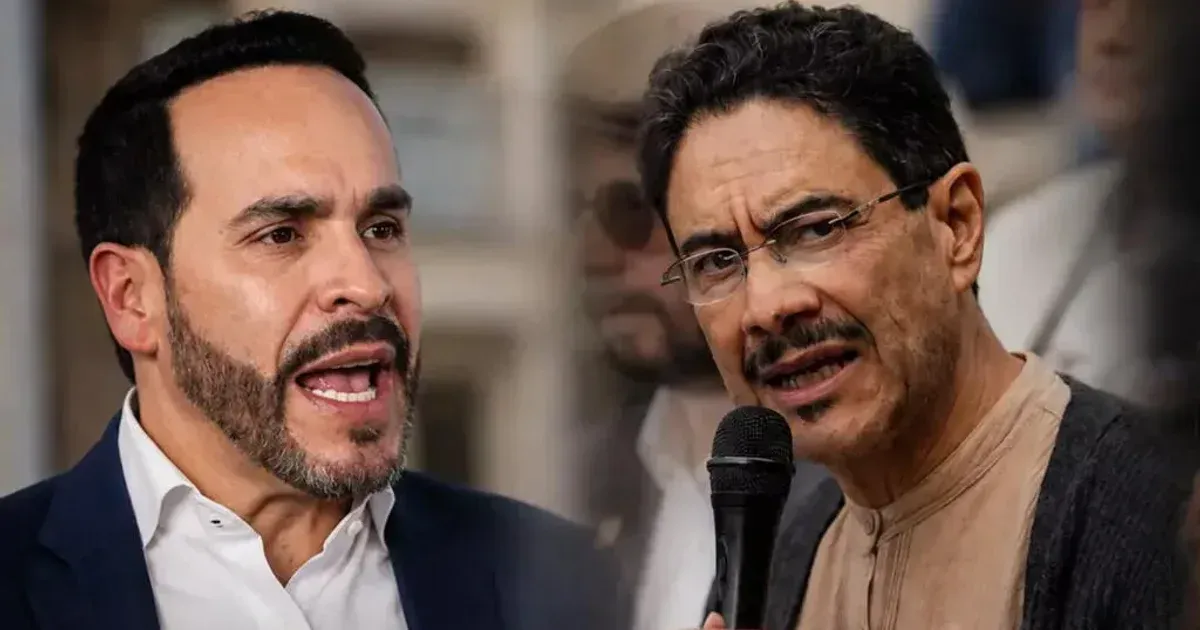
Abelardo de la Espriella became the frontrunner in Sunday's presidential contest, capturing a plurality of the vote in a race defined by security concerns and deep ideological rifts. Official tallies released on June 1, 2026, show the far-right outsider secured 43.7% of the total vote with 99% of precincts reporting. His primary challenger, veteran leftist senator Iván Cepeda, trailed with 40.9%, ensuring neither candidate reached the absolute majority required to avoid a second round. Voters across the nation participated in a consequential decision that effectively split the electorate between a return to hard-line security policies and the continuation of reformist social agendas.
National registrar figures confirmed De la Espriella garnered more than 10 million votes, a total that surprised many analysts who initially dismissed his lawyer-turned-politician persona as a fringe candidacy. His platform focused almost exclusively on a perceived vacuum of authority following the administration of Gustavo Petro. Cepeda, acting as the standard-bearer for the left, sought to defend the legislative victories of the previous four years while promising to address the rising violence that has plagued rural departments. Polarization has reached levels unseen in recent decades.
Right-Wing Outsider Challenges Leftist Status Quo
Abelardo de la Espriella built his momentum through a series of viral media appearances and a combative legal career that positioned him as an enemy of the traditional political class. Critics often label him an ultraconservative firebrand, yet his message connected in urban centers where crime rates have dominated public discussion. Campaign officials noted that his victory in several key municipalities signaled a shift away from the traditional parties that once dominated the right. Results from Bogotá and Medellín showed a stark divide in how metropolitan voters view his aggressive rhetoric regarding law and order.
Iván Cepeda relied on a different coalition, pulling support from labor unions, student organizations, and rural communities that benefited from land reform initiatives. Senator Cepeda has spent years in the public eye as a human rights advocate and a vocal critic of paramilitary groups, a background that makes him a direct ideological foil to his opponent. Support for the left remained strong in coastal regions and the southwest, though the margin of victory in those strongholds was narrower than in the 2022 election cycle. Legislative records show Cepeda has championed over 40 social reform bills during his tenure in the Senate.
Abelardo de la Espriella claimed a mandate for change during his victory speech, stating that the people of Colombia have chosen a path of order over the uncertainty of the past four years.
Voters now face a choice between two irreconcilable visions for the country's future. One side promises a total overhaul of the judiciary and a renewed offensive against rebel groups, while the other emphasizes diplomatic engagement and wealth redistribution. Recent polling conducted by local agencies suggested that the middle ground has evaporated, leaving approximately 15% of the electorate as undecided swing voters. These individuals will likely decide the outcome on June 21, 2026, when the runoff takes place. This runoff follows the tenure of the administration of Gustavo Petro, whose political legacy is currently being tested.
Security Fears Drive Voters to the Polls
Violence attributed to various armed groups influenced the electoral environment in several frontier departments. Local monitors reported that intimidation tactics by dissident factions sought to suppress turnout in areas traditionally supportive of reformist candidates. Despite these pressures, 99% of the voting tables were successfully processed, reflecting a sound institutional response from the National Registrar. Military units deployed 50,000 personnel to secure polling stations in high-risk zones, according to Ministry of Defense reports. No major terrorist incidents were recorded on election day itself.
Economic concerns also dictated voter behavior as inflation and currency fluctuations weighed on the minds of the middle class. While De la Espriella promised market liberalization and tax cuts for large enterprises, Cepeda argued for increased public spending on healthcare and education. Many families expressed frustration with the cost of living, which has risen by 12% over the last fiscal period. These economic anxieties often intersected with security issues, as disrupted supply lines in rural areas contributed to food price spikes. Business leaders in the commercial hub of Barranquilla have remained cautious about endorsing either candidate before the final round.
Voters will decide the nation's path in the June 21 runoff.
The Runoff Will Test Whether the Right Can Hold Its Lead
The election will also serve as an indicator for the broader South American political landscape. The outcome in Colombia carries weight far beyond its borders, potentially shifting the balance of power within regional and hemispheric diplomacy. If Abelardo de la Espriella succeeds, he will join a growing cohort of right-wing leaders who have gained traction by prioritizing domestic security over international climate or social compacts. Such a victory would likely complicate diplomatic relations with neighboring administrations that have aligned themselves with the left-wing wave of the early 2020s.
Cepeda, by contrast, offers a continuation of the regional integration efforts that characterized the Petro era. A victory for the left in Bogotá would solidify the current geopolitical alignment of the continent's largest economies, focusing on environmental protections and sovereign debt restructuring. Investors are watching the runoff closely, weighing the potential for a sharp policy turn under De la Espriella against the higher public spending favored by Cepeda. Foreign direct investment remains contingent on the stability of the Colombian legal framework. The upcoming three weeks of campaigning will determine if the nation moves toward a hard-line conservative restoration or a reinforced social democracy. The runoff lead gives de la Espriella momentum, but it also makes him the central target for rivals trying to consolidate anti-establishment and pro-Petro voters before the final round. De la Espriella will also need to show whether his first-round advantage can survive a runoff electorate that may become more tactical. Voters who backed eliminated candidates could consolidate against him if opponents frame the final round as a choice about institutions rather than personality. The campaign’s next phase will test whether his message expands beyond a loyal base or hardens resistance among undecided voters. That distinction could decide how aggressively rivals court the center before the final vote. Runoff endorsements may reveal which argument has more room to grow.