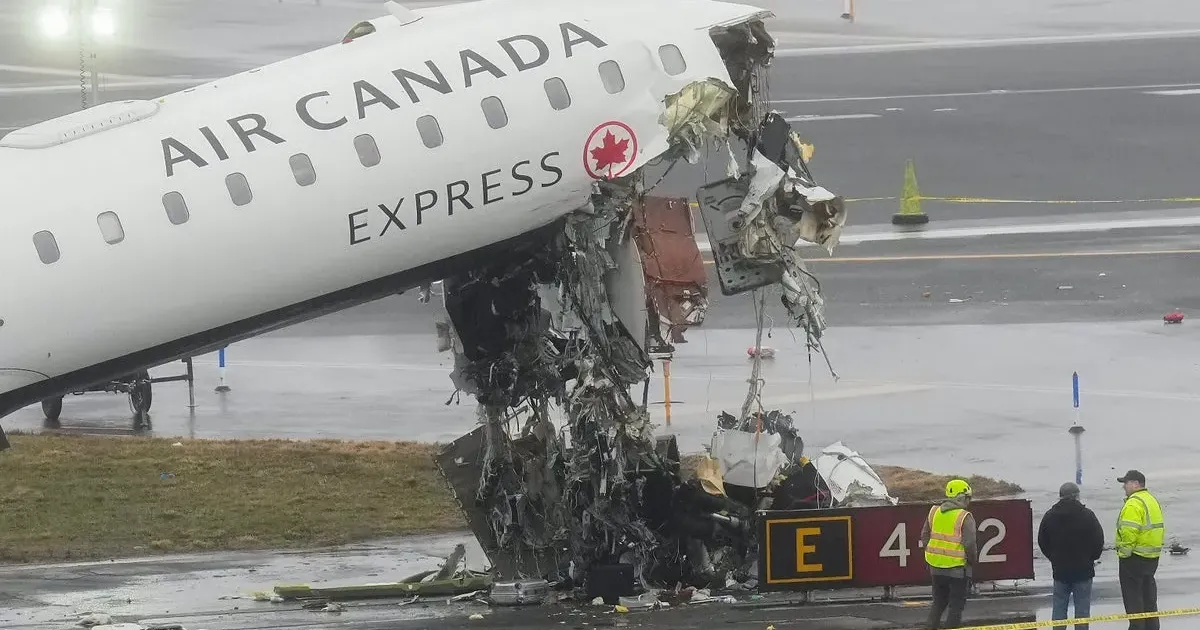
Michael Rousseau's departure from Air Canada shows how quickly a safety crisis can become a governance crisis. The fatal Air Canada Express crash at New York's LaGuardia Airport was already a grave operational event. Two Jazz Aviation pilots were killed and dozens of people were injured. Rousseau then released a condolence video that drew heavy criticism because it was delivered almost entirely in English, despite Air Canada's Montreal base, its official-language obligations and the francophone identity of one of the pilots, Antoine Forest. Days later, Rousseau said he would retire later in 2026.
The Message Became A Leadership Test
Crisis communication is judged by more than accuracy. It is judged by audience, tone, timing and respect. In Canada, language is not a cosmetic detail for a national carrier. It is part of the company's legal and public identity.
Prime Minister Mark Carney and Quebec leaders criticized the English-only message, and the official-languages commissioner received a large wave of complaints. Rousseau's prior criticism over limited French made the video more damaging. A one-time error can be apologized for. A repeated weakness in a sensitive area becomes evidence of leadership distance.
The Safety Inquiry Remains Separate
The crash itself still required technical investigation. Regulators needed to examine runway movement, aircraft operations, emergency-vehicle positioning, crew factors and airport procedures. Public anger over language cannot substitute for that work.
But the communication failure created a separate problem for the board. Families, employees, passengers and political leaders were not only asking what happened at LaGuardia. They were asking whether Air Canada understood the communities it serves at the moment those communities were grieving.
Bilingualism Is Governance For Air Canada
Air Canada is not an ordinary private brand in the Canadian imagination. It is a national airline based in Montreal and subject to official-language expectations. During normal operations, that affects announcements, service, complaints and regulatory obligations. During a fatal accident, it becomes a test of moral presence.
The next chief executive cannot treat bilingual communication as a public-relations accessory. It has to be part of emergency preparedness, executive training and board oversight. A crisis plan that does not work in both official languages is incomplete.
Succession Did Not End The Question
Air Canada said succession planning had already been underway, but the timing made Rousseau's retirement impossible to separate from the backlash. The company later named Anko Van der Werff, then CEO of Scandinavian Airlines, as its next chief executive, with Rousseau remaining as an adviser during the transition.
Van der Werff's international aviation background may help with operational credibility. He still inherits the same trust problem. His first task is not only to run an airline. It is to show that Air Canada can communicate nationally without making language respect feel optional.
The Board Has Two Tracks To Manage
A leadership change can satisfy public anger for a moment, but it does not answer what happened at LaGuardia. Air Canada still needs transparent cooperation with investigators, practical support for the victims' families and a clear internal review of emergency messaging.
The two tracks have to move together. One is technical. One is human. Both affect trust. If the company treats language as the whole problem, it risks looking evasive about safety. If it treats safety as the only problem, it repeats the mistake that made the message so damaging.
Crisis Language Is Not Ceremony
Rousseau lost control of the response because the message made him the story. In a fatal crash, leadership should reduce noise around the victims and facts. His video added another dispute.
The exit matters beyond one executive. It tells every airline board that crisis language is a core safety-adjacent function. Public trust after an accident depends on whether the company sounds competent, present and respectful when people are listening most closely.