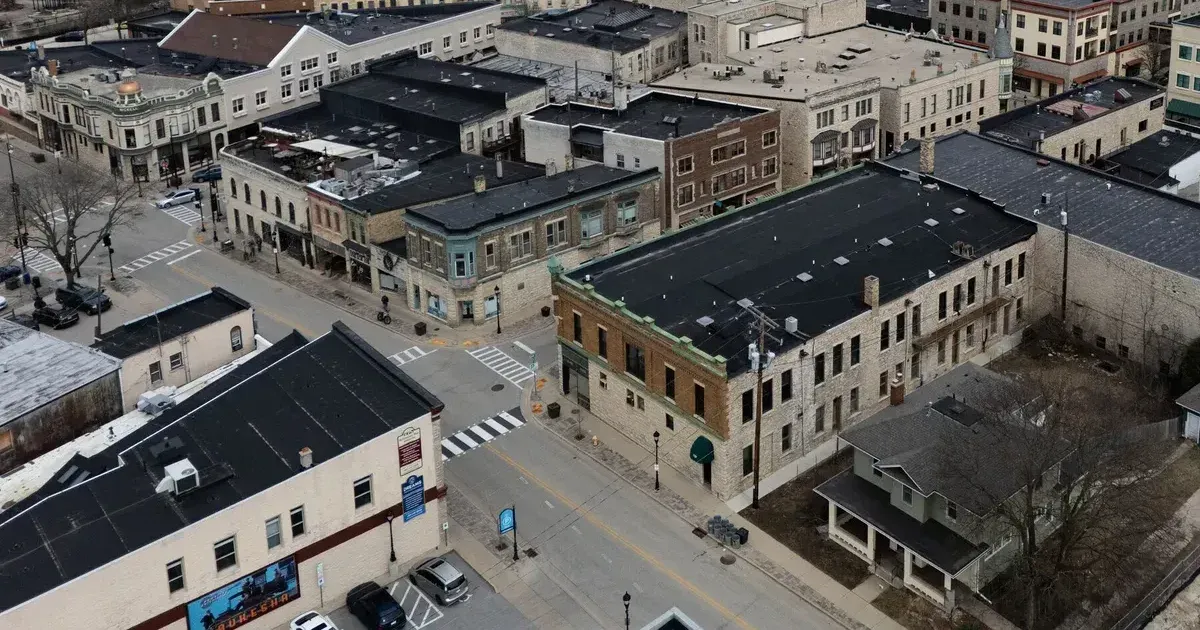
Alicia Halvensleben defeated a Republican legislator to become the mayor of Waukesha on April 8, 2026. Voters in the suburban Milwaukee hub chose the Common Council president over a veteran state lawmaker, continuing a trend of Democratic gains in areas once considered unreachable for the party. Municipal records from the last decade show a steady erosion of the GOP margin in this city that long was the engine of conservative power in Wisconsin.
Halvensleben leveraged her deep familiarity with local budgeting and infrastructure projects to distance herself from the polarizing rhetoric often found in state-level politics. Conservative strategists viewed the loss with concern because the city is an indicator for state-wide competitiveness. Results from the 2026 contest suggest that local competency frequently outweighs partisan loyalty in non-partisan municipal offices. Total turnout surpassed expectations for an off-year spring election cycle.
Waukesha Voter Shifts and Demographic Changes
Population growth in the Milwaukee suburbs has brought a wave of college-educated professionals who prioritize local school funding and public safety over national ideological battles. Statistical data from the Wisconsin Elections Commission confirms that Democratic performance in Waukesha County has improved in every major election cycle since 2016. Republican candidates formerly won this region by 30 points, yet recent margins have shrunk into the single digits.
A shift in the local workforce toward healthcare and technology sectors has altered the political landscape of the cluster of counties known as the WOW counties. These three suburban jurisdictions, Waukesha, Ozaukee, and Washington, historically provided the surplus of votes needed to carry the Republican Party to victory in state-wide races. Decreasing margins in the largest of these three hubs create a mathematical hurdle for future conservative candidates. Current census data indicate the median age in the city has dropped as young families move away from the urban core.
Property tax stabilization and the modernization of water utility systems became the primary concerns for residents during the campaign. Halvensleben focused her messaging on these detailed issues while her opponent attempted to frame the race around national cultural debates. Voters responded by prioritizing the candidate with a proven track record of managing the city budget. The final tally showed Halvensleben winning by a margin that exceeded several internal party projections.
Alicia Halvensleben and Local Governance Records
Experience within the Common Council allowed Halvensleben to present a platform built on real improvements to city services. She served as president of the council during a period of serious commercial redevelopment in the downtown district. This background provided her with a level of name recognition that often eludes challengers in municipal races. Opponents struggled to frame her as an extremist given her history of bipartisan cooperation on the city budget.
"Local leadership requires a commitment to municipal services that goes beyond partisan labels," Halvensleben stated during a council session earlier this year.
Successful passage of several key infrastructure bills during her tenure as council president provided the evidence needed to convince moderate voters. Many of these residents previously split their tickets between local Democrats and national Republicans. The coalition that delivered her victory included a meaningful number of independent voters who expressed fatigue with legislative gridlock in the state capital. Her campaign staff focused heavily on door-to-door canvassing in neighborhoods that saw the highest rates of recent home sales. The ongoing debate over voter ID requirements reflects broader disagreements on how states manage ballot security and access.
Legislative experience alone proved insufficient for her opponent, who relied on endorsements from state party leadership that failed to resonate with the municipal electorate. The defeat marks the first time in several decades that an active member of the state assembly has lost a local mayoral bid in this region. Local observers noted that the Republican candidate spent more time on televised advertisements than on community forums. Halvensleben, by contrast, participated in over twenty town hall meetings across different city wards.
Republican Legislator Defeat and Party Strategy
Failure to adapt to local issues cost the Republican candidate the support of business leaders who previously anchored the party's base in the city. Campaign finance reports show that Halvensleben outperformed her opponent in small-dollar donations from within the city limits. State legislators often face difficulty translating their record in Madison to the specific needs of a municipal executive role. The administrative nature of the mayor's office requires a focus on sewage, zoning, and police staffing that differs from the ideological debate of the state house.
Strategic miscalculations by the Republican Party of Wisconsin involved a reliance on historical voting patterns that no longer reflect the reality of the suburban electorate. Party organizers failed to account for the influx of new residents who lack the generational ties to the local GOP establishment. Internal memos leaked during the final week of the race suggested that the Republican campaign was struggling to find a message that stuck with suburban women. High turnout in the university-adjacent precincts further complicated the Republican path to victory.
Data from the 12th district indicates that even Republican-leaning wards saw a 5 percent swing toward the Democratic candidate compared to the 2022 midterms. This erosion suggests that the party's base is no longer monolithic in its voting behavior. Some local precinct captains reported that long-time conservative donors stayed home or left the mayoral line on the ballot blank. The lack of a clear, localized economic message left a void that the Halvensleben campaign filled with specific proposals for neighborhood revitalization.
Wisconsin Suburban Voting Patterns Since 2016
Trends across the Midwest indicate that suburbs are no longer guaranteed territory for the Republican Party. Democrats have focused resources on these regions to offset losses in rural counties where GOP margins have peaked. National organizations have increased their involvement in local races to build a pipeline of future statewide candidates. Wisconsin remains the most critical battleground in this regional realignment due to its narrow margins in presidential contests.
Election observers point to the 2023 state Supreme Court race as a precursor to the Halvensleben victory. In that contest, the liberal-backed candidate carried the city of Waukesha for the first time in history. The April 8 result confirms that the 2023 outcome was not an anomaly but part of a durable shift in voter alignment. Suburban voters are increasingly skeptical of candidates who prioritize social grievances over the pragmatic administration of local government. The city now joins other suburban enclaves like Brookfield and New Berlin in seeing heightened Democratic activity.
Financial investment from outside groups played a minor role compared to the grassroots mobilization seen in this cycle. Local activists who began organizing during the 2020 cycle have maintained a presence in the community, ensuring that Democratic voters remain engaged between major federal elections. The infrastructure built by these groups provided Halvensleben with a sophisticated data-driven operation that targeted infrequent voters. This mobilization effort proved decisive in a race decided by fewer than 2,000 votes.
The Elite Tribune Strategic Analysis
Obsessing over culture wars has left the Wisconsin GOP vulnerable in its own backyard. The defeat of a sitting legislator in a city like Waukesha is a devastating indictment of a state party that has traded municipal competence for ideological purity. While national pundits focus on the presidency, the real erosion of conservative power is happening at the school board and mayoral levels. Republicans are sending ideologues to do a manager's job, and the voters are finally noticing the discrepancy between rhetoric and results.
Suburban professionals do not care about the latest grievance aired on cable news when their local infrastructure is crumbling. Halvensleben won because she understood that a mayor is a CEO, not a polemicist. The Republican strategy of treating every local race as a proxy for the national platform is alienating the very voters who once formed the party's backbone. If the GOP cannot hold a city in the WOW counties, it has no viable path to winning the state in 2028. The loss should be viewed as a structural failure rather than a candidate-specific fluke.
The era of the reliable suburban firewall has ended. Democrats have successfully rebranded themselves in these districts as the party of stability and professional governance. Unless Republicans can recruit candidates who are willing to talk about sewage and zoning instead of social engineering, the blue wave will continue to lap at the edges of their former strongholds. The verdict from Waukesha is clear: results outweigh rage.