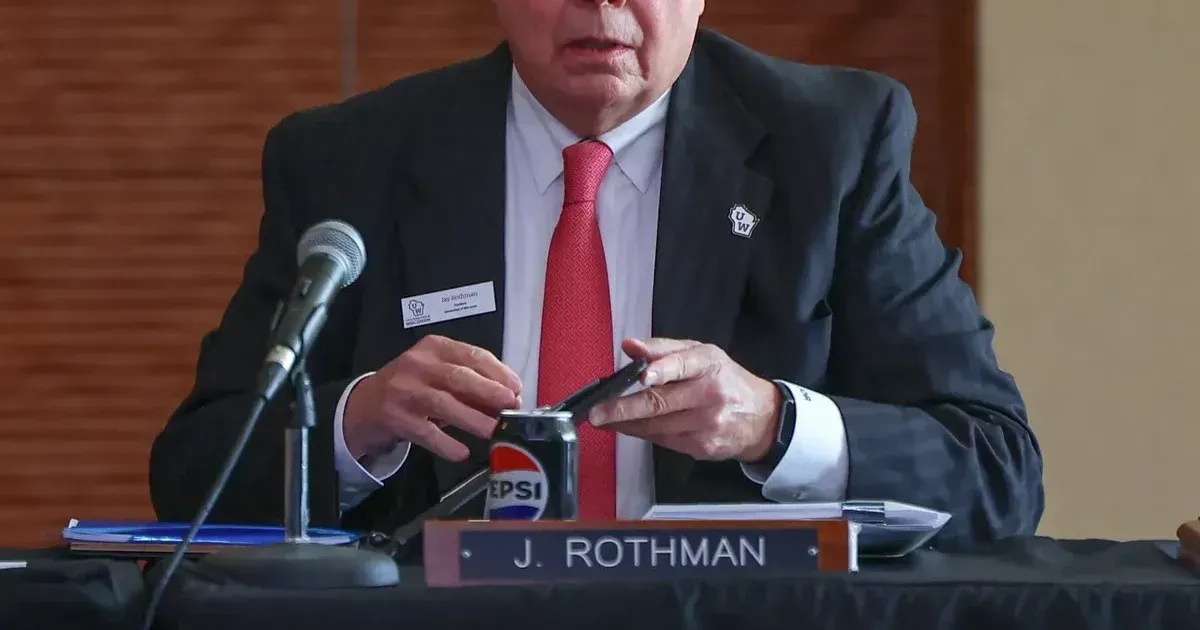
The firing of Jay O. Rothman ends one leadership chapter for the Universities of Wisconsin but leaves the larger governance conflict unresolved statewide. The Board of Regents removed him after years of pressure over funding, campus consolidation and political demands from Madison. The decision took effect on April 8, 2026, after a closed-door review. The system still has to manage 13 campuses, a multibillion-dollar budget and a strained relationship with state lawmakers.
Board of Regents Conducts Private Personnel Review
Administrative records from the Tuesday session suggest that the discussion centered on Rothman's inability to reconcile the divergent demands of faculty groups and conservative lawmakers. Public disputes over diversity, equity, and inclusion initiatives had previously threatened hundreds of millions of dollars in state funding. Rothman attempted to negotiate a compromise that satisfied neither the academic community nor the legislative leadership in Madison.
These negotiations resulted in a loss of confidence from the very board that appointed him. Faculty representatives frequently argued that his corporate background at Foley & Lardner ill-equipped him for the complexities of academic governance. By contrast, Republican leaders in the Wisconsin Assembly often viewed his concessions as insufficient or performative. The resulting isolation left him without a viable coalition to sustain his presidency.
Power Struggles Define Universities of Wisconsin Leadership
Financial stability became a secondary concern as the optics of the power struggle dominated the headlines in Milwaukee and Madison. Board of Regents members grew weary of the constant political scrutiny directed at the system during the Rothman era. Previous leaders like Tommy Thompson used political capital to shield the campuses, but Rothman found such protection difficult to maintain.
Campus closures across the state further eroded the president's standing among local communities. Decisions to end in-person instruction at several two-year branch campuses, including locations in Richland and Fond du Lac, drew fierce local opposition. Residents in those regions viewed the closures as an abandonment of the Wisconsin Idea, the enduring principle that the university should serve every corner of the state.
"Jay O. Rothman's departure brought an end to a four-year stint as leader of the university system," the Board of Regents confirmed in a statement released early Wednesday.
Legislators in Madison had repeatedly signaled their dissatisfaction with the pace of administrative reform under Rothman's watch. Assembly Speaker Robin Vos previously led efforts to withhold cost-of-living adjustments for university employees until specific diversity program cuts were implemented. While Rothman eventually reached a deal to release those funds, the political damage to his reputation proved permanent.
Governor Tony Evers, who typically supports the university system, remained silent during the final hours of the board's deliberation. This lack of vocal support from the executive branch in Madison signaled that Rothman had exhausted his remaining political leverage. Internal polling among staff at the flagship campus in Madison revealed a sharp decline in morale during the last two fiscal quarters of his term. Enrollment trends at the wide-ranging universities, which exclude the Madison flagship, have remained stagnant or declined over the last decade. Rothman was tasked with rightsizing these institutions to match the demographic realities of a shrinking high school graduate pool in the Midwest. His approach, which focused on aggressive consolidation and program elimination, alienated long-term stakeholders.
Projections for the 2026-2027 academic year show a continuing gap between operational costs and state appropriations. Faculty unions have already begun calling for a national search for a replacement who prioritizes academic mission over corporate restructuring. The next president will inherit a system where the relationship between the board and the statehouse is at its lowest point in a generation.
The Next President Inherits the Real Problem
Replacing Rothman may reset the tone, but it will not erase the structural problem. Enrollment pressure, budget politics and campus access will still define the next presidency. That is why the next leader needs more than administrative polish. The system needs someone who can defend academic mission while negotiating realistically with the state government that funds it.