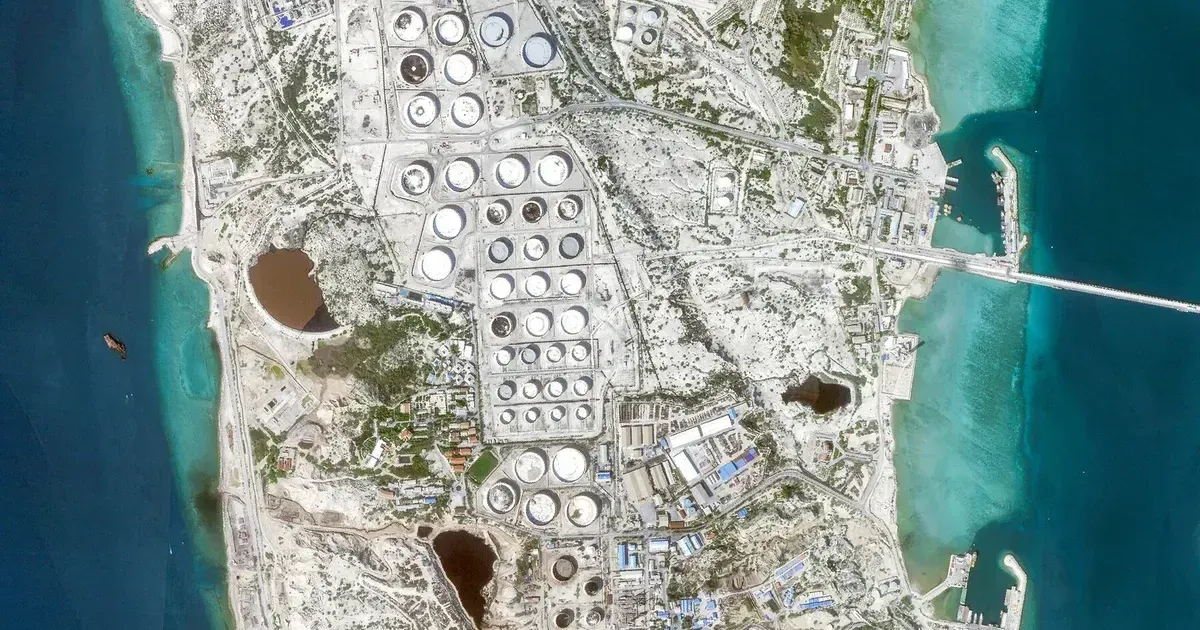
U.S. strikes on Kharg Island moved the confrontation with Iran into a more dangerous phase. The April 7, 2026, operation targeted military assets around a critical oil-export hub while avoiding the main petroleum infrastructure, according to early accounts. That distinction matters because Washington appears to be trying to apply pressure without eliminating every path back to talks. The risk is that Tehran reads the strikes as sovereign humiliation rather than controlled signaling.
Kharg Island Restrikes and Military Objectives
The more than 90 strikes conducted on April 7, 2026, used a combination of F-35C Lightning II stealth fighters and Tomahawk Land Attack Missiles. Mission planners focused on the southern and western perimeters of the island where Iranian Revolutionary Guard Corps (IRGC) units maintain fast-attack craft and anti-ship missile batteries. Destroying these assets sharply reduces the threat to international shipping in the Persian Gulf. Damage assessment teams continue to analyze high-resolution satellite imagery to determine the level of functional defeat achieved against the entrenched coastal defenses.
Naval assets including the USS Gerald R. Ford carrier strike group provided the platform for the aerial assault. Tactical commanders emphasized the precision of the munitions used, which minimized collateral damage to civilian housing and non-military harbor facilities. Despite the intensity of the barrage, the Iranian air force did not scramble interceptors during the primary wave of the attack. Electronic warfare suites aboard U.S. aircraft likely jammed local communications and early warning sensors, rendering the island's defenders effectively blind during the initial minutes of the operation.
Situation Room Tensions and Intelligence Warnings
Internal deliberations within the Situation Room revealed a stark contrast between presidential instincts and bureaucratic caution. President Trump relied heavily on the counsel of Benjamin Netanyahu, who encouraged a decisive military posture to dismantle Iranian regional influence. This alignment with the Israeli prime minister superseded the warnings from the Director of National Intelligence regarding the potential for a symmetric Iranian response against U.S. bases in Qatar and Bahrain. Intelligence officers argued that Iran possesses the capability to launch hundreds of ballistic missiles in a single salvo, potentially overwhelming regional missile defense shields. This escalation follows the initial White House deadline that demanded the immediate reopening of the critical maritime route.
Cabinet members remained divided on the strategic utility of the Kharg Island strikes. While some argued that the shows of force would compel Iran to negotiate, others feared the start of an irreversible slide into a broader Middle Eastern war. Records from these meetings show that the President often brushed aside technical objections in favor of a maximalist pressure campaign. Silence from several key advisers further enabled the shift toward kinetic action as dissenting voices within the inner circle found themselves increasingly marginalized.
President Trump told reporters that Iran must understand the consequences of their actions because they have been warned that they might die if the Strait is not reopened immediately.
Netanyahu Alignment and Strategy Shifts
The close cooperation between the Trump administration and Benjamin Netanyahu has reshaped U.S. policy in the Middle East. Coordination between the two leaders intensified in the weeks preceding the April 7, 2026, strikes, with shared intelligence drives focusing on IRGC logistics. Israel provided critical data on the underground bunkers and hardened command nodes located on Kharg Island. This partnership effectively bypassed traditional State Department channels, consolidating power within a small group of highly motivated political appointees and foreign allies.
Public statements from the Israeli government lauded the U.S. military action as a necessary step for global security. Critics, however, pointed to the lack of a clear exit strategy or a plan for regional stabilization once the strikes concluded. The integration of Israeli strategic goals with U.S. military capabilities suggests a fundamental change in how the administration views its obligations to traditional alliances. Projections show that a continued escalation could require the deployment of thousands of additional ground troops to secure regional interests and prevent a total collapse of the maritime trade routes.
Resistance from within the inner circle remained muted. Control of the Strait of Hormuz is the central point of contention driving the current hostilities. Iran blocked the waterway in late March, citing U.S. economic sanctions as an act of war. The subsequent blockade sent global energy prices soaring, forcing the White House to issue a 48-hour ultimatum that expired shortly before the strikes on Kharg Island began. Navy officials confirmed that the Fifth Fleet has moved into a high-readiness posture, preparing for potential Iranian attempts to mine the shipping lanes or use swarming boat tactics against merchant vessels.
International shipping companies have suspended all transits through the region until the security situation stabilizes. Lloyd's of London reported a 400 percent increase in maritime insurance premiums for tankers operating in the Persian Gulf. This economic pressure weighs heavily on the administration, which has promised to restore low energy prices for the American consumer. The success of the Kharg Island operation hinges on whether the more than 90 strikes can force the Iranian leadership to reconsider its blockade without triggering a global oil shock.
The Off-Ramp Is Now the Objective
The tactical question is whether the strikes reduced threats to shipping. The strategic question is whether they left Iran any face-saving route to reopen the Strait of Hormuz without appearing to surrender under fire. That makes the off-ramp the real objective. If the operation produces only more retaliation, sparing the oil terminals will not matter much to markets, allies or U.S. forces in the region.