Allbirds' $39 million asset sale to American Exchange Group was not just a cheap exit for a once-celebrated sneaker brand. It was the point where one of direct-to-consumer retail's clearest success stories split in two: the footwear brand went to a licensing and consumer-products operator, while the public company prepared to become NewBird AI.
The split is a sharper ending than a normal retail acquisition. Allbirds had been worth more than $4 billion after its 2021 IPO and had carried the promise that a mission-led, digital-first brand could reshape footwear. Less than five years later, its shoes, intellectual property, inventory and customer relationships were priced at $39 million, and the listed company was pitching GPU-as-a-service instead of wool runners.
The Wool Runner Became a Public-Market Burden
The original Allbirds product was specific and memorable. A soft wool sneaker, minimalist design and carbon-conscious language gave the brand a clear identity. Tech workers, venture investors, celebrities and climate-aware shoppers helped turn it into a quiet status signal in the late 2010s.
The brand identity was real, but it was narrower than the IPO story required. Public markets wanted repeatable growth, better margins, category expansion and evidence that Allbirds could move beyond one beloved product family. The brand could attract attention. It struggled to prove that attention could support a multibillion-dollar valuation.
Expansion Blurred the Reason to Buy
Allbirds moved into apparel, performance running, retail stores and broader lifestyle positioning. Some of those bets made sense in isolation. Together, they diluted the simple reason shoppers had first cared. A customer who liked a comfortable wool sneaker did not automatically want technical running shoes, leggings or underwear from the same company.
The competitive field also tightened. Hoka and On owned performance momentum. Nike and Adidas kept scale. Cheaper brands copied the minimalist comfort look. Sustainability language, once distinctive, became ordinary retail grammar. Allbirds still sounded principled, but the product gap narrowed.
The Store Strategy Added Weight
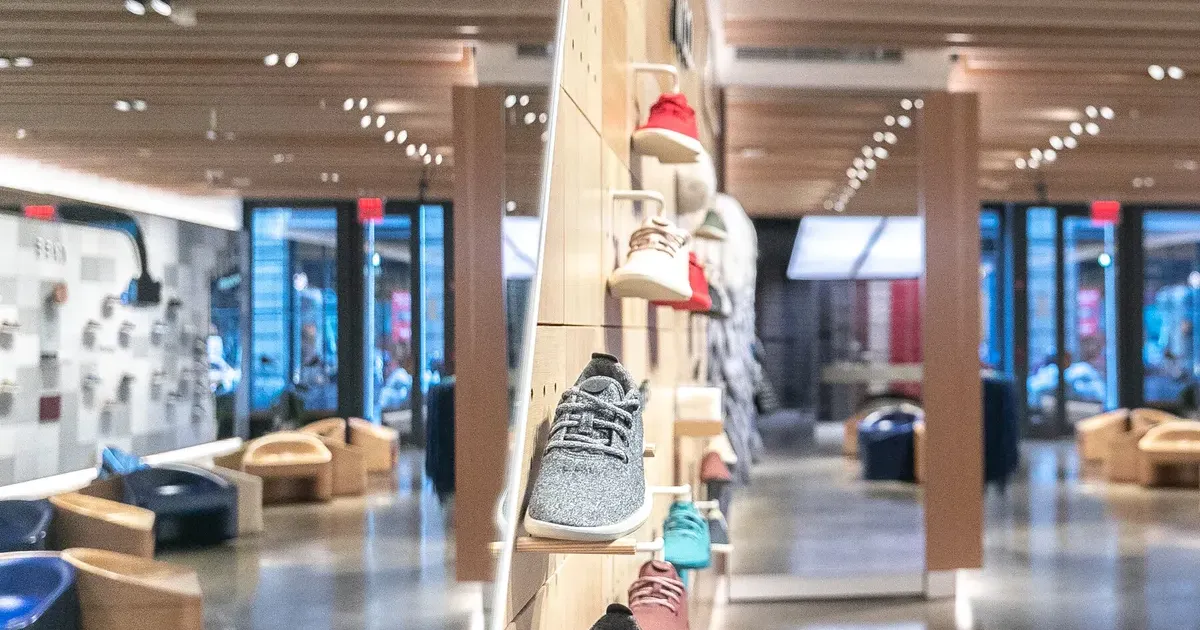
The direct-to-consumer promise was supposed to reduce dependency on traditional retail. In practice, Allbirds still needed stores, wholesale partners, marketing and expensive customer acquisition to keep growth moving. Physical stores added rent, staffing and inventory complexity at the same time sales were weakening.
By early 2026, the company was closing U.S. full-price stores and focusing on online channels and fewer remaining locations. The retrenchment made the sale easier to understand. Allbirds had not built the durable retail machine its valuation implied. It had built a recognizable brand with operating costs it could no longer support.
The $39 Million Price Was a Verdict
American Exchange Group bought a name that still had consumer recognition, not the old dream. The likely future for the footwear brand is leaner: licensing, wholesale discipline, fewer experiments, tighter cost control and emphasis on the products people still associate with Allbirds.
The price also exposed how little public-market nostalgia is worth when losses persist. Allbirds raised hundreds of millions through venture funding and its IPO. Its inventory alone was reported to be worth more than the final asset price. The valuation gap is the verdict on years of overexpansion, weak demand and a story investors stopped believing.
The AI Pivot Made the Ending Stranger
Two weeks after the sale agreement, Allbirds announced a turn toward AI infrastructure under the NewBird AI name, backed by a $50 million convertible financing plan. The stock surged as traders reacted to the AI label, not to a proven new operating record. A footwear company selling shoes one month and promising GPU compute the next is less reinvention than market commentary.
The pivot may still produce a business, but it starts from a harsh premise: the public shell was more valuable chasing AI enthusiasm than continuing as the company that made the shoes famous. The shell-company turn says as much about 2026 capital markets as it does about Allbirds.
Mission Language Was Never Enough
The lesson is not that sustainability failed. It is that sustainability could not replace product discipline, repeat purchasing, category focus and profitable operations. A mission can bring shoppers through the door. It cannot make weak unit economics disappear.
Allbirds may survive as a footwear label under American Exchange Group. The listed company may try to live again as NewBird AI. The old DTC promise is over either way. A good origin story helped create the brand. It did not become a moat, and it did not become a business model strong enough for the market that once priced it like one.