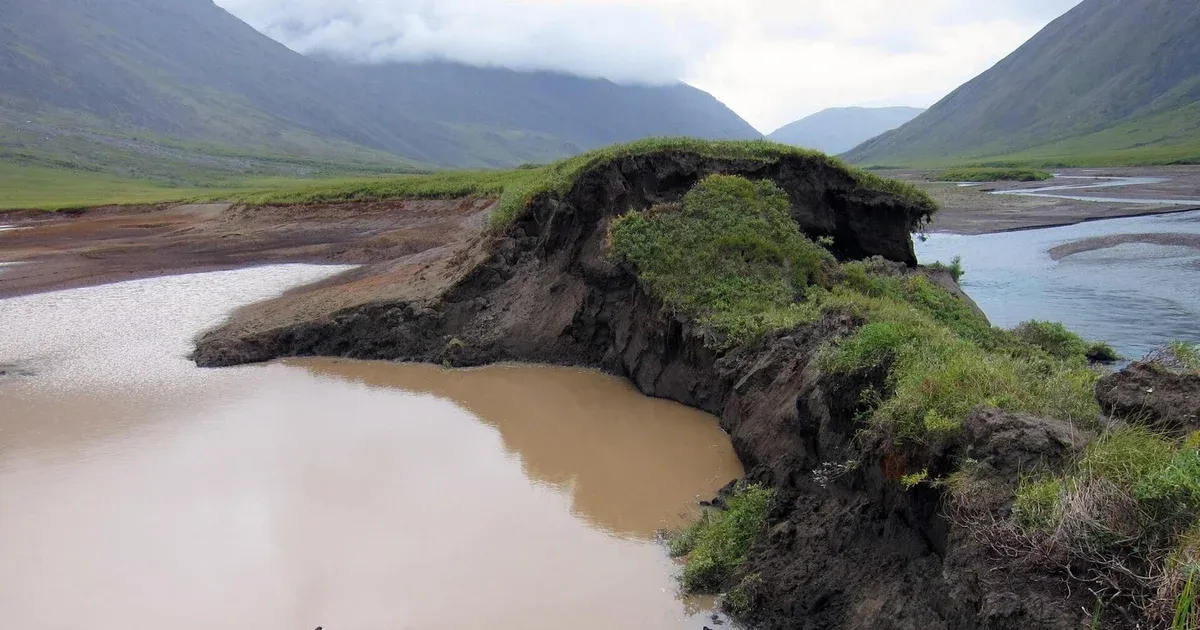
Arctic permafrost in northern Alaska is releasing ancient carbon into river systems as warming ground changes how the tundra stores and moves organic material. Researchers flagged the acceleration on April 5, 2026, after monitoring showed older carbon moving through waterways toward the Arctic Ocean. The finding matters because permafrost has long acted as a frozen vault for plant and animal material. The signal is subtle but important. When that ground thaws, microbes can break down the material and release carbon dioxide or methane, adding pressure to the climate system. River chemistry offers a practical way to track thaw. As frozen soils soften, water moves through deeper layers and carries dissolved organic carbon that had been locked away for centuries or longer. That change does not always look dramatic from the surface. A river can appear normal while its chemistry shows that the surrounding landscape is processing heat differently. Long-term monitoring is therefore essential. Scientists are watching northern Alaska because Arctic warming is faster than the global average. Small changes in ground temperature can alter runoff, erosion and microbial activity across large areas.
Ancient Carbon Adds Climate Risk
The key concern is feedback. Warming thaws permafrost, thaw releases carbon, and released greenhouse gases can contribute to further warming. The scale of that feedback remains uncertain, but the direction is troubling. Not all carbon released from thawing ground immediately becomes atmospheric greenhouse gas. Some enters rivers, some reaches coastal waters and some is processed along the way. The uncertainty is exactly why river measurements matter.
Researchers described the carbon as material that had been stored for thousands of years before thaw moved it into waterways.
The release also affects ecosystems. More dissolved carbon can change water chemistry, light penetration and food webs, especially in sensitive Arctic systems.
Why Long-Term Monitoring Matters
One season of data can be misleading in the Arctic, where storms, snowmelt and river ice can shift readings. Decades of measurements help separate weather noise from structural change. The Alaska findings point to a landscape that is no longer behaving like a stable freezer. That has implications for climate models, local infrastructure and communities that depend on rivers for travel, food and cultural life. The scientific challenge is to measure the change before it becomes too large to manage. Permafrost thaw is not a single event; it is a slow reorganization of ground, water and carbon. Rivers are now carrying part of that story downstream.
The findings also matter for communities living with permafrost change. Thaw can damage roads, buildings and riverbanks, while altered water chemistry can affect fish habitat. For northern communities, carbon measurements are not abstract climate accounting; they are evidence of a landscape becoming less predictable. Researchers will need more seasonal detail to understand how much carbon is being released during spring melt, summer storms and warmer autumns. The timing matters because rivers can process organic material differently depending on temperature, sunlight and flow speed. A warmer, wetter Arctic could move carbon through the system in ways older models did not fully capture.
Policy responses are limited because permafrost thaw cannot be reversed locally once warming penetrates the ground. The practical response is better monitoring, stronger infrastructure planning and faster emissions cuts elsewhere. The Alaska data adds another warning that frozen carbon stores are becoming active parts of the climate system.
The science also matters because permafrost carbon is difficult to price into near-term policy. Emissions targets often focus on power plants, vehicles and industry because those sources are measurable and controllable. Thawing ground is different. It responds to accumulated warming and can continue changing even after local weather shifts. That makes early detection more important. If river data shows that ancient carbon is moving faster, climate models and adaptation plans need to reflect that reality. The Alaska measurements therefore add evidence to a broader Arctic pattern: the frozen north is becoming a more active participant in the global carbon cycle.
The river signal also helps explain why Arctic change is watched so closely by climate scientists. Permafrost thaw is not limited to one valley or one river basin. Similar processes can occur across Alaska, Canada and Siberia, and each region adds uncertainty to global carbon budgets. The immediate numbers may look small compared with industrial emissions, but the concern is persistence. Once frozen ground begins releasing older carbon, the process can continue year after year. That makes the Alaska measurements a warning about direction, not just a snapshot from one season.