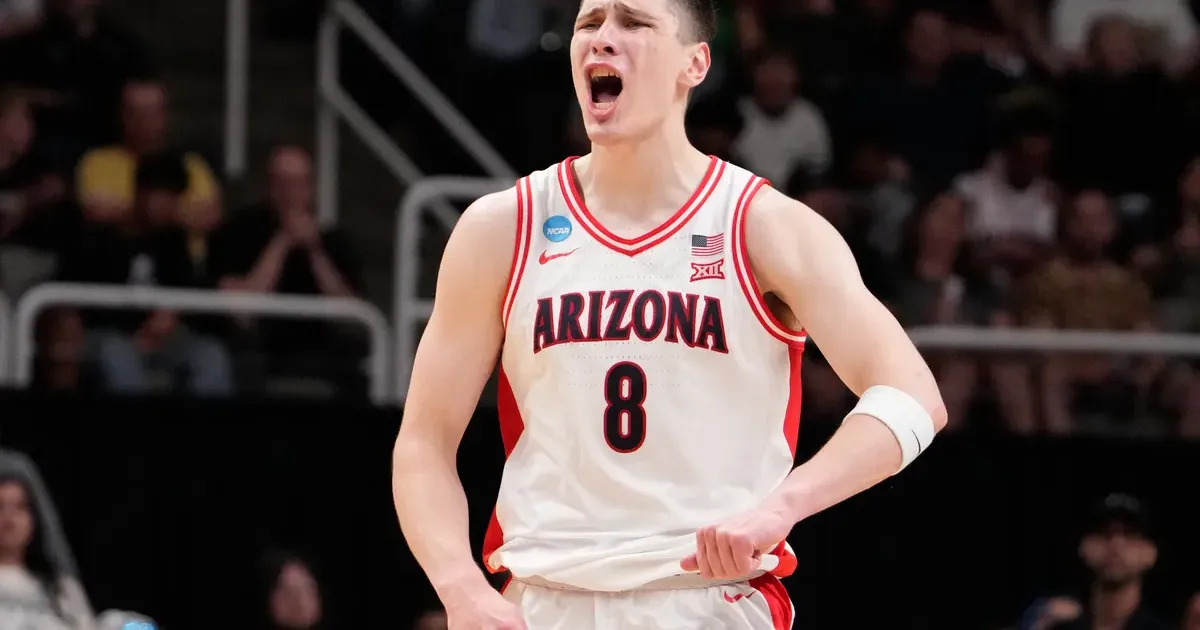
Arizona and Illinois reached the 2026 men's Final Four by ending two of the sport's longer major-program droughts. Arizona beat Purdue 79-64 in the West Region final, sending the Wildcats back to the national semifinals for the first time since 2001. Illinois beat Iowa 71-59 to reach its first Final Four since 2005.
The symmetry made the story easy to sell: two proud programs, two long waits, two fan bases rediscovering a stage they still believed belonged to them. The basketball explanation was less romantic. Both teams defended with force, managed modern rosters well and had enough high-end talent to survive Elite Eight pressure.
Their returns did not become a championship. Michigan later beat Arizona 91-73 in the national semifinal, and UConn beat Illinois 71-62 before losing the title game to Michigan. That does not erase the breakthrough. It clarifies what the breakthrough was: a return to relevance, not the end of the climb.
Arizona's Second Half Changed The Purdue Game
Arizona's win over Purdue was built on a sharp response after halftime. Freshman Koa Peat scored 20 points and was named the region's Most Outstanding Player, giving Tommy Lloyd a frontcourt force who could punish Purdue without slowing Arizona's pace.
The Wildcats had trailed by seven at the break, but their second-half run changed the game from a Purdue-control story into an Arizona power statement. Purdue's experience and half-court rhythm carried less weight once Arizona's defense began pushing possessions late into the clock and creating higher-quality transition chances.
Illinois Made The Underwood Bet Pay Off
Illinois' 71-59 win over Iowa closed a different kind of wait. Brad Underwood had built strong regular-season teams, but March kept withholding the final proof. The Elite Eight win changed that evaluation because the Illini handled the physical and emotional weight of a regional final rather than simply talking about being ready for it.
Keaton Wagler's 25 points gave Illinois the scoring headline, while Andrej Stojakovic's production and frontcourt control gave the Illini enough balance to end Iowa's run. It was not a perfect game. It was the kind of mature tournament game that turns a good program into a Final Four program.
Roster Building Drove Both Returns
The 2001 and 2005 references carry emotional weight, but they can also mislead. College basketball is no longer built around the same roster cycles. NIL, the transfer portal, international recruiting and one-year stars have changed how quickly teams can rise and how quickly they can fall back.
Arizona's mix of freshman force and veteran support fit that new era. Illinois' blend of physicality, spacing and mature pieces did the same. Neither run was powered by nostalgia. The droughts ended because the rosters matched the current sport better than many rivals did in March.
The Droughts Ended, The Standard Rose
Returning to the Final Four solved one problem and created another. Arizona and Illinois no longer have to answer whether they can get back to the stage. Now they have to answer whether they can win two more games once they arrive.
It is a better pressure to have, but it is still pressure. Fans can celebrate the return and still see the warning inside it. History can bring a banner back into conversation. It cannot guard a ball screen, retain a transfer or stop Michigan and UConn in April. The droughts ended because the programs adapted. Staying there will require the same cold work again.