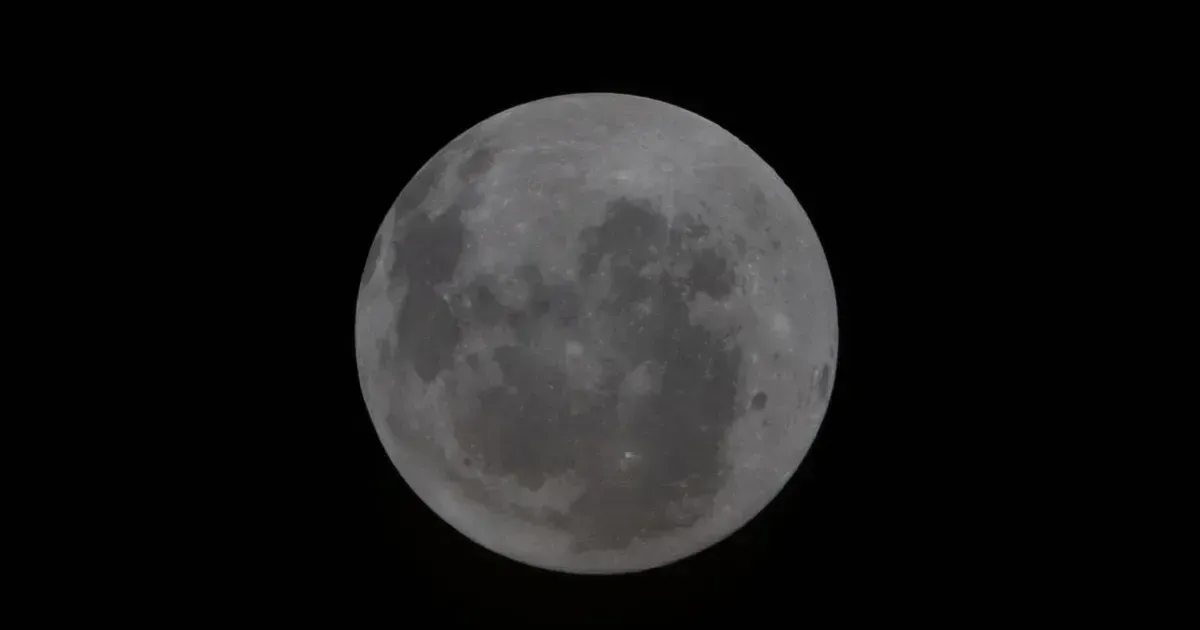
The Artemis 2 update centers on what a crew can still verify by eye. NASA mission specialists said the Orion crew identified major lunar maria during transit toward the Moon on April 6, 2026. Reid Wiseman, Victor Glover, Christina Koch and Jeremy Hansen used Orion window arrays to document the Sea of Tranquility and other basaltic plains. The observation mattered because manual landmark recognition remains part of deep-space navigation even as the spacecraft relies on sensors, flight computers and ground support.
Observations occurred while NASA ground controllers in Houston monitored life support telemetry during the high-altitude orbit phase. Each astronaut took turns at the spacecraft windows to witness the lunar landscape from a distance of several thousand miles. These dark patches, known as maria, are ancient volcanic basins that cooled billions of years ago. Their low albedo makes them leading targets for visual tracking and photography from a moving platform. Flight controllers noted that the crew used high-definition cameras to supplement their direct observations. Ground teams received the first batch of telemetry-linked images shortly after the transit began.
Orion Spacecraft Navigation and Optical Capabilities
Orion, a spacecraft engineered by Lockheed Martin, utilizes a suite of four main windows designed to withstand the rigors of deep space. Engineers used triple-pane pressure shells consisting of an aluminosilicate glass inner layer and a quartz glass outer layer. Such materials ensure that the crew maintains a clear line of sight while the vessel experiences extreme thermal fluctuations. Optical navigation systems rely on these viewing ports to triangulate the position of the ship against the lunar limb and background star fields. Wiseman acted as the primary observer during the morning session, verifying that the spacecraft orientation matched the predicted flight path. Precision sensors recorded the light intensity reflecting off the lunar surface to calibrate the onboard guidance computer. Redundancy remains a priority for the flight hardware, as manual sightings provide a fail-safe against sensor degradation. Koch managed the camera systems, capturing wide-angle shots of the lunar horizon to document the curvature of the satellite. Preliminary data suggests that the resolution of these images exceeds the requirements for the mission’s geological survey objectives.
Technical specifications for the Orion windows include a design life that spans the entire duration of the multi-week mission. Each pane must resist micrometeoroid impacts while maintaining optical purity. Heavy shielding surrounds the window frames to prevent radiation leakage during solar particle events. During the April 6, 2026, flyby, the crew noted that the clarity of the glass allowed for the identification of specific crater chains. Glover monitored the integrity of the seals while the others focused on the lunar geography. Mission success depends heavily on the ability of the crew to perform these visual assessments without the interference of glare or interior reflections. Internal lighting was dimmed to enable the most accurate observations of the lunar limb. Sunlight striking the lunar surface creates a high-contrast environment that can strain the human eye. Protective filters were available to the crew to reduce the risk of temporary flash blindness during intense periods of solar reflection.
Lunar Maria Geology and Observation Objectives
Maria represent the results of large volcanic eruptions that occurred early in the Moon's history. These plains consist primarily of basalt, a dense rock that appears darker than the surrounding lunar highlands. Scientists categorize these areas as the most meaningful geological units on the lunar near side. Observations from the Artemis 2 crew focused on the Sea of Serenity and the Sea of Fertility. By documenting the transitions between the maria and the cratered highlands, the crew provides fresh data for lunar researchers. Jeremy Hansen emphasized the importance of seeing the textures of the basaltic flows with the naked eye.
Human observers can often detect subtle color variations that automated sensors might overlook. Mineralogical differences in the basalt often manifest as slight shifts in gray or blue tones. Recording these variations helps refine models of the Moon's interior cooling process. Volcanic activity on the Moon ceased millions of years ago, leaving these basins as a permanent record of ancient thermal events.
I can see the distinct outlines of the basaltic flows stretching across the horizon, and the contrast against the highlands is much sharper than any photograph ever suggested, according to a radio transmission from Commander Reid Wiseman.
Data collection during this phase of the mission serves multiple scientific purposes. High-resolution photography of the maria allows geologists to map the distribution of volcanic vents. Some of these features are located near the edges of the basins, where the lunar crust is thinnest. Understanding the thickness of the maria helps determine the total volume of lava produced during the Moon's active period. Mission scientists at the $4.1 billion Space Launch System facility analyzed the initial image transmissions for signs of recent impact activity. Small craters often pockmark the surface of the maria, providing a timeline for meteorite flux. By counting these craters, researchers can estimate the relative age of different volcanic units. The crew’s observations add a layer of human perspective to the decades of satellite data already in existence. Direct visual confirmation of geological features builds confidence in the landing sites selected for future missions.
Artemis 2 Mission Timeline and Path Data
Flight path calculations dictated that the Orion capsule reach its furthest point from Earth on April 6, 2026. This maneuver placed the crew in a position to use lunar gravity for a free-return path. Engineers designed this path to ensure the spacecraft returns to Earth even if the primary propulsion system fails. Fuel conservation was a primary objective during this transit phase. Small thruster firings corrected the attitude of the ship to improve the view of the lunar surface. Navigation teams in Houston tracked the spacecraft using the Deep Space Network to verify every mile of progress.
Precision is required to maintain the correct entry angle for the eventual return to Earth. A slight deviation in the path could result in a skip off the atmosphere or an excessively steep descent. Christina Koch performed a series of checks on the guidance software to confirm the path remained within established safety margins. Velocity readings indicated that Orion was traveling at several thousand miles per hour during the flyby.
Communication with the crew used the Ka-band frequency for high-bandwidth data transfers. This allowed for the transmission of large image files and real-time video clips of the moon. Signal latency was approximately 1.3 seconds, reflecting the vast distance between the Earth and the Moon. Despite this delay, the interaction between the crew and mission control remained efficient. Technicians monitored the health of the phased array antennas to ensure constant connectivity. Power management systems on Orion prioritized the communication and life support hardware during the observation window. Solar arrays were positioned to capture maximum energy while avoiding interference with the crew’s line of sight. Battery levels stayed above 90 percent throughout the observation period. Sustained power is necessary for the upcoming engine burns required to align the ship for the home stretch. Ground teams expressed satisfaction with the performance of the integrated systems under deep space conditions.
Thermal Protection Systems and Performance
Heat management is a critical factor when the spacecraft is exposed to direct sunlight in the lunar environment. One side of the Orion capsule can reach temperatures exceeding 250 degrees Fahrenheit while the shaded side drops to minus 250 degrees. Active thermal control systems circulate fluid through the walls to maintain a stable internal temperature of 70 degrees. This system prevents the windows from fogging and ensures the crew remains comfortable. Insulation blankets made of specialized fabrics protect the delicate electronics from thermal shock. During the observation of the maria, the crew monitored the temperature of the external hull. Radiators located on the service module rejected excess heat into the vacuum of space. The performance of these systems is essential for the safety of the mission. If the thermal loops failed, the crew would be forced to terminate the scientific observations and focus on emergency procedures. No such issues were reported during the April 6, 2026, session. Stability in the cabin environment allowed the crew to focus entirely on their geological survey duties.
Re-entry into the Earth's atmosphere will test the heat shield at temperatures reaching 5,000 degrees. Although that phase is days away, the integrity of the shield is a constant concern for flight directors. Visual inspections of the capsule exterior were conducted using cameras mounted on the solar array tips. These images confirmed that no damage from micrometeoroids had occurred during the outbound leg. Protecting the crew from the harsh environment of space requires a multi-layered approach to engineering. Every component, from the smallest bolt to the huge heat shield, underwent rigorous testing prior to launch.
The success of the Artemis 2 mission validates the design choices made over the last decade of development. Continued monitoring of the ship’s health ensures that the crew can safely complete their historic journey. Each hour spent in lunar orbit provides invaluable data for the upcoming Artemis 3 landing mission.
Crew Observation Value
Does the spectacle of four humans peering through quartz glass justify a multi-billion dollar price tag? Critics frequently characterize these high-cost missions as expensive public relations exercises designed to distract from terrestrial failures. However, the Artemis 2 mission serves a function far beyond the mere capture of high-definition imagery. It is a brutal, necessary stress test of the hardware required for permanent lunar settlement. If NASA cannot reliably transport humans to the lunar limb and back, the dream of a multi-planetary existence dies in the boardroom.
The focus on lunar maria is not just about geology; it is about proving that humans can act as agile, on-site analysts in an environment that kills the unprepared. Relying solely on robotic probes provides a detached, sterile view of our celestial neighbor. Humans provide the intuitive leap required to solve unforeseen problems in real-time.
The current geopolitical landscape demands that the United States and its partners maintain a dominant presence in cislunar space. Allowing the lunar surface to become a vacuum of Western influence invites competitors to set the standards for resource extraction and orbital law. Artemis 2 is the geopolitical stake in the ground. It shows that the Orion-SLS architecture is functional, despite the many delays and budget overruns that have plagued the program since its inception. Skepticism is healthy, but cynicism regarding the scientific output of this mission ignores the technical leaps made in life support and radiation shielding.
These advancements will eventually trickle down into commercial aerospace, fueling a new sector of the global economy. The mission is a cold, calculated assertion of technological supremacy. Either we lead the exploration of the solar system, or we watch from the sidelines as others define the future of human expansion. NASA has no other choice.