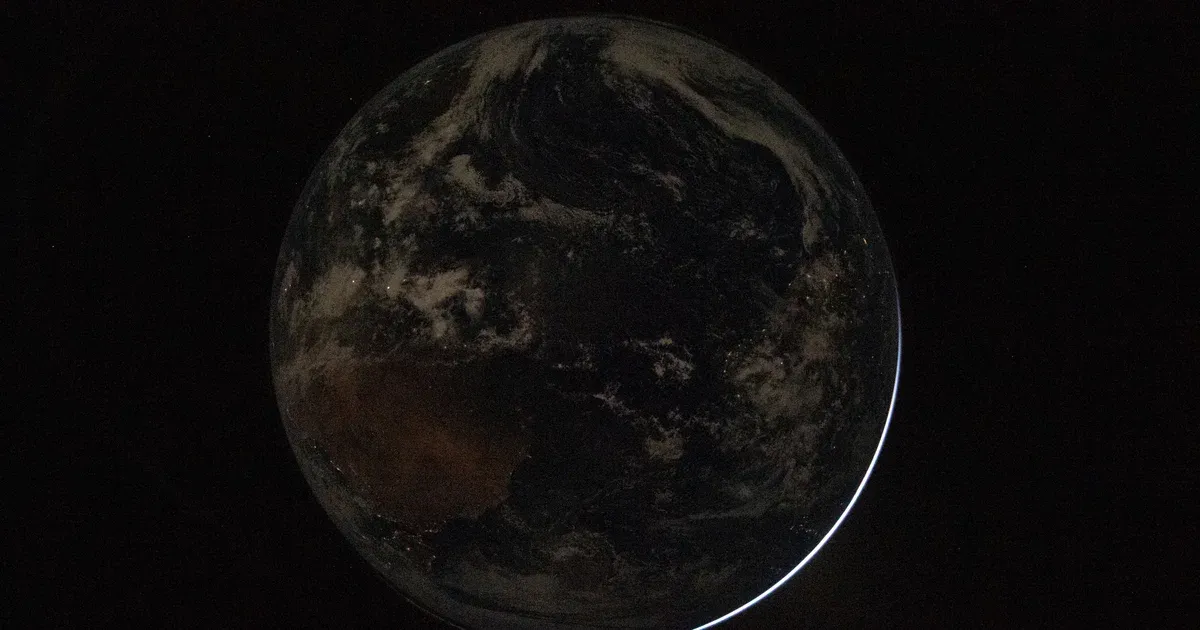
NASA prepared Artemis II for a silent lunar flyby phase in which Orion would lose contact with Mission Control behind the Moon. The blackout is a predictable effect of lunar occultation, but it remains psychologically and operationally important for a crewed mission. Engineers have to trust preplanned procedures while the spacecraft is out of reach. Crew members also have to operate without the reassurance of real-time voices from Earth. The communications loss was scheduled for April 6, 2026, as engineers mapped a roughly 40-minute period without voice, telemetry or data flow.
Engineers at the Johnson Space Center have calculated that this blackout would last approximately 40 minutes based on the mission path. The free-return path ensures that the spacecraft will naturally swing back toward Earth without an engine burn, yet the lack of real-time monitoring remains a central focus of safety protocols. Mission controllers will see the last data packets drop as the craft rounds the lunar limb. NASA flight directors have prepared the crew for a period of absolute autonomy during this window.
Physics of Lunar Occultation and Signal Loss
Orbital mechanics dictate that any object orbiting or passing behind a celestial body will lose a direct line of sight to a fixed point on Earth. For the Artemis II mission, the Orion capsule travels on a high-energy path that takes it approximately 4,600 miles beyond the lunar surface. Signals traveling at the speed of light cannot wrap around the Moon, and current satellite relay technology in lunar orbit is not yet strong enough to provide 100% coverage. Deep space communication relies on the S-band and Ka-band frequencies, which are strictly point-to-point. Ground stations in California, Spain, and Australia must wait for the spacecraft to emerge from the lunar shadow to re-establish a lock on the high-gain antenna. Power levels on Orion must remain within strict parameters to ensure the transmitter can immediately sync with the Deep Space Network upon emergence. Hardware failure during this silent window would go unnoticed by ground crews until the craft reappears on the lunar horizon. The thermal protection system faces intense stress from solar radiation while the communication array remains dormant.
Flight dynamics experts calculated that the signal loss will begin precisely as Orion crosses the lunar terminator into the radio shadow. Data from previous uncrewed missions, such as Artemis I, confirmed that the transition into silence is abrupt rather than gradual. Signal strength drops from full telemetry to zero in less than three seconds. This sudden severance of the digital tether requires the onboard computers to operate with total independence. Avionics systems are programmed to execute self-correcting routines if a fault occurs while the crew is in the blind.
NASA technicians have spent thousands of hours simulating these specific minutes in high-fidelity mockups. Every toggle and switch in the cockpit has a manual override in case the automated systems fail during the blackout. The onboard inertial navigation system keeps track of the position of the craft relative to lunar gravity. Computers on Orion process over 1,000 data points per second to maintain the correct attitude.
Historical Precedents of Apollo Lunar Silence
Past lunar missions provide the only blueprint for the psychological and technical challenges of losing Earth contact. During the Apollo 8 mission in 1968, the crew experienced a similar loss of signal that lasted about 20 minutes. Jim Lovell, Bill Anders, and Frank Borman were the first humans to experience the deep isolation of the lunar far side. Apollo 13 faced a more harrowing version of this silence as the crew fought for survival in a crippled Command Module.
Historical logs show that flight controllers often held their breath during these windows, waiting for the crackle of the radio to confirm the crew was still alive. The Artemis II duration is far longer than those of the 1960s due to the specific high-altitude flyby path. Modern digital systems are more complex than the analog rigs used in the 20th century, introducing new variables in signal re-acquisition. Astronauts in the 1970s described the far side of the Moon as the loneliest place in the solar system.
Command modules during the Apollo era carried primitive recorders to capture data for later playback. Today, Orion uses solid-state drives with terabytes of storage capacity.
"We are training for the reality that for a meaningful portion of the flyby, we are on our own," NASA astronaut Christina Koch stated during a January 2026 press briefing at Johnson Space Center.
Re-establishing contact is not an instantaneous process once the spacecraft clears the lunar limb. Ground stations must sweep the frequency range to find the carrier signal from Orion. Atmospheric conditions at the Deep Space Network sites can occasionally interfere with this process, though the redundant locations reduce this risk. In 1972, the Apollo 17 crew emerged from the lunar shadow nearly ten seconds later than predicted, causing a brief moment of alarm in Houston. These timing discrepancies usually result from slight variations in lunar gravity or venting from the service module.
Tracking stations at Goldstone, California, use 70-meter diameter antennas to catch the faint signals from deep space. The precision required to hit the target frequency is equivalent to aiming a laser at a coin from several miles away. Power levels for the S-band transponders are monitored to prevent overheating during the peak transmission phase. Each second of silence adds to the tension within the mission control room.
Deep Space Network Coverage Limitations
Terrestrial infrastructure for space communication has limits that even a $4.1 billion annual budget cannot fully overcome. The Deep Space Network consists of three complexes spaced approximately 120 degrees apart around the globe. This configuration ensures that at least one station can see the Moon at any given time as the Earth rotates. However, the sheer distance of the Artemis mission, roughly 240,000 miles, creates a latency of about 1.3 seconds each way. During the 40-minute blackout, even this lag disappears into total void.
Engineers are exploring the use of laser communication to increase data rates, but these systems still require a direct line of sight. Future Artemis missions plan to deploy Gateway, a small space station in lunar orbit, to act as a relay hub. For the Artemis II flyby, no such relay exists to bridge the gap behind the Moon. The absence of a lunar satellite constellation remains a primary technical hurdle for constant connectivity. Without a relay, the Moon remains a permanent barrier to radio waves. Signals from the far side are absorbed or reflected back into deep space.
Managing Crew Psychology During Communications Blackouts
Astronauts Christina Koch, Victor Glover, Reid Wiseman, and Jeremy Hansen have undergone specialized training to handle the mental strain of isolation. Psychological studies from Antarctic research stations and submarine deployments suggest that the loss of a communication link can trigger a sense of detachment. Crew members must rely on one another and their onboard documentation to solve problems. Silence in the headset can be jarring for pilots accustomed to constant updates from the ground. NASA psychologists emphasize the importance of maintaining a strict schedule during the blackout to keep the mind occupied.
Victor Glover has noted that the crew views this time as a rare moment of quiet reflection during an otherwise hectic 10-day mission. They will be the first humans to see the lunar far side with their own eyes since 1972. Detailed photography of the lunar surface will take priority during these 40 minutes of silence. High-resolution cameras will document craters that are never visible from Earth. Scientific data gathered during this window is stored locally until the high-gain antenna can dump the files to Earth.
The crew will likely use the time to perform manual navigation checks and systems monitoring. Lunar isolation is the ultimate test of human autonomy in an age of constant digital tethers. While NASA presents the 40-minute silence as a routine technical hurdle, it highlights a glaring vulnerability in the Artemis architecture. The reliance on Earth-based mission controls remains a vestige of the 1960s that has not been sufficiently modernized for sustained lunar presence. If the United States intends to build a permanent base, the current tolerance for communications blackouts is unacceptable.
Lunar Silence Operations Test
A single critical system failure during those 40 minutes could turn a multi-billion dollar mission into a silent tomb before Houston even knows there is a problem. The lack of a solid lunar relay constellation at this stage of the program is a strategic oversight driven by budget constraints instead of technical impossibility. Dependency on the Deep Space Network is a bottleneck that threatens the scaling of lunar operations. Private entities and international partners will soon crowd the lunar vicinity, yet the infrastructure for managing that traffic is stuck in a point-to-point paradigm. NASA must prioritize the deployment of the LunaNet architecture to ensure that no crew is ever truly alone. The psychological resilience of the Artemis II crew is admirable, but expecting astronauts to manage high-stakes emergencies without real-time data is an unnecessary gamble.
Modern spaceflight should move beyond the heroic isolation of the Apollo era and toward a resilient, interconnected lunar economy. The 40 minutes of silence on April 6 will be a quiet indictment of a program that is still tethered to the past. Silence is not a feature; it is a failure of infrastructure.