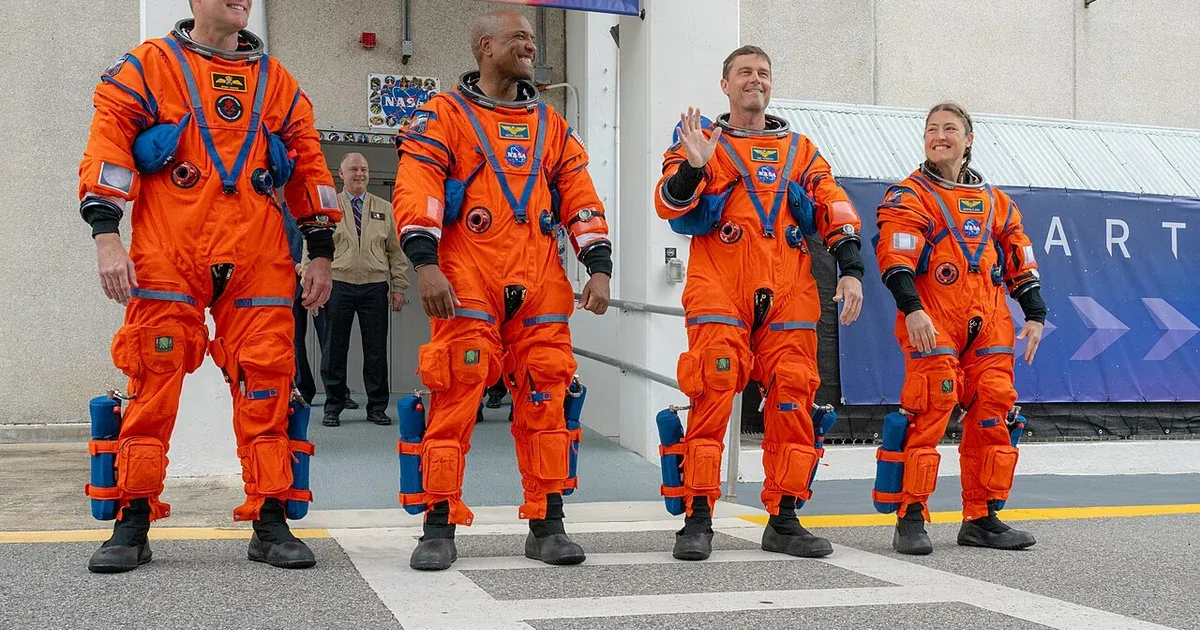
Artemis II is being framed through ordinary human routines because the mission itself is extraordinary.
The crew must manage hygiene, fatigue, radiation and navigation inside a compact spacecraft far from Earth. Mission planners are therefore selling discipline as much as wonder.
Reid Wiseman, commander of the Artemis II mission, detailed the psychological split of deep space exploration in interviews released on April 6, 2026. Four astronauts currently training for the first crewed lunar flight in over half a century described a working environment where the sublime and the mundane coexist. Wiseman noted that the experience of viewing the lunar far side for the first time might be immediately punctuated by the trivialities of personal hygiene. Physical maintenance, including the simple act of changing socks, continues to dictate the rhythm of life inside a pressurized titanium shell. Living quarters in the Orion spacecraft offer approximately 330 cubic feet of habitable volume. Small spaces require a disciplined approach to daily chores.
Mission pilot Victor Glover emphasized that the crew must manage high-stakes engineering tasks while maintaining basic biological routines. Efficient use of the liquid waste system and the careful rationing of freeze-dried meals represent the reality of long-duration transit. Crew members will spend approximately 10 days in a high-radiation environment outside the protection of the magnetosphere. Orbiting the moon requires a level of concentration that leaves little room for existential reflection during critical maneuvers. Engineers at NASA have calculated every calorie and cubic centimeter of oxygen required for the journey. Data from the life support sensors show 98% efficiency in carbon dioxide scrubbing. Precision remains the primary defense against the vacuum of space.
Artemis II Life Support and Habitat Performance
Life inside the Orion capsule depends on the European Service Module, which provides power, water, and thermal control. Four large solar arrays generate enough electricity to power two average households on Earth. Heat rejection systems must balance the extreme temperature swings found in the lunar vicinity. While in direct sunlight, the exterior of the craft reaches 250 degrees Fahrenheit. The shadow of the moon drops temperatures to minus 250 degrees Fahrenheit. Internal thermostats maintain a steady 70 degrees for the human occupants. Humidity control is equally essential to prevent condensation on sensitive electronics. Water recovery systems must function without fail during the 10.3-day mission duration.
Christina Koch, a mission specialist with record-breaking time on the International Space Station, compared the Orion to a rugged expedition vehicle. Space inside the cabin is much more cramped than the orbital laboratory. Exercise is mandatory to prevent bone density loss, though the mission is relatively short. Crew members use a specialized resistance device to simulate weightlifting in microgravity. Metabolic rates are monitored to ensure the carbon dioxide removal system is not overwhelmed. Mission controllers in Houston receive telemetry every second. Sensors embedded in the hull track micrometeoroid impacts. Radiation shielding consists of polyethylene layers designed to absorb solar particles. Total expected exposure for the crew is roughly 50 millisieverts.
Lunar Far Side Visibility and Navigation Logic
Viewing the lunar far side involves traversing a region that never faces Earth. Communication during this phase relies on the Deep Space Network and potentially the Near Space Network. Direct line-of-sight radio contact with Earth will be severed for several minutes as the craft passes behind the lunar disk. Pilots must rely on pre-programmed inertial navigation systems and star trackers. Surface features on the far side are distinct from the familiar basaltic plains of the near side. Higher crater density and thicker crustal layers define this unexplored territory. Jeremy Hansen, the mission specialist from the Canadian Space Agency, will document these features using high-resolution digital sensors. Optical data provide essential information for future landing site selection.
Sunlight hits the far side during the lunar day, revealing a rugged landscape of highlands. Shadows in the deep craters of the South Pole Aitken Basin remain permanent. Navigation during the gravity assist maneuver requires a precise burn of the orbital maneuvering system engine. Success depends on the relative velocity of the spacecraft reaching exactly 25,000 miles per hour. Fuel reserves are monitored with a margin of less than 3 percent. Trajectory corrections ensure the craft enters a free-return path toward Earth. Errors in thrust duration could result in a trajectory that misses the atmosphere or enters too steeply. Thermal protection systems are designed for a re-entry speed of Mach 32.
Physiological Impact of Trans-Lunar Radiation
Biomedical researchers focus on the health risks associated with the Van Allen radiation belts. Artemis II will pass through these high-energy particle zones twice. Astronauts wear specialized dosimeters to track cumulative exposure in real time. Acute radiation syndrome is a concern during periods of high solar activity. Solar particle events could force the crew to retreat into the most shielded part of the Orion capsule. This shelter is created by stacking heavy cargo and water supplies around the crew seats. Human tissue reacts differently to heavy ions found in deep space compared to terrestrial radiation.
Scientists expect a minor increase in the risk of cataracts and cardiovascular issues over the long term. Shielding effectiveness is a priority for the $4.1 billion per launch program.
“The far side of the moon is a place of deep silence where the scale of the universe becomes a physical sensation for everyone on board.”
Commander Wiseman used those words to describe the anticipated transition into lunar shadow. Despite the grandeur, the crew stays focused on the checklist of 2,500 individual tasks. Maintenance of the Waste Management System is a daily requirement. Personal hygiene kits are limited to biodegradable wipes and no-rinse shampoo. Socks are discarded after several days of use to save on laundry mass. Every gram of weight saved on clothing allows for more scientific instrumentation. Trash is compacted and stored in floor compartments to keep the cabin clear. Airflow is strictly managed to prevent the buildup of carbon dioxide pockets in the corners of the capsule. Fans run continuously to simulate the convection currents absent in microgravity.
Logistics of the Return and Splashdown Sequence
Recovery operations in the Pacific Ocean involve the US Navy and specialized NASA teams. The Orion capsule will hit the water at approximately 20 miles per hour after parachute deployment. Forward bay cover jettisoning occurs at 25,000 feet. Two drogue parachutes stabilize the craft before the three main chutes open. Communication with the recovery ship starts minutes after splashdown. Floating upright is the primary goal to ensure the safety of the crew. Inflatable bags at the top of the capsule deploy to right the craft if it lands upside down. Rescue swimmers from the USS San Diego will secure the capsule within thirty minutes. Medical assessments begin the moment the astronauts exit the hatch.
Ground crews must also manage the hazardous chemicals used in the propulsion system. Hypergolic propellants like hydrazine require careful neutralization before the capsule can be brought into the ship. Post-flight analysis of the heat shield will determine if the material can withstand the even higher temperatures of a Mars return. Thermal tiles are inspected for pitting and charring depth. Mission success is defined by the safe recovery of the four crew members and the integrity of the data recorders. Every sensor on the SLS rocket and the Orion craft provides a blueprint for the Artemis III landing.
Future missions depend on the hardware performance observed during this ten-day flight. Re-entry heating reaches 5,000 degrees Fahrenheit on the base of the craft. Saltwater corrosion is the final challenge for the recovery team.
Crewed Lunar Risk
Space agencies frequently lean on the relatable humanity of their astronauts to mask the terrifying fragility of the hardware involved in lunar transit. Wiseman's comment about changing socks is a clever distraction from the reality that these four individuals are essentially trapped in a high-pressure coffin hurtling through a radiation-soaked void. We are asked to marvel at the psychological resilience of a crew that can transition from observing alien landscapes to managing waste disposal, yet this forced normalcy is a survival mechanism, not a lifestyle choice.
The Artemis program is a performance of engineering prowess that carries an enormous price tag for a mission that ultimately orbits rather than lands. Skepticism is warranted when the narrative shifts so heavily toward the mundane comforts of the crew. Does the public truly grasp the razor-thin margins of error involved in a free-return trajectory? A single software glitch or a stray micrometeoroid could turn the Orion into a permanent monument to human overreach. The obsession with the astronauts' daily routines, their snacks, and their laundry serves to soften the edges of a high-risk gamble. What is unfolding is the industrialization of the lunar vicinity disguised as a grand human adventure. It is a calculated move to secure funding for a deeper presence on the moon, regardless of the biological cost to the pioneers.