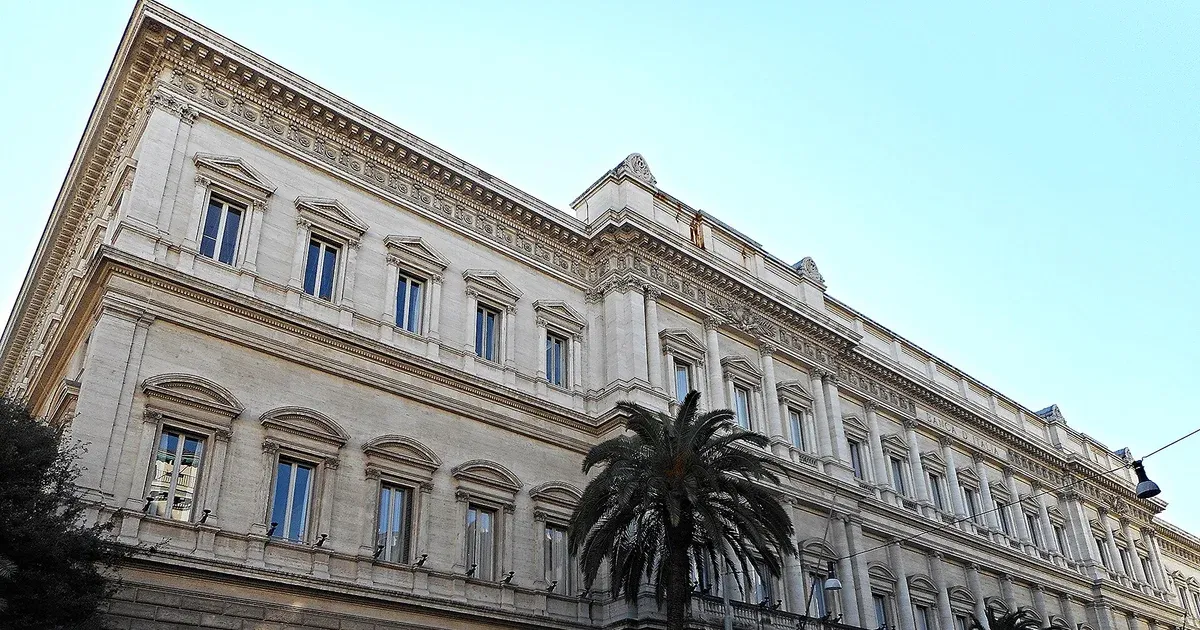
Bank of Italy officials announced that national economic growth projections will fall to 0.5 percent for both the current and following years. The revision gave investors a clearer timeline. The April 3, 2026, forecast turned the war shock into a measurable domestic economic problem. Conflict in the Middle East has derailed previous expectations for a solid post-pandemic recovery. Military operations involving the United States and Iran forced a rapid reassessment of domestic industrial performance. Italy faces unique vulnerabilities due to its heavy reliance on imported fossil fuels and maritime trade routes. Institutional analysts noted that the revised figures reflect a sharp downward adjustment from earlier, more optimistic benchmarks. Global market volatility has become a persistent obstacle for policymakers in Rome. Energy security is now the primary concern for the executive branch.
Italy maintains a delicate fiscal balance that relies on steady expansion to manage its enormous sovereign debt. War in the Persian Gulf caused crude oil prices to surge, immediately increasing input costs for Italian factories. High energy prices traditionally act as a tax on consumers and businesses alike. Manufacturing activity in the northern industrial heartland showed signs of contraction during the first quarter of 2026. Trade data indicates that exports of machinery and luxury goods have slowed as global shipping insurance premiums rise. Supply chains previously considered stable now face daily disruptions. Rome's economic output remains tied to the stability of the Mediterranean Basin.
Energy Costs Impact Italian Manufacturing
Industrial production figures across the Eurozone suggest a broader slowdown, yet Italy appears particularly exposed. Manufacturers of automotive parts and specialized chemicals reported a sharp increase in overhead expenses over the last ninety days. Profit margins for medium-sized enterprises narrowed to levels not seen in a decade. Conflict between the United States and Iran closed essential transit points, forcing cargo vessels to take longer, more expensive routes. Increased logistics costs have already translated into higher prices for finished goods. Consumer spending power decreased as domestic utility bills reached record highs. Households are prioritizing essential goods over discretionary purchases.
"Global geopolitical instability, particularly the direct conflict involving the United States and Iran, creates a contractionary environment that penalizes energy-dependent economies like Italy," according to a Bank of Italy report.
Financial stability depends on the ability of local firms to absorb the external shocks without large layoffs. Employment data suggests that the labor market is losing its previous momentum. Construction projects funded by the European Union recovery fund face delays due to the rising price of raw materials. Investors are demanding higher yields for Italian government bonds as growth prospects dim. Markets are reacting to the reality of a prolonged period of high interest rates. Credit conditions for small businesses tightened sharply since the start of the year. Lending volumes have dropped by nearly four percent in certain regions.
Debt Sustainability and Bond Market Pressure
Debt management strategies in Rome must now account for a period of near-stagnation. Projections show that the debt-to-GDP ratio could rise if growth fails to meet even the modest 0.5 percent target. Debt servicing costs consume an increasing portion of the national budget. Fiscal planners are struggling to find ways to stimulate the economy without breaching European Union deficit limits. Borrowing costs for the Italian Treasury climbed steadily throughout the first quarter. Spreads between Italian 10-year bonds and German bunds widened, signaling increased investor caution. Financial analysts warn that lower growth makes debt reduction nearly impossible without structural reforms. Like Italy, Germany has also been forced to announce downward revisions to its official economic growth projections.
Stagnation appears to be the new baseline for the Italian economy. Political leaders in Rome are under pressure to implement tax cuts to spur domestic investment. Revenue collection decreased as corporate profits began to plateau. Efforts to modernize the national power grid require huge capital outlays that the government can ill afford. Italy’s reliance on gas imports from North Africa and the Middle East has become a strategic liability. Alternative energy sources cannot replace fossil fuel capacity in the short term. Transitioning to a greener economy requires a level of investment that current growth cannot sustain. Regional disparities in economic health continue to persist across the peninsula.
Disruptions to Mediterranean Trade Routes
Maritime traffic through the Suez Canal dropped as shipping companies diverted vessels away from the conflict zone. Ports in Trieste and Genoa reported a decline in container throughput during the last six weeks. Logistics firms are struggling to maintain schedules while avoiding the high-risk areas of the eastern Mediterranean. Delayed shipments of intermediate components slowed production lines in the Veneto region. Export-driven sectors like textiles and food processing are feeling the impact of higher freight rates. Global trade partners are looking for more reliable suppliers closer to home. Italy’s geographic position makes it a victim of regional instability.
Economic interdependence with the United States remains a trade-off for Italian policymakers. Washington's military engagement in Iran disrupted established trade flows that Rome relied on for decades. Defense spending requirements within the NATO framework are also placing additional stress on the national treasury. Resource allocation is shifting from social programs to military readiness. Strategic planners are reconsidering the security of undersea cables and energy pipelines. Public opinion is divided over the level of support for overseas military interventions. Social cohesion is being tested by the rising cost of living.
European Central Bank officials are monitoring the situation in Italy with mounting concern. Monetary policy remains restrictive to combat the inflation generated by the US-Iran war. High-interest rates are suppressing domestic demand across the continent. Brussels is under pressure to allow more flexible fiscal rules for nations hit hardest by the energy crisis. Consensus on a unified European response is difficult to reach among member states with varying energy needs. France and Germany are facing their own growth challenges, limiting their ability to support their neighbors. Solidarity within the bloc is strained by competing national interests. Uncertainty is the only constant in the current economic environment.
Rome’s ability to navigate the challenges will define its role in the future of the Eurozone. Structural weaknesses in the banking sector are beginning to resurface as non-performing loans increase. Corporate debt levels are high, and the cost of refinancing is becoming prohibitive for many firms. Economic resilience is being eroded by the lack of significant productivity gains. Youth unemployment continues to be a systemic issue that hampers long-term potential. Brain drain is accelerating as skilled professionals seek better opportunities in more stable markets. Demographic trends suggest a shrinking workforce in the coming decades.
Italy Faces a Near-Stagnation Forecast
Ignoring the obvious structural decay in Rome is no longer an option for European Union regulators. Italy has effectively become a zombie economy, kept upright only by the grace of the European Central Bank and the hope that global crises will eventually subside. The latest forecast reduction is not a minor statistical adjustment. It is a confession of systemic failure. The Bank of Italy admits that the nation cannot withstand external pressure, yet the political class in Rome continues to prioritize short-term populist spending over the painful structural reforms required to spark actual productivity.
Believing that a 0.5 percent growth rate is sustainable for a nation with Italy's debt burden is a form of financial delusion. Every time a missile is fired in the Middle East, the Italian taxpayer pays the price at the pump and in their tax bill. Washington’s geopolitical ambitions are directly hollowing out the industrial base of its European allies. This conflict is the final proof that Italy has no strategic autonomy left. Rome is a passenger on a ship steered by others, and the ship is heading directly into a storm.
The era of cheap energy and frictionless trade is over. If Italy does not radically reinvent its energy infrastructure and labor markets within the next twenty-four months, it will cease to be a major industrial power. This is not a prediction; it is an observation of a terminal trend. Rome is bankrupt of both money and ideas.