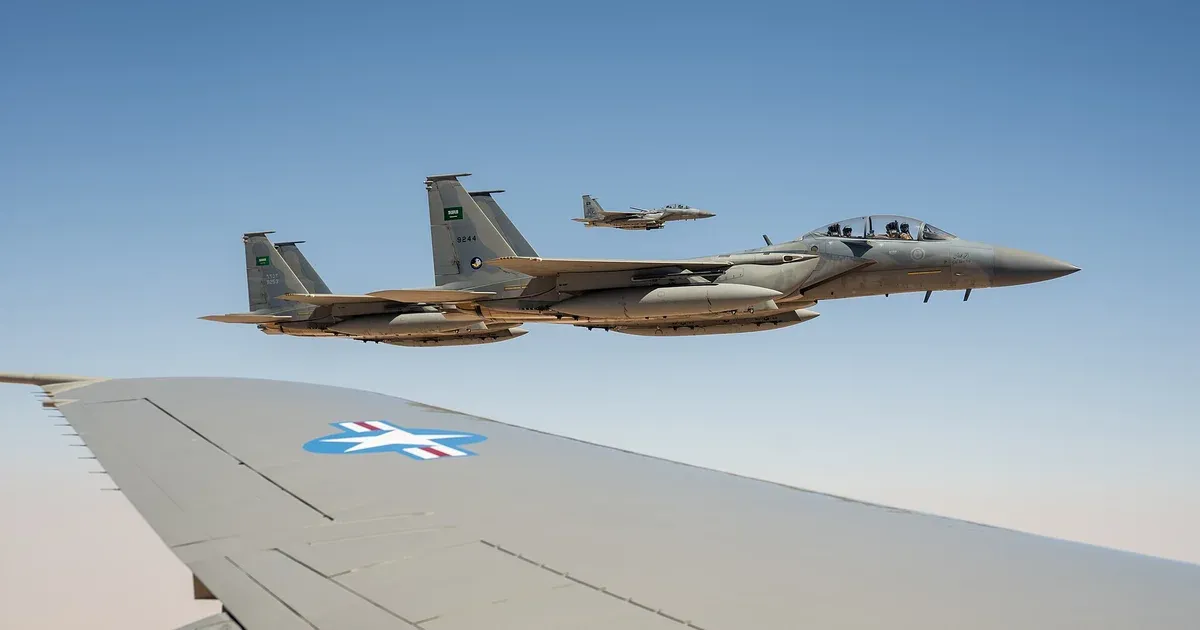
Saudi Arabia finalized a large procurement agreement with Boeing to restructure its aerial defense capabilities across the Middle East. Negotiators in Washington and Riyadh concluded eighteen months of private discussions to seal the $45 billion package. Defense officials expect the transfer of advanced aerospace technology to begin within the next fiscal quarter. Volatility in regional energy markets accelerated the timeline for these acquisitions. Commercial interests in both nations pushed for a conclusion to the deal to stabilize industrial production cycles. The April 3, 2026, agreement tied Saudi procurement to a wider regional defense buildout.
Riyadh officials prioritized the modernization of their aging tactical fleets. Modernization efforts center on the F-15EX Strike Eagle platform and specialized early warning systems. Technical specifications indicate the integration of sovereign electronic warfare suites developed within the kingdom. Security analysts argue that the scale of this acquisition fundamentally alters the power balance in the Persian Gulf. Pressure from regional competitors forced a swift resolution to the contract negotiations.
Riyadh Expansion of Aerial Defense Infrastructure
Defense contractors view the agreement as a critical anchor for long-term manufacturing stability. Boeing intends to move substantial portions of its assembly chain to local facilities in the heart of the Arabian Peninsula. Establishing the production hubs fulfills the industrial diversification requirements of the Vision 2030 economic program. Labor markets in the United States stand to benefit from the sustained demands for high-end components manufactured in St. Louis. Economic projections suggest the deal will support approximately 60,000 jobs across the American Midwest.
Subcontractors like Raytheon and Lockheed Martin are preparing to supply the integrated missile systems that complement the Boeing aircraft. The sophisticated interceptors provide a layered defense against ballistic threats. Regional instability continues to drive the demand for thorough shielding against non-state actors. Military leaders in the Gulf emphasized the necessity of a unified defense architecture during the signing ceremony. Logistics experts anticipate a decade of maintenance and sustainment work resulting from the initial hardware delivery.
"Securing these long-term defense assets ensures a stabilized deterrent across the Gulf region for the next decade," stated a spokesperson for the Pentagon.
Pentagon leadership maintained a quiet presence throughout the final stages of the transaction. Congressional oversight committees reviewed the arms transfer to ensure compliance with human rights and technological export regulations. Approval came after a heated debate regarding the potential for an arms race in the region. Strategic planners believe the infusion of Western technology creates a deeper bond between the two nations. Defense exports of this magnitude often dictate the direction of foreign policy for a generation.
Financial Impact on Global Defense Markets
Investors responded to the announcement by driving aerospace stocks higher on the New York Stock Exchange. Boeing shares jumped 4.2% within hours of the public confirmation. Market participants had anticipated a deal but were surprised by the total valuation exceeding initial estimates. Capital flows into the defense sector typically surge during periods of geopolitical uncertainty. Volatility in the Levant and the Red Sea makes such investments appear pragmatic to institutional holders. Private equity firms are now looking for opportunities within the supply chain that support this $45 billion commitment. The ongoing instability in the Persian Gulf continues to threaten the long-term economic outlook for the entire region.
Debt markets also reflected the weight of the transaction. Saudi sovereign wealth funds will likely issue new bonds to finance the staggered payment schedule. Revenue from oil exports provides the necessary collateral for the huge capital expenditure. Fiscal discipline within the kingdom allows for the heavy investments without compromising domestic infrastructure projects. Global banks are competing for the lucrative underwriting fees associated with the financing rounds. Financial transparency remains a focal point for international observers monitoring the deal.
Contractual obligations include the training of thousands of Saudi pilots and technicians. Boeing will establish a specialized academy to enable this knowledge transfer. Professional development in the aerospace sector is a key foundation of Riyadh's strategy to reduce reliance on foreign expertise. Technical proficiency in maintaining fifth-generation fighter jets is a rare commodity in the Global South. Educational partnerships between American universities and Saudi institutions are expected to grow. Localized expertise ensures the longevity of the equipment in harsh desert environments.
Middle East Volatility and Regional Stability
Regional dynamics shifted immediately upon the news of the finalized contract. Neighboring states are now assessing their own defense postures to maintain parity. Procurement cycles in the Middle East often function as a feedback loop. One nation's modernization drive triggers a sequence of acquisitions across the peninsula. Volatility in the price of crude oil provides the liquidity necessary for these expensive competitive maneuvers. Security experts monitor the developments for signs of escalating tension.
Diplomatic channels between Washington and Riyadh are busier than they have been in years. Regular consultations regarding the deployment of the new assets are now mandatory. The complexity of the F-15EX systems requires constant data sharing and calibration with American satellite networks. Interoperability between the two air forces is a primary objective of the deal. Joint exercises are already being scheduled for the late 2026 calendar year. Operational cooperation reduces the risk of miscalculation during regional crises.
Political opposition in some European capitals voiced concerns over the transfer of such potent weaponry. Critics argue that enormous arms deals can sometimes fuel the very instability they are intended to deter. Past experiences in the region provide a mixed record of long-term success for such strategies. Public opinion in the West often clashes with the cold realities of realpolitik. Governments must balance moral considerations with the necessity of maintaining strategic alliances. Global security remains a delicate act of managing competing interests.
The procurement of the THAAD missile system components is the next logical step for the Saudi military. Negotiations for that secondary package are already underway. Integration of the Boeing aircraft with ground-based interceptors creates a full shield. Technological dominance in the air is only one part of the broader security equation. Radar arrays and sensor networks must also be upgraded to match the new hardware. Engineers from various defense firms are already arriving in the kingdom to begin the site surveys.
Boeing Deal Deepens Saudi Defense Leverage
Does the large infusion of American hardware actually buy stability, or does it only purchase a temporary seat at a crumbling table? The $45 billion price tag for this Boeing deal is an admission of failure in regional diplomacy. Reliance on kinetic deterrents suggests that the language of negotiation has been replaced by the roar of the F-15EX engine. Washington is doubling down on a client state that has historically proven to be a volatile partner. This transaction is less about defense and more about an industrial life support system for Boeing.
Strategic planners often ignore the reality that weapon systems have a way of outlasting the regimes that buy them. History is littered with the wreckage of advanced technology turned against its creators. Riyadh is using its oil wealth to lock the United States into a security guarantee that may become a liability during the next regional fire. The financial windfall for the Midwest cannot mask the geopolitical risk of fueling a Gulf arms race. Volatility is not a condition to be solved by more missiles; it is an inherent feature of the current landscape. Boeing wins, Riyadh glows, and the world waits for the inevitable spark. Profit overrides prudence once again.