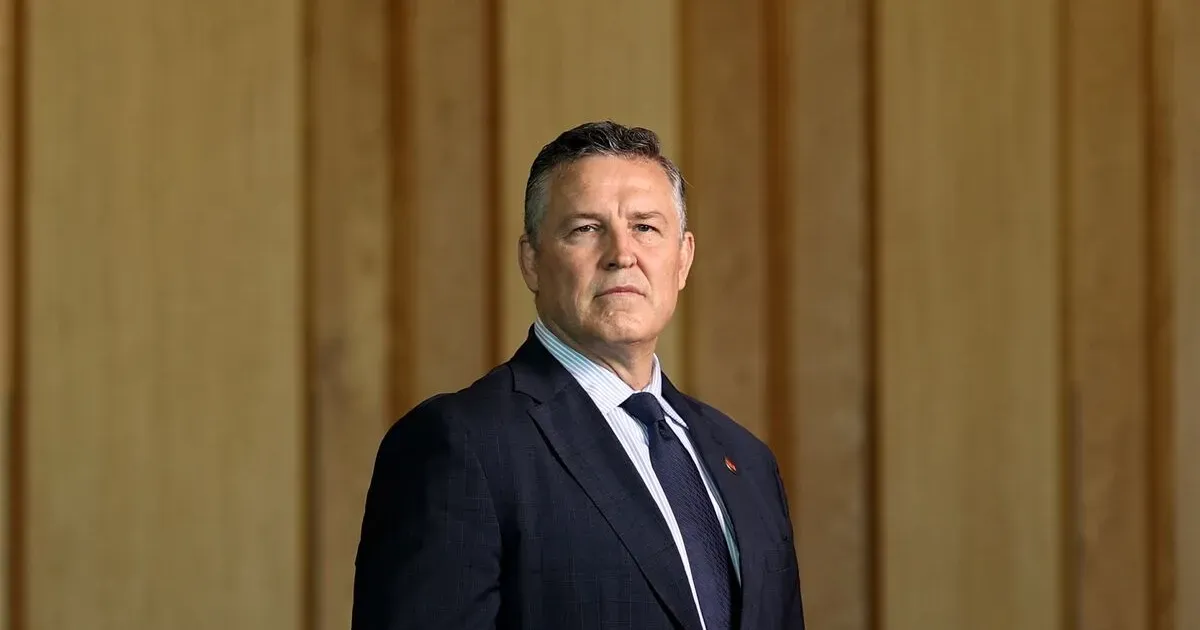
Anthony Miller, the chief executive of Westpac Banking Corp., stated that the widening war involving Iran creates a real risk of a domestic recession. The April 3, 2026, warning landed as Australian policymakers watched energy and freight costs rise. Speaking during a briefing in Sydney, Miller explained that the conflict has fundamentally altered the risk profile for the Australian economy. Military operations in the Persian Gulf have already impacted global energy markets and maritime logistics. These pressures are beginning to manifest in local wholesale price indices.
Supply chains, which already suffered through several years of volatility, now face systemic blockages. Miller noted that it remains unclear how long these disruptions will take to move through the industrial and retail sectors. Uncertainty surrounding the duration of the Iran war is forcing banks to re-evaluate their growth projections for the next fiscal year. Westpac is the first of the major Australian lenders to publicly sound the alarm regarding a potential contraction.
Financial markets reacted immediately to the CEO’s comments as bond yields fluctuated. Investors are increasingly concerned that the Australian economy, which is heavily dependent on the free flow of goods through Asian and Middle Eastern trade routes, lacks the resilience to withstand a prolonged energy shock. Miller emphasized that the current geopolitical instability is not a localized issue but a global threat to liquidity. Westpac has already begun adjusting its internal stress tests to account for a sustained oil price spike above $120 per barrel.
Westpac CEO Details Supply-chain Breakdowns
Logistical networks connecting Australian ports to the rest of the world are increasingly strained. Miller pointed to the rising costs of maritime insurance for vessels transiting near the conflict zone. Shipping companies have started rerouting tankers around the Cape of Good Hope, adding weeks to delivery schedules. The longer route increases fuel consumption and labor costs for every ton of freight entering Australian waters. Port authorities in Brisbane and Melbourne report that arrival delays have doubled since the onset of the Iran war.
Inventory management for Australian businesses has become an exercise in crisis mitigation. Many companies are shifting from just-in-time delivery models to more expensive just-in-case strategies. Miller warned that the inventory transition requires serious capital that could otherwise be used for expansion or hiring. High storage costs are eating into the profit margins of small and medium enterprises across the continent. Bankruptcy filings in the transport sector rose by 4% in the last quarter.
Manufacturing sectors are particularly vulnerable to these delays. Components for heavy machinery and automotive parts are stuck in transit, halting assembly lines in Adelaide and Perth. Miller stated that the longer the Iran war continues, the more likely these temporary delays will become permanent structural failures. Credit availability for firms in these sectors is tightening as banks grow cautious. Westpac has already increased its provisions for bad debts in the logistics industry.
Energy Price Volatility Hits Australian Households
Petroleum prices at Australian pumps have climbed steadily over the past month. While the nation produces meaningful amounts of liquefied natural gas, it remains a net importer of refined fuels. Miller observed that higher energy costs act as a regressive tax on the Australian public. Discretionary spending is falling as households allocate more of their income to commuting and heating. Retail sales data for March showed a serious decline in electronics and luxury goods.
Inflationary pressures are building despite the efforts of central bankers. Miller suggested that the supply-side nature of this inflation makes traditional monetary tools less effective. Raising interest rates to curb inflation caused by a war can sometimes accelerate a recession by crushing consumer demand. Westpac analysts are tracking a sharp increase in credit card balances as families struggle to cover basic utilities. The bank is monitoring mortgage delinquency rates for signs of broader systemic stress.
Electricity providers are also flagging potential price hikes for the winter season. Anthony Miller noted that the interconnectedness of global energy markets means that a strike on Iranian infrastructure has immediate repercussions for Australian grid pricing. Domestic gas reservation policies have reduced some of the impact, but they cannot fully insulate the country from global parity pricing. Industrial consumers of electricity are already scaling back production shifts to save on costs.
"It is unclear how long supply chain disruptions from the Iran war could take to work their way through the economy, and the risk of a recession in Australia has certainly risen," Anthony Miller, CEO of Westpac, said during his April 2026 economic outlook presentation.
Reserve Bank of Australia Faces a Policy Dilemma
Pressure is mounting on the Reserve Bank of Australia to navigate a path between runaway inflation and a total economic collapse. Miller noted that the central bank is in an unenviable position. If the RBA holds rates steady, the Australian dollar may weaken against the US dollar, making fuel imports even more expensive. If they raise rates, they risk pushing thousands of over-leveraged homeowners into foreclosure. $100 billion in household wealth could be erased if property prices see a double-digit correction.
Government officials in Canberra have stayed quiet on the CEO’s warning. However, Treasury documents leaked last week suggest that internal growth forecasts have been revised downward twice since January. The fiscal deficit is expected to widen as tax receipts from the corporate sector diminish. Miller argued that the government may need to consider targeted subsidies for the most affected industries. Such interventions would require a meaningful shift in current fiscal policy.
Economic indicators are currently giving mixed signals. Unemployment remains low, but underemployment is rising as firms cut hours to manage costs. Miller believes the labor market is a lagging indicator that will likely deteriorate by the end of the second quarter. Westpac is advising its corporate clients to maintain high levels of liquidity. Cash reserves are the only buffer against a sudden stop in the credit markets. Maritime traffic through the Strait of Hormuz has slowed to a trickle since the escalation of hostilities. Australia relies on this corridor for a portion of its refined oil products and specialized chemical imports. Miller explained that the lack of alternative routes for these specific commodities creates a bottleneck that cannot be bypassed. Air freight is not a viable alternative for the volumes required to keep the Australian economy functioning. Logistic costs for air transport have tripled since the conflict began.
International trade partners are also feeling the squeeze. Japan and South Korea, major buyers of Australian iron ore, are facing their own energy-induced slowdowns. Miller warned that a drop in demand from these key markets would hammer the Australian mining sector. Exports account for a significant part of the national GDP, and any reduction in volume would be felt immediately in the national accounts. Port data shows a 15% drop in outgoing bulk carrier traffic over the last thirty days.
Australian Banks Price a Recession Scenario
Miller’s public admission that a recession is looming is a calculated maneuver to lower expectations before Westpac’s next earnings call. By blaming the Iran war for Australia’s internal economic fragility, the banking sector is attempting to absolve itself of any responsibility for the high-interest-rate environment it has helped sustain. The reality is that the Australian economy has been walking a tightrope for a decade, propped up by a property bubble and raw commodity exports. Geopolitical tension in the Middle East is merely the catalyst for a correction that was already inevitable.
National security hawks in Canberra will likely dismiss Miller’s warnings as alarmist, but the numbers tell a different story. Australia’s extreme dependence on maritime trade makes it a hostage to any disruption in the Persian Gulf. The disruption is not a temporary glitch in the system but a fundamental exposure that successive governments have failed to address. The bank is essentially telling the public that the era of insulation from global conflict is over. The evidence points to the death of the Australian 'Lucky Country' narrative in real-time.
Expect the RBA to ignore Miller’s pleas for caution and continue its hawkish stance to protect the currency. The result will be a brutal squeeze on the middle class. While the resources sector might find new markets, the average Australian suburbanite will bear the brunt of higher fuel, higher food, and higher mortgage costs. The squeeze is an economic reality check. The adjustment could last well beyond one quarter.