The 2026 Naismith Memorial Basketball Hall of Fame class is useful because it refuses one clean definition of greatness. It includes WNBA icons, an NBA peak star, two very different coaching cases, a famous referee, a college legend and a national team that changed the women's game before the WNBA had even launched.
Candace Parker, Elena Delle Donne, Chamique Holdsclaw, Amar'e Stoudemire, Doc Rivers, Mark Few, Mike D'Antoni, Joey Crawford and the 1996 U.S. Olympic women's team form a class that asks what Springfield is really honoring. The answer is not perfection. It is permanence: who changed the floor, who built a program, who shaped a style, who carried visibility and who stayed in the sport's memory after the box score cooled.
Parker and Delle Donne Define Modern WNBA Greatness
Candace Parker's case needs little decoration. She entered the WNBA as a No. 1 pick, won MVP and Rookie of the Year in the same season, and later became the first player in league history to win championships with three different franchises: Los Angeles, Chicago and Las Vegas. Her game stretched positional language. She could rebound, pass, defend, initiate offense and speak for the league on national television with the same authority.
Elena Delle Donne's case is less about volume and more about the purity of the peak. Her size, shooting touch and efficiency made her one of the hardest covers in women's basketball. The 2019 Washington Mystics title run gave the career its clean championship center. Injuries shortened the easiest version of her resume, but the best years were obvious Hall years.
Holdsclaw and the 1996 Team Add Historical Weight
Chamique Holdsclaw belongs in the class because her legend began before her WNBA prime. At Tennessee, she was the face of a dynasty and one of the sport's great college players. Her professional career had its own achievements, but her larger place in basketball memory comes from the way she connected college dominance to the early growth of the women's pro game.
The 1996 U.S. Olympic women's team gives the class its institutional backbone. That team went unbeaten in Atlanta, won gold and helped create the runway for the WNBA's launch in 1997. It was not just a great national team. It was part of the commercial and cultural proof that elite women's basketball could carry a national audience.
Stoudemire Carries the Peak Argument
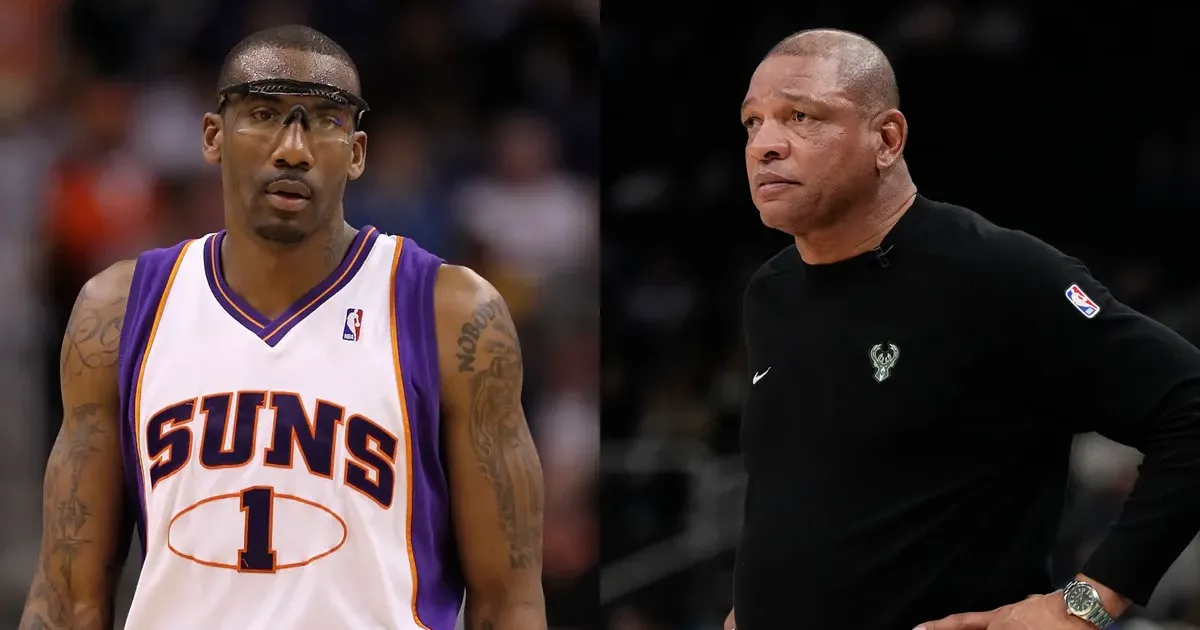
Amar'e Stoudemire is the class's clearest NBA-player peak case. With Steve Nash in Phoenix, he gave the Seven Seconds or Less Suns their vertical force and helped make spread pick-and-roll basketball feel like the future. He was Rookie of the Year, a six-time All-Star and a five-time All-NBA selection.
The injuries matter because they kept the career from becoming even larger. They do not erase what the best version looked like. Stoudemire bent defenses with rim pressure, speed and power that still show up in modern offensive spacing. His first Knicks season also gave Madison Square Garden a short, electric reminder of what a true focal point could do.
Rivers, Few and D'Antoni Are Three Coaching Arguments
Doc Rivers enters with a championship, more than 1,000 wins and a long run as one of the NBA's defining public coaching figures. The 2008 Celtics title carries real weight. So do the criticisms: repeated playoff collapses have followed his reputation for years. His Hall case is legitimate, but it is not clean.
Mark Few's case is cleaner in a different way. He turned Gonzaga from a tournament story into a permanent national program without a power-conference label. D'Antoni's case rests on influence. His best teams did not win the title, but his offensive ideas helped change NBA spacing, tempo and shot selection. Few built an institution; D'Antoni changed a style; Rivers accumulated enough winning and one ring to force the debate.
Crawford Shows the Hall Also Honors the Game Around the Stars
Joey Crawford's induction is a reminder that the Hall is not only a player museum. Officials, coaches, contributors and teams shape basketball's history too. Crawford was one of the NBA's most recognizable referees across decades, which is both a compliment and a complication because no official becomes visible without controversy.
His inclusion widens the class's texture. Basketball history is not made only by scorers and champions. It is also made by the people who control games, broadcast them, teach them, institutionalize them and create the conditions in which stars become legible to the public.
The Hall Chooses Memory, Not Symmetry
the 2026 class works because it is uneven. Parker's all-court brilliance, Delle Donne's shooting peak, Holdsclaw's college force, Stoudemire's explosive prime, Few's program-building, D'Antoni's tactical influence and Rivers's debated longevity are not the same kind of greatness.
Springfield should be honest about those distinctions. Some inductees changed how basketball was played. Some changed who watched. Some built structures that lasted. Some survived long enough to accumulate a case that stays argued over. The Hall works best when it does not pretend those paths are identical. It should reward permanence, but it should name the kind of permanence each career actually earned.