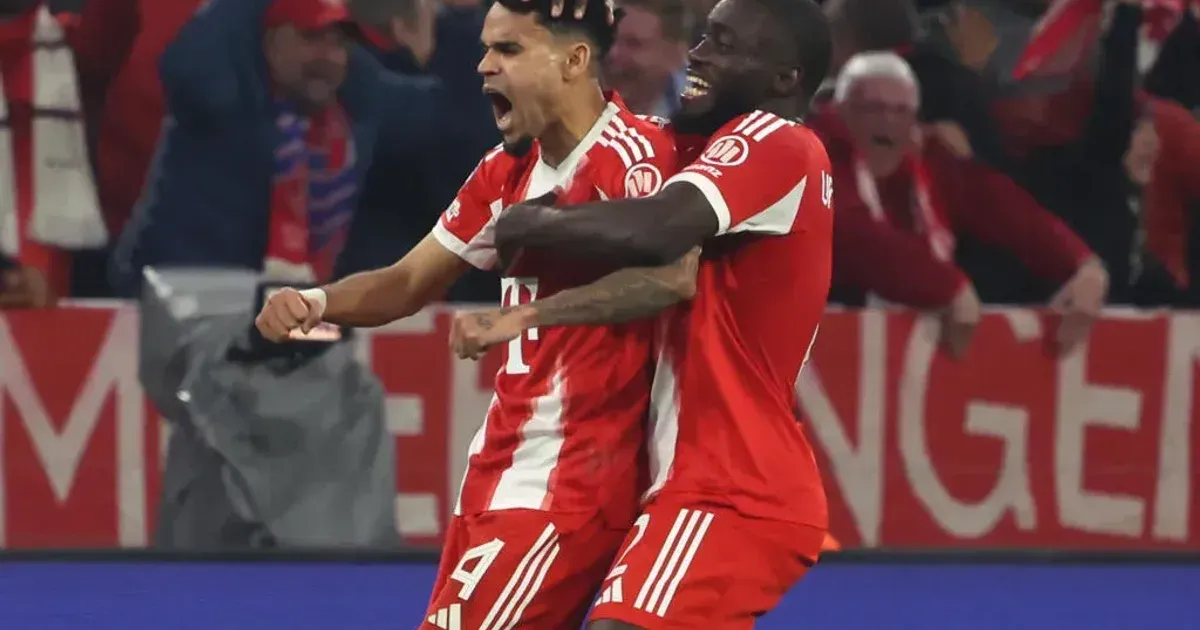
Bayern Munich turned a wild Champions League night into a semifinal place. The result added another chapter to one of Europe's most persistent knockout rivalries. The win also gave Bayern a psychological lift before the semifinal draw. On April 16, 2026, the German side defeated Real Madrid in a seven-goal thriller at the Allianz Arena. Luis Díaz and Michael Olise struck late in the second half to dismantle the Spanish defense and ensure safe passage for the German side. Real Madrid led three times during a volatile first half, yet they could not maintain their advantage against a relentless Bavarian offensive. Final aggregate scores reached 6-4 in favor of the hosts.
Luis Díaz provided the decisive blow during the closing stages of the match. Michael Olise followed shortly with a clinical finish that ended any hope of a Madrid comeback. France 24 reported that these late goals earned Bayern Munich a dramatic 4-3 win on the night. Al Jazeera noted the match will be remembered as a classic encounter between two of Europe's most decorated institutions.
Tactical Volatility and Real Madrid Performance
Managers often struggle to control the rhythm of matches involving these two clubs. Real Madrid initiated the scoring early, exploiting gaps in the Bayern midfield. Carlo Ancelotti's side appeared composed, finding the net three times before the interval. High tempo play defined the opening forty-five minutes as both teams prioritized verticality. Defensive structures on both sides suffered under the weight of such aggressive attacking intent.
Bayern Munich adjusted their defensive line during the halftime break. Pressure on the Madrid wingers increased, limiting the supply to their central strikers. Momentum shifted gradually as the second half progressed. Munich players exhibited superior physical conditioning, winning most second-ball duels in the final third. The efficiency of the Bayern strikers has proved decisive in these high-stakes knockout rounds.
Madrid supporters watched as their team lost grip on a match they had twice seemed to control. Errors in possession near the penalty area allowed Bayern to launch counter-attacks with devastating speed. The tactical shift toward a narrower defensive shape by Bayern neutralized the overlapping runs from Madrid fullbacks. Each goal from the visitors was met with an almost immediate response from the home side. Scoring remained balanced until the final ten minutes of regulation time.
The result mattered because Bayern survived the kind of match Real Madrid usually bends to its own history. Madrid created pressure in waves, but the home side kept finding space behind the fullbacks and refused to let the tie settle. Díaz gave Bayern the direct running it needed late, while Olise punished the gaps that opened as Madrid pushed for control.
That resilience changes the tone of Bayern's European campaign. A side that had been questioned for defensive lapses now carries a signature knockout win into the next round, and the late goals give the dressing room a cleaner story than the chaotic scoreline suggests.
The semifinal place also protects Bayern from a week of recriminations over the chances it allowed Madrid to create.
Semifinal Momentum
Historical prestige rarely survives the blunt force of late-match athleticism in the modern Champions League. Real Madrid, the self-appointed kings of this competition, was not beaten by superior tactics or deeper philosophy. They were physically overwhelmed by a Bayern Munich squad designed for high-intensity attrition. Three goals Madrid scored in the first half were the dying gasps of a counter-attacking model that is becoming obsolete against the pressing monsters of the Bundesliga.
Relying on the mystical aura of the white shirt is a failing strategy. While Madrid played with elegance, Bayern played with a violent efficiency that looked toward the next decade. Acquisitions of Díaz and Olise represent a clear departure from the aging core that once defined the Bavarians. It is a cynical, effective pivot toward raw power. If Paris Saint-Germain intends to defend their title, they must realize that Bayern is no longer interested in the aesthetics of the game. This team is a machine built to punish defensive lapses with a speed that defies traditional marking schemes. The result makes Bayern a credible title contender, though the semifinal will test whether its attack can offset the defensive openings Madrid exposed.