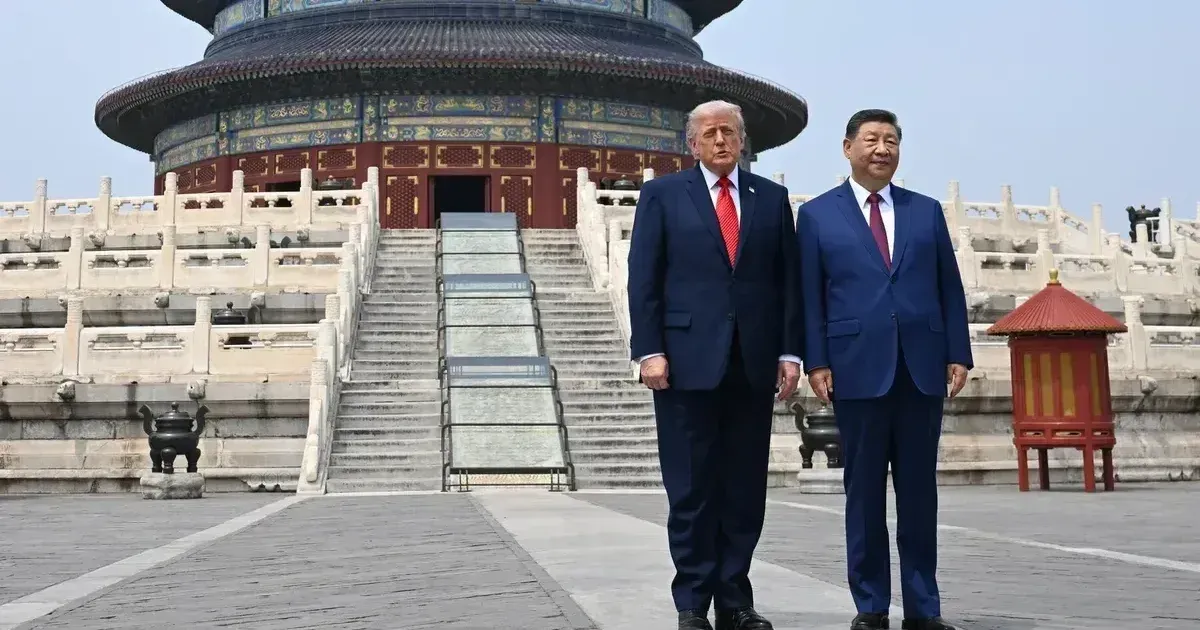
Donald Trump characterized long-term American arms agreements with Taiwan as potential leverage in trade talks with Beijing. The comments gave Beijing a propaganda opening before Taipei had time to settle its response. They also made arms deliveries sound less like commitments and more like bargaining assets. That framing is exactly what Taiwan’s government had hoped to avoid. These comments followed a high-profile summit with Xi Jinping in Beijing on May 14, 2026, where the US leader discussed economic and security ties. Chinese state-controlled media organizations quickly broadcast the remarks, framing them as a sign that Washington treats its security commitments to Taipei as transactional rather than absolute. Such a shift in rhetoric suggests that decades of bipartisan support for the self-governed island may be entering a phase of significant volatility.
Taipei officials spent the following weekend parsing the specific language used during the bilateral meetings. Initial reports from the Taiwan Ministry of Foreign Affairs attempted to project stability, but internal anxieties about US abandonment have surfaced in local legislative discussions. Where once the United States maintained a policy of strategic ambiguity to deter conflict, the suggestion that military hardware transfers could be traded for trade concessions introduces a new variable. Trump has long questioned the cost-benefit ratio of overseas defense obligations, a theme he repeated throughout his recent visit to the Chinese capital.
Strategic Uncertainty Grips Taipei After Beijing Summit
Government leaders in Taipei find themselves in an unstable position as they weigh the reliability of existing defense contracts. Historically, these arms packages provided the backbone of Taiwan's deterrence against potential reunification efforts by force. Changing the status of these deals from a security necessity to a negotiating chip alters the calculus for military planners. Some analysts in Washington suggest that this transactional approach could embolden Beijing to increase pressure in the Taiwan Strait, sensing a weakening in the American resolve to intervene. Security experts noted that Xi Jinping explicitly reiterated China's territorial claims during the meetings, according to official transcripts.
"It's a very good negotiating chip," Trump said of the pending Taiwan arms package in a Fox News interview.
Public messaging from Beijing has focused almost exclusively on the perception of American retreat. Global Times and other state-aligned outlets published editorials arguing that Taiwan should recognize its status as a peripheral interest in the broader US-China rivalry. By emphasizing the temporary nature of American alliances, these outlets aim to demoralize the Taiwanese public and encourage a pro-unification sentiment. Xi Jinping maintained a firm stance on the sovereignty of the island, though he did not publicly comment on the specific arms deal negotiations during the press conference.
State Media Narrative Shifts in Beijing
Chinese broadcasters began emphasizing the phrase negotiating chip to expose perceived cracks in the US-Taiwan alliance. This rhetorical opening allows Beijing to present itself as the more stable long-term partner in the region. Taiwan President Lai Ching-te has not yet issued a direct response to the specific negotiating chip terminology, opting instead to emphasize continued cooperation on semiconductor supply chains. The strategy in Taipei appears to be a focus on the economic indispensability of the island to avoid becoming a sacrificial piece in a larger trade war. Domestic opposition parties in Taiwan, meanwhile, used the news to argue for a more conciliatory approach toward Beijing.
American defense contractors with substantial stakes in Taiwan are monitoring the situation for signs of contract delays or cancellations. Lockheed Martin and Raytheon have billions in pending orders that could be affected if the administration decides to pause transfers as part of a trade bargaining strategy. Any disruption to the delivery of F-16 components or missile systems would have immediate effects on the readiness of the Taiwanese military. Military sources in Taipei indicated that several key shipments are expected in late 2026, making the timing of these remarks particularly sensitive for the island's defense ministry.
Challenges to the Taiwan Relations Act Framework
Legislation governing the US relationship with Taipei, specifically the Taiwan Relations Act, mandates that the United States provide the island with the means to defend itself. Treating these legal obligations as flexible bargaining tools could lead to judicial or legislative challenges in Washington. Congressional leaders from both parties have already signaled they will seek clarification on whether the administration intends to bypass established statutory requirements. Despite the executive branch's authority over foreign policy, the funding and approval of arms sales involve substantial oversight from the House and Senate. This tension between executive transactionalism and legislative obligation is likely to define the next several months of US-Taiwan relations.
Diplomatic circles in Beijing view the current friction as a strategic advantage that requires little direct action to exploit. Simply by amplifying Trump's own words, China can sow doubt among other regional allies who rely on American security umbrellas. Japan and South Korea are reportedly observing the situation with caution, fearing that their own defense arrangements could be subject to similar re-evaluations. The focus on trade-offs over treaties creates a sense of unease that goes beyond the specific geographic concerns of the Taiwan Strait.
Taiwan Leverage Risk
What happens when the concept of an ironclad alliance is replaced by the logic of a real estate deal? The current friction suggests a move away from the ideological defense of democracy toward a pragmatic assessment of regional costs. If Taiwan is viewed as a chip, the value of that chip is only as high as the next trade concession from China. The environment benefits Beijing by providing a plan for the slow decoupling of the island from its Western support.
The question is no longer just about military hardware, but about the survival of the post-war security architecture in the Pacific. Beijing has demonstrated it is willing to wait for the right moment of American indifference to advance its goals. A transactional foreign policy may provide that opening without firing a single shot.